
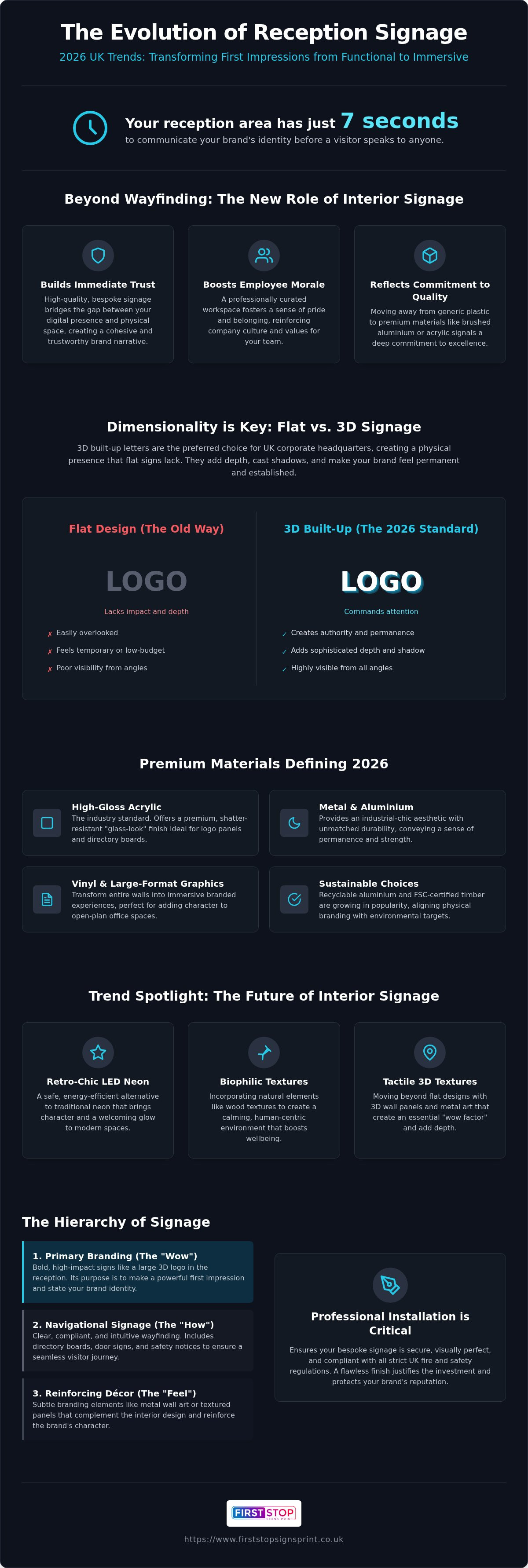
Your reception area has exactly seven seconds to tell a visitor who you are before they've even spoken to a member of staff. In 2026, a generic flat sign isn't just a missed opportunity; it's a silent signal that your brand has stopped evolving. Investing in the high-impact reception signs uk businesses need to stand out is no longer about simple information. It's about creating an immersive first impression that reflects your professional authority.
We understand the frustration of worrying that a new installation might look cheap or fail to meet strict UK fire safety regulations whilst you struggle to choose between 3D letters and LED displays. You need a durable, high-quality solution that justifies the investment. This guide will show you how to transform your workspace with the latest 2026 trends in bespoke signage, ensuring your brand identity feels cohesive and modern from the moment a client walks through the door.
You'll discover which materials offer the best longevity, how to navigate current compliance standards, and why tactile 3D textures are replacing flat designs to create that essential wow factor in modern British offices.
Key Takeaways
- Learn why modern interior branding has moved beyond simple wayfinding to become a vital tool for immersive storytelling and employee engagement.
- Discover the premium materials defining reception signs uk in 2026, from high-gloss acrylic boards to the sophisticated depth of 3D built-up logos.
- Master the hierarchy of signage to map out a seamless visitor journey that balances bold primary branding with clear, compliant navigation.
- Stay ahead of the curve by exploring 2026 trends like biophilic wood textures and retro-chic LED neon alternatives that bring character to your workspace.
- Understand the critical role of professional installation in ensuring your bespoke 3D or LED signage is secure, compliant, and visually perfect.
The Evolution of Signs Inside: Why Interior Branding Matters in 2026
Interior spaces in British offices have undergone a radical transformation. Whilst the history of commercial signage was once rooted in purely functional directions, 2026 sees a shift towards immersive storytelling. Your workspace shouldn't just tell people where to go; it should tell them who you are. High-quality reception signs uk businesses invest in today act as the physical manifestation of their digital brand, bridging the gap between the screen and the office floor.
Consistency is vital for any growing company. If your outdoor shop front signs promise a premium experience, but your interior signs are generic plastic, the brand narrative breaks. Bespoke signage influences behaviour by building immediate trust with visitors. It also boosts employee morale. Working in a space that feels curated and professional fosters a sense of belonging and pride. Moving away from "off-the-shelf" solutions towards the bespoke reception signs uk experts provide allows you to use materials like brushed aluminium or high-grade acrylic that reflect a commitment to quality.
First Impressions: The Reception and Lobby Area
The lobby is your handshake. Using 3D logos creates an immediate sense of authority and professionalism. These built-up letters cast shadows that add depth, making the brand feel permanent and established. For darker or more modern spaces, LED signs provide a welcoming glow without being overpowering. It's a balance of aesthetic appeal and clear messaging. You want your visitors to feel the brand's energy before they've even reached the front desk.
Internal Signage as Interior Décor
Modern office design often blurs the line between branding and architecture. We're seeing a rise in 3D wall panels that add texture to otherwise flat corridors, turning a plain wall into a brand statement. Metal wall art is another popular choice, serving as both a decorative piece and a subtle branding tool. By choosing colours and textures that complement modern UK office designs, you create a cohesive environment. This approach ensures the signage feels like a natural part of the building rather than an afterthought, justifying the investment through long-term durability and visual impact.
Key Materials and Textures: Beyond the Standard Plastic Sign
Selecting the right material is the difference between a sign that merely exists and one that commands attention. This choice is vital. Whilst mass-produced PVC arrows might suffice for a temporary event, they fail to meet the standards required for a permanent corporate presence. High-impact reception signs uk clients prefer often start with acrylic. This material provides a premium "glass-look" finish that's both shatter-resistant and sophisticated, making it the industry standard for directory boards and logo panels.
For those seeking a more industrial-chic aesthetic, metal and aluminium are the go-to choices for London's retail spaces. These materials offer unmatched durability and a sense of permanence. In contrast, vinyl and large-format graphics allow you to transform entire walls into branded experiences. This is particularly useful in open-plan spaces. Harvard research on office layouts suggests that how we define our physical workspace significantly impacts collaboration. Strategic signage helps delineate these zones without the need for intrusive partitions.
2026 has also seen a surge in sustainable material choices. Businesses are increasingly opting for recyclable aluminium or FSC-certified timber to align their physical branding with their environmental targets. It's about being responsible whilst looking professional.
The Impact of 3D Signs and Letters
3D letters are currently the preferred choice for London corporate headquarters because they create a physical presence that flat signs lack. You can choose between flat-cut acrylic for a sleek, modern look or built-up metal letters for maximum impact. Depth and illumination work together to increase visibility by creating natural shadows that draw the eye from any angle. This three-dimensional approach ensures your brand is literally standing out from the wall.
Specialist Finishes: From Matte to Metallic
The finish of your sign is just as important as the material itself. Luxury retail environments often utilise brushed gold or silver finishes to evoke a sense of prestige. Conversely, many modern offices are moving towards soft-touch matte finishes. These reduce glare from harsh interior lighting, ensuring your logo remains legible at all times. We provide custom colour matching to guarantee your physical reception signs uk installation perfectly mirrors your digital branding. If you're unsure which material best suits your building's architecture, our team can help you choose the right finish for your project.
Strategic Placement: Navigational vs. Branding Signs
When a visitor enters your building, their eyes instinctively search for clues to orient themselves. Mapping this journey is essential for effective placement. The hierarchy of signage begins with primary branding, followed by wayfinding, and finally, regulatory notices. High-impact reception signs uk offices rely on are usually placed at eye level directly behind the reception desk. This "hero" position ensures the brand is the first thing seen, establishing immediate authority before a word is even spoken.
Beyond aesthetics, you must consider the legal framework. All businesses must adhere to the UK Health and Safety Regulations for Signage. This includes ensuring fire safety exits are clearly marked and that wayfinding is accessible to everyone, including those with visual impairments. In 2026, compliance isn't just about ticking boxes; it's about inclusive design that helps all visitors navigate your space safely and confidently. Integrating these requirements into your design early prevents the need for clashing, "bolted-on" safety signs later.
Wayfinding Systems: Guiding the Flow
Directional signs should be intuitive. If a visitor has to stop and think, the sign has failed. In large retail centres or sprawling office complexes, floor graphics and hanging signs are effective at guiding foot traffic without obstructing views. By integrating these systems into your interior design theme, you maintain a professional look whilst ensuring everyone knows exactly where they're going. Clear, concise typography is better than complex icons for these functional elements.
Branding Zones: Creating Touchpoints
Branding shouldn't stop at the lobby. Use "hero" walls for your primary 3D logo, but consider secondary touchpoints throughout the building. Placing signs inside meeting rooms reinforces company values during client presentations. Strategic use of LED signs in social areas or staff breakout rooms can also boost internal culture. It's about creating a consistent brand experience as people move through the building. This constant, subtle reinforcement builds a stronger connection with your brand.
Visual clutter is the enemy of clarity. Too many signs competing for attention can overwhelm a visitor. Stick to the essentials. One bold, high-quality sign is always more effective than three generic ones. By focusing on quality over quantity, you ensure your reception signs uk installation remains a powerful branding tool rather than a distraction. If you're planning a new layout, we can help you organise your signage hierarchy to ensure maximum impact and clear navigation.
2026 Trend Analysis: The Future of Interior Signage
Interior branding in 2026 isn't a static field. It's a blend of nature, technology, and art. One of the most significant shifts we've seen across the UK is biophilic integration. Instead of cold, sterile panels, businesses are opting for reception signs uk designers create using living moss or reclaimed wood textures. This brings a natural, calming feel to high-pressure corporate environments. It's about more than just looks; it's about the psychological well-being of everyone who enters the building.
Digital integration has also become more sophisticated. We've moved past clunky, printed QR code stickers. In 2026, these codes are often discreetly etched into metal or integrated into the 3D logo itself. This allows visitors to check in or access digital brochures through the physical sign. It's a seamless bridge between the physical office and your digital presence, making the visitor experience smoother and more interactive.
LED and Illuminated Internal Signs
The shift towards energy-efficient LED signs for 24/7 branding is particularly evident in London's financial and creative districts. You can choose between halo-lit letters, which cast a soft glow back onto the wall, or face-lit letters for maximum brightness. Halo-lighting is often preferred for a sophisticated, understated vibe in law firms or consultancy offices. Energy-efficient LED technology has superseded traditional neon for internal use because it offers the same retro-chic aesthetic with lower running costs and improved safety.
Bespoke Metal Wall Art
Custom-cut metal signs are becoming a permanent, high-impact branding solution that bridges the gap between signage and fine art. We're seeing a rise in specialist finishes like rust-effects for an industrial look, or high-gloss powder coating to match specific brand colours. Polished finishes, such as brushed brass or silver, remain the standard for high-end corporate lobbies. These pieces don't just display a name; they add a sense of permanence and prestige to the architecture of the room.
Textured 3D wall panels are also replacing flat painted surfaces, providing a tactile backdrop for your primary branding. This layered approach ensures your interior feels curated and intentional. If you're ready to future-proof your office with the latest trends, you can explore our bespoke 3D and LED options to start your transformation today.
The First Stop Approach: Bespoke Design and Installation
Choosing a sign is only half the battle. The true impact of reception signs uk businesses rely on comes from how they're engineered and installed. We don't just ship a box and hope for the best. Our approach is a complete end-to-end service, taking your project from the initial concept to the final screw. This ensures that every 3D letter is perfectly aligned and every LED module is safely wired. We take pride in the precision of our workshop, where modern technology meets traditional craftsmanship to create something truly unique for your lobby.
By combining high-quality sign printing with bespoke manufacturing, we provide a total solution that generic online retailers simply can't match. Whether you're based in Romford, the heart of London, or across Essex, we act as your local partner. We take full responsibility for the finished result, ensuring that the physical product matches the high-resolution designs you approved. This integrated process eliminates the risk of colour mismatches or material failures that often occur when using multiple suppliers.
Expert Installation Across London and Essex
Installing heavy 3D logos or complex illuminated displays in busy London commercial spaces requires careful logistics. Our team understands how to navigate these environments whilst ensuring strict compliance with UK building and fire safety regulations. Using a local partner for your reception signs uk needs also means we're nearby for any future maintenance or brand updates. This provides a level of reliability that 'DIY delivery' services lack, as we're always available to ensure your signage continues to look as good as the day it was installed.
Bespoke Design Consultancy
Every sector has different requirements. A luxury retail boutique in Essex needs a different aesthetic to a high-traffic corporate headquarters in the Home Counties. We help you select the most durable and visually striking materials for your specific business signs, ensuring the textures and finishes complement your existing interior décor. Our consultants work closely with you to tailor solutions that justify your investment and reflect your brand's authority. We'll guide you through the pros and cons of acrylic, metal, and LED options to find the perfect fit for your building's architecture.
Ready to transform your interior? Contact First Stop Signs Print for a bespoke quote today.
Transform Your Brand Presence with Modern Interior Signage
Modern interior branding has evolved into a powerful tool for immersive storytelling. By choosing the high-impact reception signs uk businesses need to remain competitive, you ensure your workspace reflects the quality of your services. From the tactile depth of 3D logos to the energy-efficient glow of modern LED displays, every element works together to define your professional identity and build immediate trust with every visitor.
First Stop Signs Print bridges the gap between creative vision and technical execution. We're specialists in 3D and LED bespoke signage, bringing decades of experience in commercial printing and sign manufacture to every project. Our team provides expert installation across London and Essex, navigating local building regulations to deliver a flawless finish. You don't have to settle for generic, off-the-shelf solutions when bespoke craftsmanship is within reach.
Elevate your brand with bespoke reception signs from First Stop Signs Print and make your first impression count. Your journey towards a more professional, high-impact workspace starts with a single conversation. We're ready to help you turn your lobby into a landmark of professional authority.
Frequently Asked Questions
What is the best material for reception signs in a professional UK office?
Acrylic and brushed aluminium are the most popular materials for a professional finish. Acrylic provides a sophisticated glass-look that works well for directory boards, whilst metal offers a sense of permanence and prestige. Many businesses choose 3D letters made from these materials to add depth and authority to their lobby. The best material depends on your building's lighting and existing décor, but we typically recommend high-grade acrylic for modern London offices.
Do I need planning permission for internal business signs in the UK?
Internal signs generally don't require planning permission from local councils. However, if your reception signs uk installation is illuminated and clearly visible through a window from the street, you might need advertisement consent. It's also vital to ensure all signs comply with UK building regulations and fire safety standards, especially regarding the materials used and their placement near emergency exits. We help our clients navigate these specific legal requirements during the design phase.
How much does it cost to have a 3D logo sign installed in London?
The cost of installing a 3D logo sign in London is influenced by several factors, including the choice of materials, the overall size, and whether you require LED illumination. Bespoke manufacturing means every project is unique, so we provide tailored quotes rather than flat rates. Factors like access requirements in busy commercial buildings and the complexity of the electrical work for halo-lit letters will also play a role in the final investment for your signage.
Can LED signs be used safely inside a small retail shop?
Modern LED signs are perfectly safe for small retail environments because they operate at low voltages and generate very little heat. Unlike traditional glass neon, LED alternatives are durable and energy-efficient, making them ideal for 24/7 branding in London shops. They provide a welcoming glow that draws customers in without creating a safety hazard. You can choose subtle halo-lighting to create a premium atmosphere that doesn't overwhelm a compact shop floor or boutique.
What is the difference between wayfinding and branding signage?
Branding signage focuses on identity and emotional connection, whilst wayfinding is strictly functional. Your primary brand sign, like a 3D logo, establishes authority and professional presence. Wayfinding systems include directional arrows, floor numbers, and room names that guide visitors through the building. A successful interior layout integrates both, ensuring that your branding is visible at key touchpoints whilst wayfinding remains intuitive and clear to follow, helping visitors navigate your space without confusion.
How long does it take to manufacture a bespoke internal sign?
Manufacturing a bespoke internal sign typically takes between one and three weeks, depending on the complexity of the design and the materials selected. The process involves initial consultancy, design approval, precision manufacturing in our workshop, and final professional installation. For businesses in Romford, London, or Essex, our local presence allows us to manage these timelines efficiently. We always provide a clear schedule at the start of the project to ensure your signage is ready for your office opening.
Are 3D wall panels suitable for branding in reception areas?
3D wall panels are an excellent choice for modern reception areas because they add architectural interest and texture to plain walls. They serve as a sophisticated backdrop for your primary reception signs uk, making a logo stand out more effectively than it would on a flat surface. These panels can be customised to match your brand colours and are often used to create a "hero" wall that commands attention and defines the entire lobby space.
How do I ensure my interior signs are UK accessibility compliant?
To ensure accessibility compliance, you must focus on high colour contrast, clear typography, and appropriate mounting heights. Signs should be easy to read for everyone, including visitors with visual impairments. UK regulations suggest using sans-serif fonts and avoiding glossy finishes that cause glare. Placement is equally important; signs should be positioned where they are easily visible and not obstructed by doors or furniture. We follow these standards to ensure your workspace is inclusive and legally compliant.


