
If a potential customer is walking down a bustling British high street, how many shops do they actually notice before they've already passed the front door? In a crowded retail environment, your fascia sign often isn't enough; you need to be visible from a distance to capture attention. Investing in projecting signs for shops uk is the most effective way to ensure your brand stands out 24/7, even when the pavement is packed.
We know the process can feel daunting. You're likely worried about navigating strict council planning permissions or choosing materials that won't rust and fade after a single season of British rain. It's perfectly normal to feel overwhelmed by the choice between modern 3D LED logos and traditional hanging styles. You want a solution that looks professional without the fear of unexpected fines or maintenance headaches.
This guide will help you overcome those hurdles and transform your shopfront with confidence. You'll discover how to choose a durable, eye-catching design that reflects your brand whilst meeting all safety and legal standards. We'll walk you through the latest 2026 regulations, from deemed consent height limits to the nuances of express consent fees, so you can focus on driving footfall to your business.
Key Takeaways
- Understand why perpendicular signage is essential for overcoming pedestrian tunnel vision and capturing footfall on busy high streets.
- Discover the most durable materials for the British weather, from powder-coated metals to weather-resistant 3D acrylic logos.
- Learn how to select the right style for your brand, comparing traditional swing signs with sleek, modern lightboxes and projecting signs for shops uk.
- Navigate UK planning permission with confidence by mastering the deemed consent rules and the 0.75 square metre size threshold.
- Simplify your shopfront upgrade by choosing a partner that offers a complete service from initial design to final professional installation.
The Strategic Importance of Projecting Signs for UK Retailers
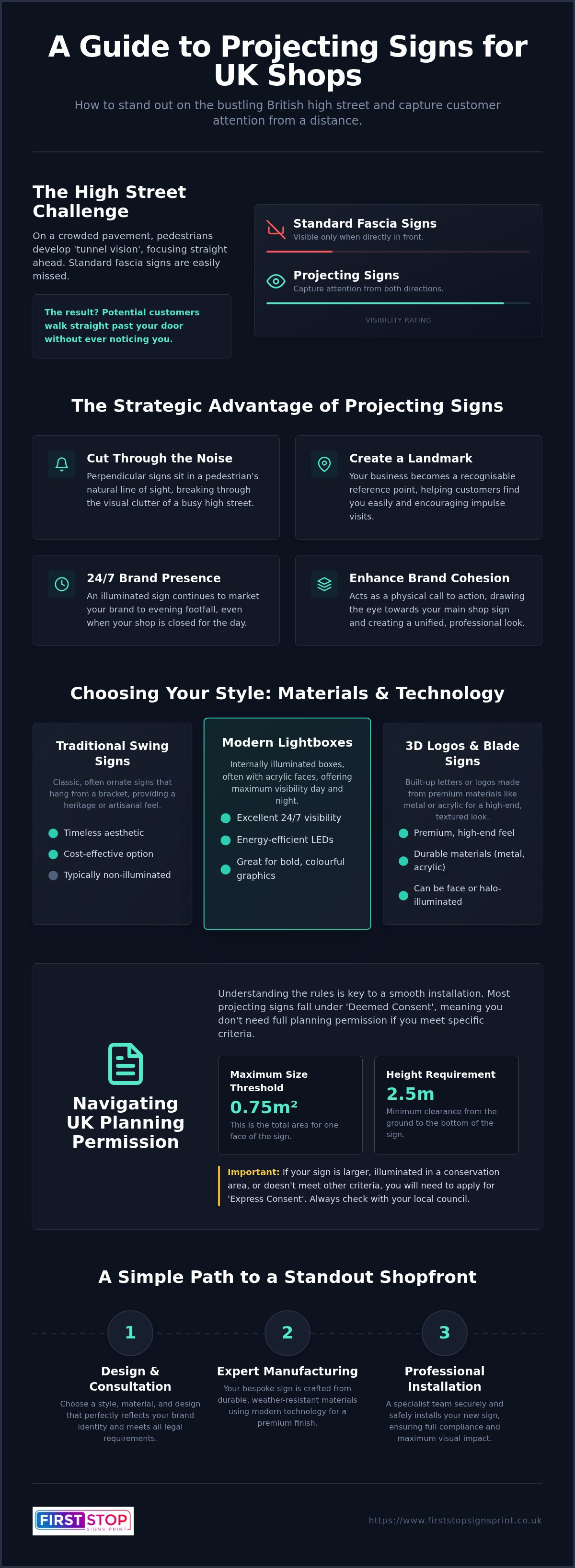
A projecting sign is a double-sided display mounted perpendicular to your building's facade. Whilst a standard fascia sign communicates who you are when someone is standing directly in front of your shop, a projecting sign speaks to people long before they arrive. The Strategic Importance of Projecting Signs lies in their ability to act as a visual beacon in a cluttered environment. They don't just display a name; they function as wayfinding tools that guide customers to your door.
In the UK, high streets are often narrow and crowded. Most pedestrians suffer from a form of 'tunnel vision', focusing on the path ahead rather than the flat signs above doorways. By installing projecting signs for shops uk, you break this visual pattern. These signs capture attention from both directions of travel, providing a 24/7 marketing advantage. Even when your shutters are down, an illuminated projecting sign continues to promote your presence to evening footfall, ensuring your brand stays top-of-mind.
To better understand how visual impact transforms a business presence, watch this helpful video:
Breaking the High-Street Noise
Pedestrians rarely tilt their heads up to read fascia boards whilst navigating busy pavements. Perpendicular signs sit directly in their natural line of sight. This creates a 'landmark' effect, helping your business become a recognisable point of reference amongst a row of competitors. Effective exterior signage is a primary driver for impulse purchases. If a shopper cannot see your brand from thirty yards away, they won't make the snap decision to step inside. By extending your visibility into the pavement space, you effectively claim more visual real estate than your neighbours.
Complementing Your Brand Identity
Your exterior branding should work as a cohesive unit. A projecting sign acts as a physical 'call to action', drawing the eye toward your main shop sign board. To maintain a professional look, it's vital to ensure colour consistency across all touchpoints. This element should be a key part of your wider large format print uk strategy. Whether you're using sleek 3D logos or traditional graphics, the projecting element must match your window displays and interior branding to build trust and recognition with your audience.
Modern Materials and Technologies: 3D Logos and LED Integration
High-street branding has evolved significantly over the last decade. Flat, printed panels are rapidly making way for bespoke business signs that offer physical depth and texture. When you're investing in projecting signs for shops uk, the choice of material and technology directly impacts how customers perceive your brand's value. A premium sign suggests a premium service.
The Rise of 3D Projecting Signs
3D letters and built-up logos have become the gold standard for London boutiques and modern retailers. By adding dimension, you create natural shadows that shift with the daylight. This makes the sign appear dynamic and high-end throughout the day. Common materials include brushed aluminium, polished stainless steel, and high-density acrylics. These choices don't just look professional; they provide a tactile quality that flat signs simply cannot match. Built-up logos enhance brand perception by making your business look established and detail-oriented.
Illuminated LED Projecting Signs
Illumination is no longer about high-maintenance neon tubes. Modern LED modules make projecting signs for shops uk more visible than ever during the long winter nights. They're incredibly energy-efficient and offer superior longevity compared to older technologies. You can choose from several lighting styles, such as internal LED modules for a sleek glow or external trough lighting for a more classic, traditional look. Face-lit letters provide a crisp, modern feel, whilst a "halo effect" creates a sophisticated wash of light against the building wall. To manage energy usage, smart sensors and timers allow your sign to shine only when needed.
Weatherproofing for the UK Climate
The British climate is notoriously harsh on exterior installations. Between coastal salt spray and urban pollution, your sign needs to be built to last. We use advanced powder-coating techniques to prevent rust and corrosion on all metal components. UV-stable inks and high-grade vinyls are also essential to prevent fading during the summer months. Structural integrity is equally vital; brackets must be engineered to withstand high wind loads to ensure public safety. When planning your installation, Navigating UK Planning Permission guidelines are a great place to start to ensure your sign meets local standards. If you're looking for a durable solution, our team can help you design custom business signs that are engineered specifically for the elements.
Comparing Styles: Swing Signs, Blade Signs, and Lightboxes
Choosing the right style of projecting signs for shops uk is about more than just visibility; it's about architectural harmony. The right sign tells a story about your business before a customer even reads the name. Whether you're aiming for a heritage feel or a minimalist aesthetic, your choice of silhouette defines your shopfront's personality. The evolution of these designs reflects the broader history of Modern Materials and Technologies in British architecture, moving from hand-forged iron to precision-engineered steel.
For late-night businesses like pharmacies, bars, or convenience stores, illuminated lightboxes are the industry standard. They provide a flat, bright surface that's legible from a great distance in the dark. However, many modern brands now opt for custom-shaped signs to stand out. Breaking the rectangular mould with a bespoke silhouette, such as a coffee cup for a cafe or a stylized logo for a boutique, creates instant recognition. These unique shapes act as a visual shorthand for what you do.
Swing Signs and Brackets
Traditional swing signs offer a unique advantage: movement. A sign that gently sways in the breeze catches the peripheral vision of a pedestrian differently than a static board. This style is a favourite for cafes, pubs, and shops located on historic high streets where a heritage look is required. You can customise the aesthetic through your bracket choice. Ornate 'Baroque' brackets add a touch of classic charm, whilst minimalist modern steel arms suit contemporary spaces. To ensure longevity, keep the pivot points lubricated and check for wear on the hanging hooks at least once a year.
Rigid Blade and Projecting Boards
In high-wind areas or narrow London streets, rigid blade signs are often the most practical choice. Because they don't swing, they reduce stress on the building's masonry and provide a perfectly stable surface for detailed double-sided graphics. This ensures your message is crisp and clear from both directions of travel. To create a truly immersive brand experience, consider integrating your rigid sign with window graphics. This creates a cohesive visual layer that guides the customer's eye from the pavement directly into your store, making the transition from passer-by to visitor seamless.
Navigating UK Planning Permission and Installation Safety
Installing a new sign isn't just about aesthetics; it's a legal responsibility that requires careful navigation of local regulations. Many shop owners in London and Essex worry about council enforcement or the risk of being told to remove a brand-new installation. Understanding the rules for projecting signs for shops uk is the best way to avoid these headaches. Most standard signs fall under 'deemed consent', which means you don't need to submit a formal planning application if your design stays within specific thresholds.
For a sign to qualify for deemed consent in 2026, no part of it can be more than 4.6 metres above ground level. If your business is located in an Area of Special Control, this limit is reduced to 3.6 metres. Size is equally important. Non-illuminated signs must stay under 1.55 square metres in total area, and any characters on the sign must be no taller than 0.75 metres. If you're planning an illuminated 3D logo or your shop is in a conservation area, you'll likely need 'express consent'. This process carries a standard fee of £462 in England and typically takes between 8 and 13 weeks for a decision.
The Legal Framework for UK Signage
The Town and Country Planning (Control of Advertisements) Regulations 2007 provide the primary legal framework for all high-street signage. Beyond the paperwork, you must prioritise public safety. A projecting sign must maintain a minimum clearance of 2.4 metres from the pavement to ensure it doesn't obstruct pedestrians. There are also strict projection limits; usually, a sign shouldn't extend more than 1 metre from the wall or sit closer than 0.6 metres to the edge of the kerb. Conservation areas and listed buildings have even tighter restrictions, often requiring specific materials like timber rather than acrylic.
Professional Installation Standards
Safety doesn't stop once you have permission. A professional installer will perform a detailed wall substrate analysis to ensure your building can support the sign's weight and wind load. UK weather, particularly in coastal areas or wind tunnels between city buildings, puts immense stress on mounting brackets. If you've chosen an illuminated LED display, the wiring must meet current UK electrical safety standards to prevent hazards. It's also vital to work with a team that carries comprehensive Public Liability Insurance. We take these technical risks seriously so you can focus on running your business. If you're ready to upgrade your shopfront with total peace of mind, book our professional sign installation services today to ensure your project is fully compliant.
Bespoke Projecting Signs from First Stop Signs Print
At First Stop Signs Print, we don't just manufacture hardware; we deliver visibility. We understand that a shop in Romford faces different architectural challenges than a boutique in central London or a family-run business in Essex. Our end-to-end service for projecting signs for shops uk ensures that your brand isn't just seen, but remembered. We specialise in high-impact 3D logos and LED displays that cut through the visual noise of modern high streets, providing a professional edge that flat signs cannot match.
Why Choose Our Bespoke Process?
Our approach begins with a personalised design consultation. We don't believe in one-size-fits-all templates because your brand guidelines are unique. Once the design is finalised, we use premium UK-sourced materials to manufacture your sign in-house. This allows us to maintain strict quality control over every weld, print, and LED module. Our dedicated installation team is intimately familiar with local council requirements across London and Essex, ensuring your sign is mounted safely and legally. We often combine our sign-making expertise with vinyl sticker printing and advanced large format technology to create a layered, professional look that spans from your window glass to your projecting board.
Ready to Transform Your Shopfront?
Starting your project is a straightforward process. To provide an accurate quote, we typically require high-resolution photos of your current shopfront, the dimensions of the installation area, and your vector logo files. This information allows our team to assess the wall substrate and design a bracket system that meets structural safety standards whilst reflecting your brand's aesthetic. Every project we undertake is a commitment to durability and visual impact. We understand the anxiety surrounding signs fading or rusting in the British weather, which is why we prioritise UV-stable inks and weather-resistant finishes. Your shopfront is your most valuable 24/7 salesperson, and we are here to help it perform at its best. Contact First Stop Signs Print today to begin your journey toward a more visible, high-impact brand presence with the best projecting signs for shops uk.
Elevate Your Brand Visibility on the High Street
We've explored how a strategic signage upgrade transforms a standard shopfront into a 24/7 beacon for passing customers. By choosing modern 3D LED technology and weather-resistant materials, you ensure your business stands out whilst withstanding the unpredictable British climate. Navigating council regulations doesn't have to be a barrier to your growth when you follow the latest deemed consent guidelines and prioritise professional installation standards.
Investing in projecting signs for shops uk is a proven way to increase footfall and establish a landmark presence amongst your competitors. Our expert UK-based installation team is ready to help you navigate the technical process from the initial design concept to the final bolt. As specialists in 3D LED signage, we take pride in serving London, Essex, and the Home Counties with high-impact solutions that are built to last.
Request a Bespoke Projecting Sign Quote from First Stop Signs Print today. Your shop deserves to be seen, and we're here to make that happen with the precision and care your brand deserves.
Frequently Asked Questions
Do I need planning permission for a projecting sign in the UK?
Most businesses fall under "deemed consent" if they follow strict height and size limits. You won't need a formal application if the sign is below 4.6 metres from the ground and smaller than 1.55 square metres. However, express consent is usually required for illuminated designs or shops in conservation areas. It's always best to check with your local planning authority before starting a project to avoid potential council fines.
How high should a projecting sign be mounted from the pavement?
You must maintain a minimum vertical clearance of 2.4 metres between the bottom of your sign and the pavement surface. This ensures that pedestrians can pass safely underneath without obstruction. Additionally, for "deemed consent" to apply, no part of the sign should be higher than 4.6 metres from the ground. Adhering to these height restrictions is a critical part of meeting UK health and safety standards for high-street installations.
What is the best material for a projecting sign in the British weather?
Marine-grade aluminium and stainless steel are the most durable materials for the British climate. These metals resist corrosion from heavy rain and urban pollution, especially when finished with professional powder-coating. For modern branding, UV-stable acrylics are excellent for 3D logos as they won't fade or crack in the sun. Choosing high-quality materials for your projecting signs for shops uk ensures your investment remains eye-catching and structurally sound for many years.
Can I have an illuminated projecting sign in a conservation area?
Yes, you can have an illuminated sign, but it usually requires a formal application for express consent from your local council. Standard "deemed consent" rules do not apply to illuminated advertisements within conservation areas. Local authorities often prefer subtle, heritage-style lighting, such as trough lights, over bright internal LED modules. We recommend consulting with a specialist to design a solution that respects the historic character of your specific high street.
How much wind can a standard projecting sign bracket withstand?
Standard brackets are engineered to withstand typical UK wind loads, but the exact capacity depends on the sign's surface area and the wall substrate. A professional installer will perform a structural assessment to ensure the mounting system can handle gusts common in narrow city streets or coastal towns. We use heavy-duty steel or aluminium brackets that are specifically designed to prevent metal fatigue and ensure the sign remains securely fixed during storms.
What is the difference between a blade sign and a swing sign?
The primary difference is movement. A swing sign hangs from a bracket and moves with the breeze, which can help catch the eye of passers-by. A blade sign is a rigid, static board that is fixed directly to a bracket or the wall. Blade signs are often preferred in high-wind areas or modern retail environments where a sleek, minimalist look is required. Both styles provide excellent double-sided visibility for high-street pedestrians.
How long does it take to manufacture and install a custom shop sign?
The timeline usually depends on the complexity of your design and whether you need planning permission. Manufacturing a bespoke sign typically takes a few weeks once the design is approved. However, if your project requires express consent, you should factor in the council's 8 to 13-week decision period. We manage the process from design to installation to ensure your shopfront transformation is as seamless and efficient as possible for your business.
Do you provide installation services in North London and Essex?
We provide comprehensive sign installation services across North London, Essex, and the surrounding Home Counties. Our team has local expertise in Romford and throughout the London boroughs, meaning we understand the specific architectural and regulatory challenges of these busy high streets. Whether you need a 3D LED logo or a traditional shop sign board, we offer an end-to-end service that ensures your branding is mounted safely and professionally.


