
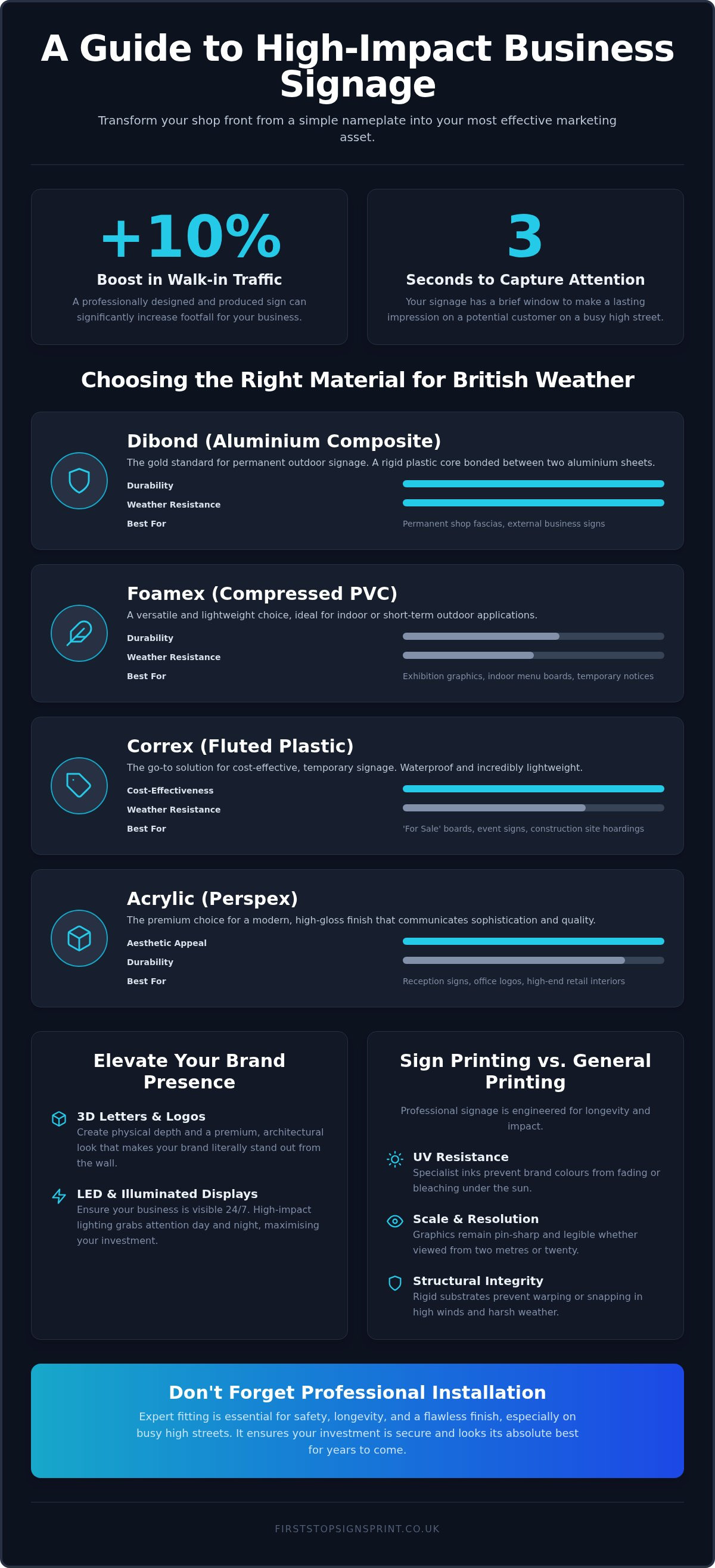
Did you know that simply upgrading your shop front can boost walk-in traffic by 10% or more? In a competitive market like London or Essex, that's often the difference between a thriving storefront and one that fades into the background. You likely already recognise that your physical presence is your most hardworking salesperson, yet it's easy to feel overwhelmed by the technical jargon of the industry. Choosing the right sign printing partner involves more than just picking a pretty design. It's about ensuring your investment survives the unpredictable British weather and looks just as sharp in three years as it does on the day of installation.
We understand the frustration of decoding terms like Dibond versus Foamex, or the worry of finding a reliable installer who actually shows up. This guide will demystify the entire process, helping you choose the perfect materials and designs to transform your brand visibility. We'll preview the end-to-end production journey, from high-impact 3D LED logos to durable shop boards, ensuring you find a local partner who handles everything from the initial sketch to the final professional installation for a seamless result.
Key Takeaways
- Understand how expert sign printing acts as a strategic investment to increase your shop's "stopping power" and boost walk-in traffic.
- Learn to distinguish between materials like Dibond and Foamex to ensure your signage remains durable and professional in all British weather conditions.
- Explore the advantages of 3D letters and LED displays for creating a high-impact, premium visual presence that works for your brand 24/7.
- Discover why professional installation is essential for safety and longevity, especially when navigating the logistics of busy London and Essex high streets.
- Gain a clear understanding of the end-to-end bespoke production process, from initial design concepts to the final expert fitting.
What is Professional Sign Printing and Why Does Your Business Need It?
Professional sign printing is the precise art of transferring high-resolution digital designs onto heavy-duty substrates designed for commercial environments. Unlike standard paper printing, this process uses specialised inks and materials that can withstand the rigours of the British climate. It isn't just about making a board; it's about engineering a visual asset that maintains its integrity under UV rays and driving rain. When you invest in professional production, you're ensuring that your brand's first impression remains flawless for years.
On a crowded UK high street, your shop front has approximately three seconds to capture a passer-by's attention. This is what we call "stopping power". Throughout the history of signage, the goal has remained the same: to communicate identity and intent. Today, bespoke signage does more than just state your name. It signals brand authority. A high-quality, professionally printed sign tells potential customers that you are established, reliable, and attentive to detail. Budget alternatives often peel or fade, which inadvertently sends a message of neglect to your target audience.
The Difference Between Sign Printing and General Printing
General printing focuses on tactile, short-term items like flyers or business cards. In contrast, sign printing demands extreme durability and specific technical considerations to ensure longevity. We focus on three critical areas that general printers often overlook:
- UV Resistance: Specialist inks prevent the sun from bleaching your brand colours within months.
- Scale and Resolution: Graphics must remain pin-sharp whether viewed from two metres or twenty.
- Structural Integrity: Substrates like aluminium composite or Foamex provide the rigidity needed for outdoor mounting, ensuring the sign doesn't warp or snap in high winds.
Signage as a Marketing Investment
Think of your sign as a permanent marketing campaign with a one-off cost. When you calculate the "cost per impression", a high-quality shop sign is remarkably efficient. In busy areas like London or Essex, thousands of people see your storefront every day. This constant physical presence builds subconscious trust and drives retail footfall. There's also a vital link to your digital presence; customers who see a professional sign are significantly more likely to remember your brand name when they search for services online later. It's the bridge between the physical street and the digital marketplace.
Comparing Sign Printing Materials: Dibond, Foamex, and Beyond
Selecting the right substrate is the most critical technical decision in the sign printing process. While your design captures the eye, the material ensures that message stays visible and structural for years. Choosing a board based solely on price often leads to warping or fading within months. Instead, we match the material to the specific physical demands of your location, ensuring your investment stands up to the elements.
Foamex, a compressed PVC foam, remains a versatile favourite for internal displays and short-term outdoor use. It's lightweight and easy to install, making it ideal for exhibition graphics or indoor menu boards. However, for permanent shop fascia, Aluminium Composite, often referred to by the brand name Dibond, is the gold standard. It consists of two thin aluminium sheets bonded to a rigid plastic core. It doesn't rust, it doesn't warp in the heat, and it provides a perfectly flat surface for high-resolution graphics. According to the International Sign Association, material selection is a primary factor in the lifecycle and safety of any commercial display.
For high-turnover signage, such as "For Sale" boards or construction site hoardings, Correx is the go-to solution. This fluted plastic is waterproof and incredibly cost-effective for temporary needs. If you're looking for a premium, high-gloss finish for a modern office reception, Acrylic or Perspex is the superior choice. It offers depth and a polished aesthetic that communicates high-end brand values instantly. If you're unsure which substrate fits your budget, our team can help you select the best custom business signs for your specific location.
Which Material Suits Your Specific Environment?
Your location dictates your material needs. In high-wind Essex coastal regions, a standard lightweight board might snap; here, we recommend 3mm or 5mm Aluminium Composite for its superior flexural rigidity. For internal office signage, the focus shifts to aesthetics. We often use clear Acrylic with reverse-printed graphics to create a sophisticated, floating effect. Temporary event signage prioritises portability, so we suggest thinner Foamex or Correx which can be easily moved and mounted without heavy-duty fixings.
Finishes and Laminates: Protecting Your Print
The print itself needs protection from more than just rain. On busy London high streets, glare from streetlights and shop windows can make a gloss sign unreadable. A matte laminate solves this by diffusing light, ensuring your text remains sharp at all hours. In urban environments prone to vandalism, anti-graffiti laminates allow you to wipe away spray paint without damaging the underlying graphics. We always use UV-stable inks in our sign printing process. These specialised pigments resist the bleaching effects of the sun, keeping your brand colours vibrant for several years rather than just one season.
Innovative Sign Printing Techniques: 3D Letters and LED Displays
Flat signage is functional, but adding a third dimension transforms a shop front into a landmark. Whilst traditional sign printing focuses on two-dimensional surfaces, modern techniques allow businesses to play with depth, shadow, and light. This shift from flat panels to 3D elements is what creates a premium brand feel. It moves your business away from being just another name on the street and positions you as an established leader in your sector.
The rise of hybrid signage has changed the game for London and Essex high streets. By combining high-resolution large format printing with 3D letters, you create a layered effect that captures attention from multiple angles. This approach ensures your branding remains legible during the day whilst gaining a completely different, high-impact personality once the sun sets. It's a strategic way to maximise the utility of your physical premises 24 hours a day.
The Power of 3D Logos
3D lettering creates a sense of prestige that flat boards simply cannot match. Built-up letters are the hallmark of professional branding, crafted from materials like polished stainless steel, brushed aluminium, or vibrant acrylic. These aren't just stuck-on shapes; they're engineered components that offer a sense of permanence. You have two primary choices for illumination: halo-lit or face-lit. Halo-lit letters project light back onto the wall to create a sophisticated glow, whilst face-lit options ensure your brand colours shine directly forward. These elements are equally effective as internal 3D wall panels, providing a focal point for reception areas that immediately builds trust with visiting clients.
LED Digital Sign Boards and Neon Alternatives
Visibility shouldn't end when your shop closes. LED technology has revolutionised the industry, offering an energy-efficient way to stay visible in London’s busy nightlife. Modern LED signs provide a sustainable alternative to traditional glass neon, which is often fragile and expensive to run. LED neon-style signs use flexible piping to achieve the same retro aesthetic but with significantly lower power consumption and zero maintenance. These systems are easy to programme, allowing you to control brightness or timing to suit your specific location. Whether you're running a late-night bar in Shoreditch or a boutique in Romford, an illuminated shop front sign ensures you're never truly invisible to potential customers.
The Importance of Professional Sign Installation and Placement
Even the most striking sign printing can be undermined by poor installation. It's a common mistake to view the physical fitting as an afterthought, yet this stage determines whether your sign lasts for a decade or fails within a year. DIY attempts often lead to premature peeling, water ingress, or, in the worst cases, serious safety hazards. In busy urban environments like London and Essex, a sign falling from a height isn't just a business failure; it's a significant legal liability. Professional installers ensure that every bracket and fixing is engineered to withstand the specific wind loads and environmental stresses of your location.
Visibility is a science. Placing a sign too high can make it invisible to pedestrians, whilst placing it too low may lead to accidental damage or obstruction. We analyse sightlines to ensure your brand is visible from the maximum possible distance. This involves calculating the optimal angle for both foot traffic and passing vehicles, ensuring your investment achieves the highest possible return. Our team combines advanced sign printing with expert engineering to ensure your brand remains prominent and secure.
The Installation Process: What to Expect
A successful project begins long before the first hole is drilled. We conduct a comprehensive site survey to assess the structural integrity of the mounting surface and the proximity of power supplies for LED elements. Depending on the material and location, we use various fixing methods:
- Hidden Rails: Provides a clean, seamless look for large fascia boards by concealing the mounting hardware.
- Stand-off Mounts: Creates a sophisticated 3D effect by floating the sign away from the wall, adding depth and shadow.
- Direct Fixing: The most secure method for heavy-duty substrates in high-wind coastal or exposed areas.
The final step is commissioning. This is where we verify that every LED is perfectly balanced and the alignment is laser-straight before we consider the job complete.
Local Regulations and Planning Permission
Navigating the UK's planning system can be complex. General rules often allow for certain types of shop front signs without formal permission, but specific triggers exist for illuminated signs or those above a certain size. London presents unique challenges, with numerous conservation areas and listed buildings that require strict adherence to heritage guidelines. We manage the compliance side of your project, ensuring your new signage meets local council requirements without delaying your launch. If you're ready to upgrade your shop front, you can book our professional sign installation services to ensure a safe and compliant result.
Bespoke Sign Printing Services from First Stop Signs Print
We provide a complete end-to-end service that takes your branding project from an initial concept to a professionally installed landmark. Our expertise in sign printing allows us to serve businesses across Romford, London, Essex, and Hertfordshire with a level of precision that off-the-shelf solutions can't match. We don't just print boards; we craft visibility solutions tailored to your specific brand identity. Whether you require a high-impact 3D logo for a corporate lobby or a weather-resistant shop front board, we manage the entire production cycle within our specialised facility.
Our capabilities extend well beyond large-scale exterior signage. We support local businesses with high-volume commercial printing needs, including custom labels, packaging, and marketing materials like business cards and flyers. This holistic approach ensures that your physical storefront, your product packaging, and your promotional leaflets all share a consistent, high-quality aesthetic. By keeping everything under one roof, we maintain strict quality control and ensure your brand colours are perfectly matched across every medium.
Why Choose a Local Specialist Over an Online Giant?
Online printing giants often leave the most challenging part of the process to you. They ship a flat board in a box and leave you to figure out the mounting, safety, and alignment. We take a different path. By choosing a local specialist, you benefit from personalised consultations where we visit your premises to understand your specific business goals. Our accountability is absolute; we handle both the manufacture and the professional fitting. This eliminates the risk of miscommunication between different contractors and ensures a fast turnaround for businesses throughout London and the Home Counties.
Getting Started with Your New Signage
Transforming your storefront begins with a simple, professional conversation. You can request a bespoke quote and a comprehensive site survey to ensure every technical detail, from wall integrity to power supply for LED signs, is accounted for. Our design team works closely with you to bring your 3D letters or LED displays to life, ensuring the final product matches your vision perfectly. We take immense pride in our craft and the measurable impact our work has on local high streets. If you're ready to elevate your brand, transform your business presence with First Stop Signs Print today.
Elevate Your Brand Visibility in 2026 and Beyond
Your physical signage is more than just a nameplate; it's a strategic investment in your business's future. By choosing high-durability materials like aluminium composite and investing in modern 3D or LED elements, you ensure your storefront works to attract customers around the clock. We've explored how professional sign printing combines technical precision with creative design to create a lasting impression on the busy high streets of London and Essex.
Success lies in the details, from the initial site survey to the final expert installation. Working with a local partner who provides a full design-to-delivery service removes the stress of managing multiple contractors and guarantees a compliant, high-quality result. Whether you're looking for a bespoke 3D logo or a high-impact shop front board, our team is ready to help you stand out from the competition.
Ready to transform your storefront? Get a Bespoke Sign Printing Quote Today and let's bring your vision to life. We're proud to support businesses across the Home Counties in becoming more visible and successful.
Frequently Asked Questions
What is the best material for outdoor sign printing?
Aluminium composite, commonly known as Dibond, is the superior choice for permanent outdoor sign printing. It consists of a rigid polyethylene core sandwiched between two thin aluminium sheets. This structure ensures the sign remains perfectly flat and resists rusting or warping in the unpredictable British weather. Whilst materials like Foamex are excellent for short-term use, aluminium composite provides the professional finish and longevity required for a permanent high street storefront.
How long does professional sign printing take from design to install?
Most projects take between seven and fourteen working days from the final design approval to the completed installation. Simple flat-panel signs are often at the quicker end of this scale. Complex projects involving custom 3D letters or LED digital sign boards may require the full two weeks due to the intricate manufacturing and wiring involved. We provide a specific timeline following your site survey to ensure your launch stays on track.
Do I need planning permission for a new shop front sign in London?
Many shop front signs fall under "deemed consent," meaning you don't need a formal application if they meet specific size and height requirements. However, you'll likely need permission if the sign is illuminated, located in a conservation area, or attached to a listed building. London councils have strict heritage guidelines that vary by borough. We recommend checking with your local planning authority or consulting our team to ensure your project remains compliant.
Can you print 3D signs with LED lighting?
We certainly can. We specialise in creating built-up 3D letters and logos that incorporate energy-efficient LED lighting. You can choose between face-lit letters, where the light shines through the front, or halo-lit options that create a sophisticated glow against the mounting surface. This combination of 3D depth and illumination ensures your brand remains highly visible and professional throughout the night in busy areas like Essex and London.
What is the difference between Dibond and Foamex?
The primary difference lies in their structural composition and intended environment. Dibond is an aluminium composite material designed for permanent outdoor use; it's incredibly rigid and weather-resistant. Foamex is a compressed PVC foam board that is much lighter and more cost-effective. Whilst Foamex is perfect for indoor displays or temporary outdoor signage, it can warp in direct sunlight over time. For a permanent shop fascia, we always recommend Dibond.
Do you offer sign installation services in Essex and Hertfordshire?
Yes, our professional fitting teams cover a wide geographical area including Romford, London, Essex, and Hertfordshire. We understand the specific logistical challenges of these locations, from navigating narrow London streets to meeting the safety requirements of busy high streets. Our end-to-end service ensures that once your sign printing is complete, it is installed securely and correctly by experts who know the local area and its specific environmental demands.
How long will a professionally printed outdoor sign last?
A professionally printed and installed outdoor sign typically lasts between five and ten years. The exact lifespan depends on the substrate chosen and the exposure of your specific location. We use UV-stable inks and high-quality laminates to prevent sun-bleaching and rain damage. Signs mounted in sheltered areas often exceed the decade mark, whilst those in exposed coastal regions may require more frequent maintenance to keep their premium, high-gloss appearance.
Can you help with the design of my business sign?
Our team provides a comprehensive design-to-delivery service to help bring your brand to life. We don't just print from provided files; we can assist with the creative layout, material selection, and technical specifications. Whether you have a clear vision or need help developing a 3D logo from scratch, our designers ensure your signage is optimised for both visibility and impact before the manufacturing process begins.


