
Your business doesn't stop when the sun goes down, but without the right visibility, your storefront might as well be invisible. In the grey, drizzly afternoons common across London and Essex, a high-quality light box is often the only thing standing between a potential customer and your competitor next door. It's frustrating to see your brand fade into the background whilst others shine brightly, especially when you're worried about whether a sign will survive the British weather or if you'll fall foul of local planning regulations.
We understand that choosing permanent signage feels like a daunting investment. You want a solution that works 24/7 without costing a fortune in energy bills or failing after the first winter storm. This guide will help you discover the perfect light box solution to illuminate your brand and drive footfall, covering everything from bespoke shop fronts to high-impact interior displays. We'll explore energy-efficient LED technology that offers up to 80% better efficiency than traditional tubes, explain how to navigate advertisement consent, and show you how professional installation ensures your brand remains a local landmark for years to come.
Key Takeaways
- Understand the psychology of illumination and how high-impact signage significantly boosts brand recall and customer trust in a competitive physical market.
- Compare the functional benefits of fabric, acrylic, and aluminium builds to ensure your chosen materials match your specific industry and aesthetic goals.
- Learn how to select a light box with the appropriate IP rating to ensure your signage remains durable and vibrant whilst facing harsh UK weather conditions.
- Discover why modern LED technology is the essential choice for energy-efficient, even illumination that eliminates "hot spots" and reduces long-term running costs.
- Recognise why professional installation is vital for meeting UK safety standards and navigating local planning regulations in areas like London and Essex.
What is a Commercial Light Box and Why Does Your Business Need One?
A commercial light box is a high-impact branding tool designed to illuminate graphics from within, ensuring maximum visibility in any environment. Whilst a general definition might answer What is a lightbox? by describing it as a simple backlit frame, for a UK business owner, it represents a strategic architectural investment. It's not just a sign; it's a glowing facade that commands attention. Unlike photography tools or temporary displays, these systems use robust frames and internal LED modules to create a professional presence. The psychology of light is a powerful driver of consumer behaviour. People are biologically programmed to notice light sources, and an illuminated sign suggests activity and security. By lighting up your brand, you're building trust and increasing brand recall through a clean aesthetic that tells customers you're open for business.
The Impact on Footfall and Brand Recognition
In the UK, the "golden hour" for retail often happens during dark winter afternoons when natural light is scarce. A standard shop board becomes a shadow on a crowded London high street, but a light box cuts through the visual noise. It acts as a beacon for pedestrians, guiding them toward your entrance whilst competitors fade into the background. For corporate offices in Romford or Essex, these signs provide a professional first impression that lasts 24/7. It signals to clients that you've invested in your physical presence, which translates to a perception of stability and quality. You'll find that visibility directly correlates with footfall, especially during the long evening hours when non-illuminated signs simply disappear.
Light Boxes vs. Traditional Signage
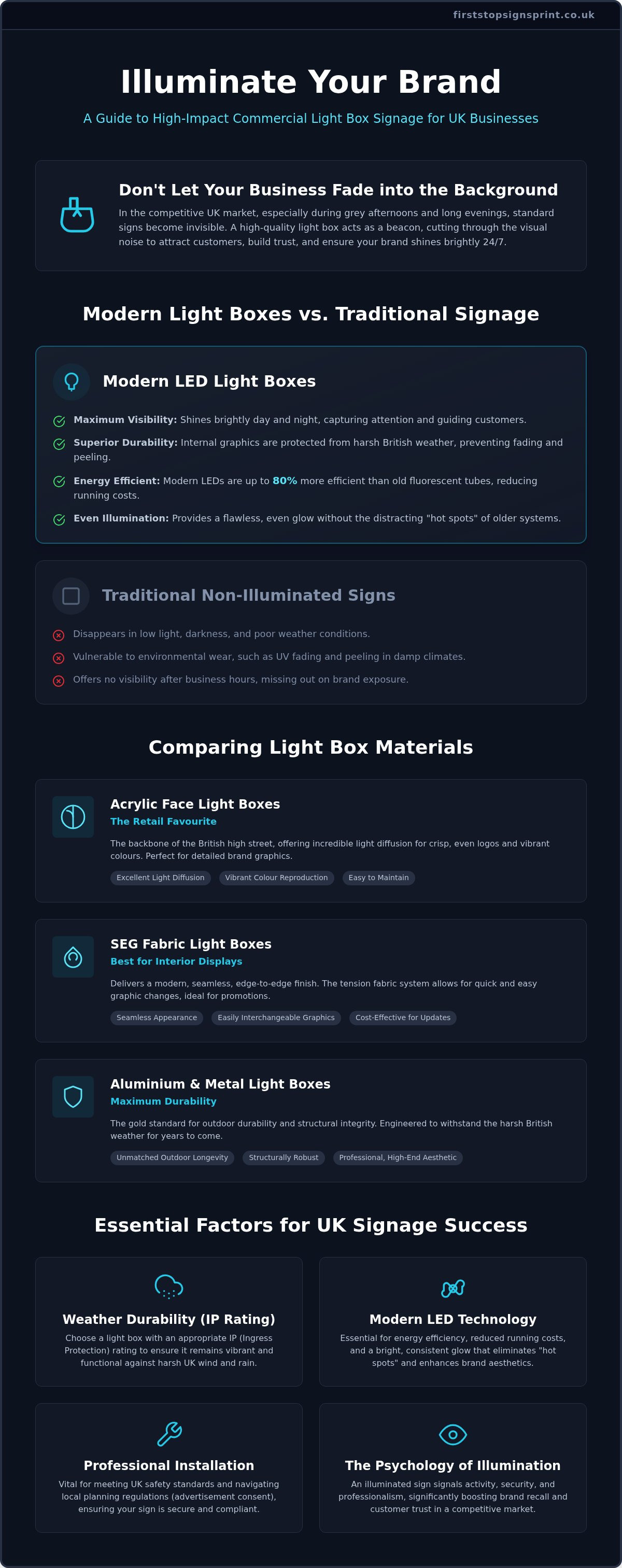
Traditional non-illuminated signs often suffer from environmental wear. Printed colours fade under UV exposure, and boards can peel in the damp British climate. Modern light boxes, specifically those using bespoke metal or acrylic builds, offer superior durability. They protect the internal graphics from the elements, ensuring your brand looks fresh for years. Design versatility is another major advantage. You can transition from sleek, minimalist bars to traditional retail fronts with ease. Modern LED technology has also revolutionised running costs. Current modules are up to 80% more energy-efficient than old fluorescent tubes. They provide a bright, even glow without the "hot spots" or high electricity bills associated with older systems. Choosing an illuminated option means your marketing works for you even when the shutters are down.
Comparing Light Box Types: Fabric, Acrylic, and Aluminium
Selecting the right material for your light box isn't just an aesthetic choice; it's a decision that impacts longevity and maintenance. For permanent shop fronts in Romford or high-traffic London interiors, you need a build that matches the environment. Bespoke design allows you to tailor these materials to your specific brand identity, ensuring the final product looks intentional rather than off-the-shelf. The choice often comes down to whether you're prioritising the vibrant colour of retail graphics or the structural integrity required for the British weather.
Acrylic Face Light Boxes: The Retail Favourite
Acrylic face systems are the backbone of the British high street. They offer incredible light diffusion, which ensures your logo looks crisp and even without any visible LED "hot spots". This material allows for vibrant colour reproduction, making it ideal for brands with complex, high-detail logos. Beyond the visual appeal, acrylic is remarkably easy to maintain. A simple wipe-down keeps the surface clear, which is essential for preserving a professional look in busy urban areas where road grime can quickly dull a sign's impact.
SEG Fabric Light Boxes: Best for Interior Displays
Silicone Edge Graphic (SEG) fabric boxes are the preferred choice for corporate lobbies and high-end exhibitions. They provide a seamless appearance with no visible frame edges, resulting in a modern, edge-to-edge finish. One of the biggest advantages of fabric is the ease of changing graphics. Because the fabric tension system allows for quick swaps, businesses can update seasonal promotions or event branding in minutes without professional help. This versatility makes them a cost-effective solution for hospitality venues and retail interiors that require frequent visual updates.
Aluminium and Metal Light Boxes: Maximum Durability
Aluminium is the gold standard for outdoor durability. It provides the structural integrity needed for large-scale installations and is naturally resistant to rust, making it perfect for the damp UK climate. These premium metal builds often incorporate advanced weatherproofing features to protect internal electronics from rain and frost. When planning an external installation, you should consult the UK government guidelines for outdoor advertising to ensure your signage complies with local safety standards. If you're looking for a sign that combines luxury with long-term resilience, our team can help you design custom business signs that stand up to the elements whilst maintaining a high-end aesthetic.
Indoor vs. Outdoor Light Boxes: Navigating UK Requirements
Deciding between an indoor and outdoor light box involves more than just picking a location. It requires a technical understanding of Ingress Protection (IP) ratings. For interior displays, an IP20 rating is often sufficient to protect against dust. However, for a shop front in Romford or a high-street branch in London, you need at least IP65. This ensures the internal LED components remain bone-dry even during a heavy Essex downpour. Without proper sealing, moisture leads to short circuits or unsightly condensation behind the acrylic face, ruining your professional image and requiring costly repairs. Consulting with a professional signage company ensures your hardware matches the environmental demands of your specific site.
Outdoor Durability and Weatherproofing
UK weather conditions are notoriously unpredictable. Your signage must withstand biting frost, constant rain, and high wind loads without flickering or failing. Projecting light boxes act like sails in heavy gusts, so the structural mounting must be engineered to meet British safety standards. We use advanced sealing techniques to prevent moisture build-up, whilst UV-resistant inks ensure your brand colours don't fade during the rare British heatwave. Choosing the right material, such as a bespoke aluminium frame, provides the necessary rigidity to prevent warping over time. These builds are specifically designed to outlast generic imports that often crack or yellow after a single winter season.
UK Planning Permission and Compliance
Compliance is often the most confusing part of the process for many business owners. Most illuminated signs require advertisement consent from your local planning authority, which currently carries a standard application fee of £132 in England. This is particularly strict in conservation areas across Essex and Hertfordshire, where traditional aesthetics are protected and bulky modern fixtures may be rejected. To meet the UK government's minimum requirements for illuminated signs, you must also consider specific brightness levels to avoid light pollution. Most local councils stipulate a maximum brightness of 300 candelas per square metre during daylight hours, with a mandatory reduction to 50 candelas after sunset. Professional installation ensures your sign is not only secure but also fully compliant with these environmental and safety regulations, preventing potential fines or forced removals later on.
Choosing the Right LED Technology and Brightness
LED technology has completely transformed the signage industry, rendering old-fashioned fluorescent tubes obsolete. Modern light box systems now rely on high-quality LED modules that offer up to 80% better energy efficiency and a lifespan that often exceeds 50,000 hours. This shift isn't just about saving money on electricity; it's about reliability. You don't want a flickering sign outside your Romford shop after only six months of use. A professional build ensures even light distribution across the entire face, eliminating the distracting "hot spots" often seen in budget imports where the individual bulbs are visible through the acrylic. By choosing a high-quality internal layout, you ensure your brand looks crisp and professionally lit from every angle.
Colour temperature, measured in Kelvin (K), defines the visual warmth or coolness of the light source, ranging from the amber tones of traditional bulbs to the crisp blue-white of daylight.
Colour Temperature and Brand Accuracy
Choosing the right Kelvin rating is vital for maintaining brand integrity. Cool white LEDs, typically around 6000K, are a popular choice for retail as they provide a sharp, modern look that makes colours appear more vivid. Warm white, around 3000K, is often preferred by hospitality businesses in Essex to create a more inviting, relaxed atmosphere. If your logo has specific pantone colours, the light source must complement them; otherwise, your vibrant red might look dull or slightly orange under the wrong light. We help you match your interior lighting with your external signage to ensure a cohesive visual experience for every customer who walks through your door.
Smart Controls and Automation
Managing your sign's operation shouldn't be a manual chore. You can organise your display's schedule using integrated timers and light sensors that automatically activate the sign as dusk falls. This is particularly useful for London businesses where lighting needs to adjust to varying daylight hours throughout the year. Remote-controlled dimming is another excellent feature for interior displays, allowing you to tweak the mood for evening events or late-night trading. Many of our systems now integrate directly with existing smart building controls, giving you total command over your energy usage and visibility. If you're ready to upgrade your storefront with high-efficiency LED signs, our team can design a bespoke solution that combines peak performance with lower running costs.
Professional Installation: The Key to Signage Longevity
Professional installation is the vital bridge between a manufactured product and a permanent brand asset. Whilst it might be tempting to view a light box as a simple fixture, commercial applications demand a level of structural precision that off-the-shelf solutions cannot provide. A sign that isn't properly secured is more than just a visual disappointment; it's a potential liability on busy London high streets. Expert installers ensure that every unit is perfectly level, structurally sound, and fully compliant with UK safety standards. This final stage of the process is where your investment truly transforms into a glowing landmark for your business.
The Professional Installation Process
Our methodology begins with a comprehensive site survey to check wall integrity and power availability. We don't just fix a sign to a surface; we identify the optimal cable routes and structural support points to ensure a clean, cable-free finish. For larger shop sign boards, we employ heavy-duty mounting systems specifically designed to resist the high wind loads common in the UK. Once the frame is fixed, our team handles the electrical commissioning, testing the internal LED modules to ensure the power supply is integrated safely and efficiently into your building's existing infrastructure.
One area where generic signage often fails is the integration of physical depth. By mounting 3D letters onto the face of a bespoke light box, you create a sophisticated multi-dimensional effect that commands attention. This pairing of 3D signs and internal lighting offers a high-end aesthetic that helps luxury brands and boutiques stand out in crowded urban centres. To maintain this visual impact, we recommend a simple maintenance schedule: annual electrical inspections and bi-annual cleaning of the exterior face to remove urban pollution and preserve the clarity of your graphics.
Why First Stop Signs Print is Your Local Partner
We pride ourselves on being a dedicated local partner for businesses across Romford, London, and the Home Counties. Our bespoke approach ensures every sign is manufactured in the UK to meet our exacting standards for durability and visual impact. We understand the specific logistical challenges of the area, from North London parking permits to managing site access on narrow Essex high streets. By merging our skills in 3D logo design with advanced LED signs, we deliver a storefront that works for you 24/7. We take full responsibility for the quality of our work, ensuring the entire process is as seamless as possible from the initial design to the final bolt. If you are ready to illuminate your brand, enquire about your bespoke light box today and let us help you command the physical space.
Illuminate Your Brand's Future
Investing in a professional light box is one of the most effective ways to ensure your business remains a focal point in the local landscape. By choosing durable materials like aluminium and energy-efficient LED modules, you're not just buying a sign; you're securing a 24/7 marketing asset that drives footfall even in the darkest months. We've explored how navigating IP ratings and planning regulations is essential for long-term success, especially in conservation areas across London and Essex.
Our team at First Stop Signs Print combines high-quality British manufacturing with bespoke 3D and LED design expertise to deliver signage that truly reflects your brand's quality. Whether you're refreshing a shop front in Romford or fitting out a corporate office in North London, our professional installation service ensures your sign is safe, compliant, and built to last. Don't let your brand fade into the background when you can shine brightly amongst the competition. Get a Bespoke Quote for Your Business Light Box today and take the first step toward a more visible, professional future. We're ready to help you light up your storefront with a solution that's as unique as your business.
Frequently Asked Questions
Do I need planning permission for a light box sign in the UK?
Most external illuminated signs require advertisement consent from your local planning authority. This process is governed by national regulations and currently requires a standard application fee of £132 in England. Rules are often stricter if your business is located in a conservation area or a listed building in Essex or London. It's best to consult your specific borough's planning department to ensure your light box meets local brightness and safety standards before installation.
How much electricity does a modern LED light box use?
Modern LED systems are incredibly efficient, using up to 80% less electricity than traditional fluorescent tubes. A standard-sized light box typically runs on low wattage, making it a cost-effective choice for 24/7 visibility. Because LEDs generate very little heat, they also reduce the strain on your building’s electrical system. You can further lower running costs by using automated timers or light sensors that ensure the sign only operates when it's actually needed.
Can I change the graphics in my light box myself?
Your ability to change graphics depends entirely on the specific frame design. SEG fabric boxes are designed for quick, tool-free swaps, making them ideal for businesses with seasonal promotions. However, permanent acrylic-faced shop boards usually require professional assistance to ensure the face is resealed correctly against the weather. Attempting to open an outdoor unit yourself could compromise its waterproof integrity, so we recommend professional help for any permanent external signage updates.
How long do LED light boxes typically last?
High-quality LED modules are built for longevity, often exceeding a lifespan of 50,000 hours of continuous use. For a business operating twelve hours a day, this translates to over eleven years of reliable illumination. Unlike old fluorescent bulbs that flicker and dim over time, LEDs maintain consistent brightness until the end of their life cycle. Choosing a bespoke build with premium components ensures your light box remains a vibrant part of your storefront for a decade or more.
What is the best material for an outdoor light box in the UK?
Aluminium is widely considered the gold standard for outdoor signage in the UK. It's naturally resistant to rust and provides the structural integrity needed to withstand high wind loads and heavy rain. Whilst acrylic is excellent for the sign's face, the frame should be metal to prevent warping over time. A bespoke aluminium build offers a premium aesthetic that outlasts generic plastic imports, ensuring your investment remains professional and secure in the damp British climate.
Are light box signs waterproof?
Commercial outdoor signs are designed to be weather-resistant, but they must have the correct Ingress Protection (IP) rating. We recommend at least an IP65 rating for any external light box to ensure it stays bone-dry during heavy downpours. This rating confirms the unit is sealed against dust and low-pressure water jets from all directions. Proper sealing prevents condensation from building up behind the face and protects the internal electronics from the UK's frequent rain and frost.
Can you create a bespoke shape for my light box logo?
We can certainly create bespoke shapes to match your branding. Modern manufacturing allows us to move beyond simple rectangular boxes to create 3D logos and contoured signs that follow the exact outline of your brand. By combining 3D letters with internal LED lighting, you get a unique visual impact that standard signs can't match. These custom-shaped units are particularly effective for corporate offices and high-end retail outlets in London looking to make a distinctive impression.
How do I clean and maintain my light box sign?
Maintaining your sign is straightforward but essential for longevity. For the exterior, a gentle wipe with a soft cloth and mild soapy water will remove urban grime and road dust. Don't use abrasive chemicals that could scratch the acrylic face. We also recommend an annual professional maintenance check. This ensures the mounting brackets remain secure and the electrical connections stay safe, keeping your light box looking brand new and functioning perfectly for years to come.


