
The most expensive-looking label isn’t always the one with the most foil. A carefully chosen metallic detail can make packaging feel premium, whilst too much shine can distract from the brand. Getting metallic foil labels printing right means choosing a finish that suits your design, product and production run.
If you’re unsure whether hot foil or digital foil is the better fit, or concerned that a finish could peel, dull or clash with your existing signage, you’re not alone. Labels are miniature brand touchpoints, much like a high-impact 3D shop sign. Their look and feel can shape how customers see your product.
This guide explains the differences between foil printing methods, what to consider when choosing label materials, and how to plan for durability and colour consistency. It also covers practical details to discuss with a UK print partner when your requirements are bespoke or you need repeat orders. First Stop Signs Print provides commercial printing and signage from Romford, serving London and Essex. Read on to make a confident, informed choice for your next label project.
Key Takeaways
- Choose a metallic finish that supports your brand’s intended look, from reflective gold and silver to more contemporary foil effects.
- Compare hot foil stamping and digital foil against your design, run size and need for repeat orders.
- Use metallic foil labels printing to add a considered detail, and choose a label format that suits how it will be applied.
- Check material, adhesive and production requirements early so the label suits its packaging and intended use.
- Ask how bespoke label printing could complement your wider signage and brand identity.
The Impact of Metallic Foil Labels on Premium Branding
A metallic accent can make a label feel more considered before a customer has even handled the product. Metallic foil labels printing adds reflective detail to packaging, drawing attention to a logo, product name or other focal point. The effect can suggest quality and exclusivity, particularly when the foil is used with restraint and supports the wider brand identity.
Metallic effects can be created with metallic inks or by applying a thin foil layer to a printed surface. Foil catches the light differently from flat colour, creating contrast that can help packaging stand out. An artisan food or drink maker might use foil to highlight a name or emblem, whilst a cosmetics brand might use a small detail to reinforce a refined look. It can also refresh standard packaging without requiring a complete redesign. The best option depends on the packaging, artwork and production method.
For a practical look at home label printing and the choices involved, watch this video:
Tactile Quality and Shelf Appeal
Foil adds visual and tactile contrast. Its reflective surface catches the eye, whilst the difference between smooth foil and the label stock invites closer inspection. On a crowded shelf, one focused detail can help customers notice your product without overwhelming the design. A well-finished label may support premium positioning, but it cannot replace product quality or clear, legible information. Keep foil purposeful and ensure essential text remains easy to read.
Hot foil stamping uses heat and pressure to transfer foil. For an overview of the traditional technique, see Hot stamping.
Cohesive Branding from Shop Front to Sticker
Your packaging is part of the same physical brand experience as your shop front. Consider how label colours and metallic accents sit alongside your bespoke shop signs. A foil shade can look different under varied lighting or on different materials, so assess proofs in the settings where customers will see them. This helps you make informed decisions about colour and finish across different brand touchpoints.
Professional printing provides a consistent production process for repeat branding, whilst DIY methods can be useful for testing an idea or making small quantities. If labels need to align with established signage, discuss the artwork, material and finish with your printer. First Stop Signs Print provides commercial printing and signage, including labels and bespoke signs. Ask whether the foil finish and construction you have in mind are suitable for your project.
Metallic Foil Labels Printing: Choosing the Right Finish
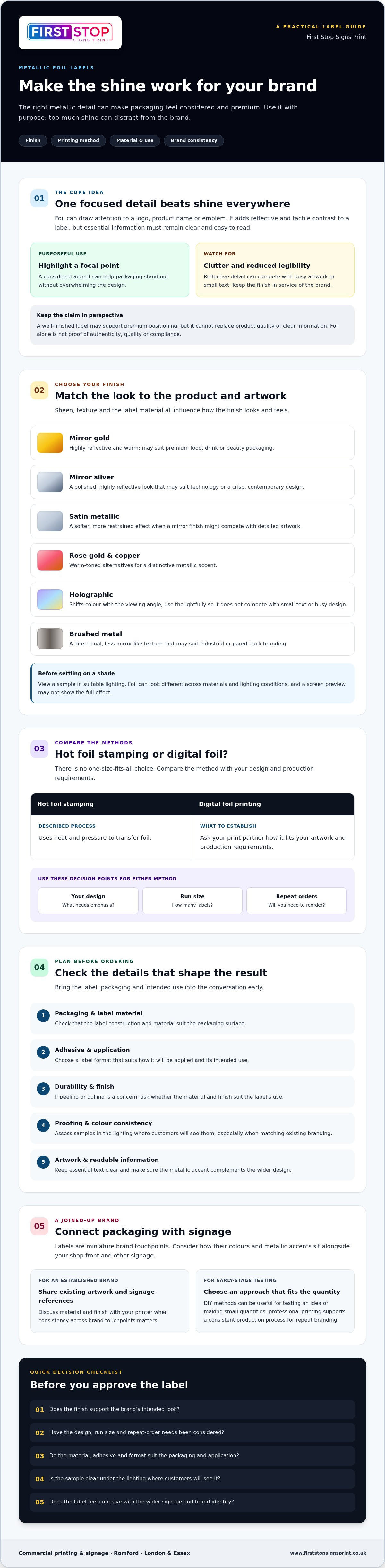
The right foil finish depends on more than colour. Its sheen, texture and interaction with the label material all affect how customers see and handle your packaging. Before choosing a shade, consider the product, the surrounding design and the surface the label will sit on. A sample viewed under suitable lighting can reveal differences that a screen preview may not show.
Gold and Silver: The Standard of Excellence
Mirror gold and mirror silver have a polished, highly reflective appearance, similar to a small metal plate. Gold can bring warmth to premium food, drink or beauty packaging; silver may suit technology products or designs aiming for a crisp, contemporary look. These are design choices, not indicators of a product’s quality or compliance.
Satin metallic finishes soften reflections for a more restrained, matt effect. They can work well when you want a refined accent that doesn’t compete with detailed artwork. Consider the feel as well as the appearance: a smooth mirror finish differs from a textured label, whilst satin foil creates a quieter effect both visually and to the touch.
Speciality Foils: Holographic and Brushed Metal
Rose gold and copper add warmth, whilst holographic foil shifts colour as the viewing angle changes. That movement can create a striking effect, but it may compete with small text or a busy design. Holographic detail can contribute to a distinctive appearance, but it shouldn’t be treated as proof of authenticity on its own. Brushed metal effects offer a less mirror-like, directional texture that may suit industrial or pared-back branding.
The Foil & Specialty Effects Association provides industry resources on foil and specialty print effects. Its information can help you prepare questions about the process and material choices for your printer.
Substrate changes the result. On clear vinyl, reflective foil can appear against the product or contents behind the label. Ask whether an opaque backing or an additional printed layer is needed to achieve the intended look. Textured paper adds tactile character, but its surface may affect how continuous and even the foil appears. Don’t assume one adhesive suits every stock. Ask your printer to confirm that the proposed label construction is appropriate for the surface and conditions of use.
For a consistent result, compare a printed sample with your packaging and existing brand colours. Metallic finishes can look different under shop lighting, daylight and on-screen previews. These checks are useful when planning metallic foil labels printing, especially if you’re matching labels to other physical branding. If you’re planning bespoke labels alongside signage, you can explore label printing and signage with First Stop Signs Print.
Hot Foil Stamping vs. Digital Foil Printing: Which is Best?
The right method depends on the finish you want, the size of your run and how likely the artwork is to change. Hot foil stamping uses heat and pressure to transfer foil with a custom die. Digital foil applies foil to selected printed areas without a bespoke die. Both methods can create striking labels, but their tactile effects and production requirements differ.
The Traditional Hot Foil Process
A metal die presses the foil onto the label stock. Depending on the material and setup, the pressure can leave a defined impression, giving the design a tactile quality that flat printing doesn’t replicate. This depth and crisp foil detail can suit premium spirits or perfume packaging, where a small emblem or brand name needs to feel deliberate.
The trade-off is preparation: a custom die must be made, adding a step before production. Ask the printer to confirm the schedule, particularly if your artwork is still being approved. Hot stamping can become more cost-efficient for larger, repeat runs because the initial die-making effort is spread across more labels. The point at which it makes sense depends on the quote, quantity and likelihood of reorders.
Digital Foil Innovations
Digital foil avoids a custom die, which can make it a practical option for short runs, boutique launches and designs with variable details, such as individual names or unique codes. It usually produces a smooth foil surface rather than the pressed impression associated with traditional stamping. This can suit a clean, modern design, but it won’t provide the same tactile depth.
Foil and CMYK can work together: use colour printing for imagery and information, then reserve foil for a logo, border or key detail. This keeps reflective areas purposeful and can help small text remain legible. Discuss how the foil layer will register with the printed artwork, and request a proof if precise alignment matters.
Neither method alone determines whether a label will withstand moisture, oils or scuffing in transit. Stock, adhesive, protective coatings and handling all affect performance. Tell your printer how the product will be stored and used, then test a sample against those conditions before committing to a larger run.
For a related application, see this guide to professional vinyl sticker printing. If you’re comparing bespoke label options with wider branding, you can also explore First Stop Signs Print’s commercial printing services.
Essential Buying Guide: Factors to Consider Before Ordering
A successful label order starts with how the labels will be used, not just how they look. Before requesting a quote for metallic foil labels printing, confirm the quantity, application method, packaging conditions and artwork requirements. These details help a printer recommend a suitable format and production approach, and make it easier to compare quotes on the same basis.
Consider the total cost as well as the cost per label. A larger quantity may reduce the unit cost, but it only makes sense if you can use and store the labels properly before the adhesive or printed finish is affected. Ask whether the price includes setup or tooling, and check how repeat orders are handled if you expect to reorder.
Rolls vs. Sheets: A Practical Comparison
Roll labels are often a practical choice for automated or high-volume packaging lines, provided the roll dimensions, winding direction and core suit your applicator. Sheets can be easier to handle for small batches, samples or promotional events where labels will be applied by hand. Tell your printer how you’ll apply the labels and confirm the format will work with your equipment or workflow.
Store unused labels as advised by the printer. Heat, moisture and prolonged exposure to direct sunlight may affect label materials or adhesive performance, so don’t assume that a foil finish protects the label. Ask about storage conditions and the recommended shelf life for the construction you choose.
Technical Checklist for Perfect Foil Results
Fine lines and small lettering can lose definition if the foil detail is too delicate for the chosen process. There’s no single minimum line weight or font size that suits every stock and printing method, so request the printer’s artwork specifications before finalising your design.
- Use vector artwork for logos and foil shapes where possible. Paths and curves can retain clean edges when scaled, unlike low-resolution images.
- Separate the foil area from the CMYK artwork on a clearly named spot-colour layer, following the printer’s file guidance. This identifies exactly which parts should receive foil.
- Allow for finishing by confirming bleed, safe zones and registration tolerances. Keep important text clear of trim edges and avoid tiny details where slight movement could affect legibility.
- Check the real application by reviewing a proof or sample on the intended packaging, particularly if labels need to withstand refrigeration, moisture, sunlight or handling in transit. Ask which material, adhesive and protective finish suit those conditions.
For visual consistency, compare your label artwork with your existing sign design. Repeating the same logo and colours, with considered use of metallic detail, can connect packaging to your wider brand presence. To discuss bespoke commercial printing and signage, find out more about label printing from First Stop Signs Print.
Bespoke Foil Label Solutions from First Stop Signs Print
A label doesn’t have to work alone. It can carry the same visual identity as your packaging, shop front and other customer-facing materials. First Stop Signs Print provides bespoke commercial printing and signage from Romford, serving businesses across London and Essex. If you’re developing a wider brand presentation, discuss how labels could fit alongside your other printed materials and signage.
Metallic foil labels printing can add a compact, high-impact detail to packaging. The foil process and suitable stock depend on the artwork and application, so confirm which options are available for your project. Share your artwork, intended use and any existing brand references early, so the production requirements can be considered alongside the visual result.
Why Choose a Local UK Printer?
For businesses in London and Essex, working with a printer based in Romford offers a nearby point of contact for project discussions and repeat commercial printing. Clear communication helps resolve practical questions, from artwork and label use to how a design should sit alongside existing signage. Confirm the schedule for your individual order rather than assuming a particular turnaround.
Beyond Labels: A Complete Visual Solution
Think of a foil label as a miniature counterpart to a shop sign: both can use colour, contrast and carefully placed detail to make a brand more visible. First Stop Signs Print’s label printing can complement its 3D signage and LED displays, helping connect the impression customers get outside a premises with the product they encounter inside.
For example, a business might carry a recognisable logo and consistent colour choices from its shop front onto product packaging. The finish need not be identical across materials; the aim is a coherent identity that feels considered at every touchpoint. Explore the role of 3D lettering in creating a strong physical presence, then consider how labels can continue that visual story.
First Stop Signs Print offers support from design through to production for commercial printing and signage projects. If you’re planning a launch or repeat order, outline the quantities and requirements so the team can discuss a suitable approach. Ask whether the foil process and materials you need are available for your labels.
Make Your Next Label Work Harder
A premium label is more than a finishing touch. It carries your brand into customers’ hands and can connect product packaging with the identity they see at your premises. Start with a clear purpose: decide what the foil should draw attention to, then choose a printing method, material and format that suit the design and how the label will be used.
Metallic foil labels printing can bring that detail to life, but consistency matters across every physical touchpoint. Treat your label as a miniature expression of your wider brand, not an isolated item. Clear artwork, suitable materials and a considered finish all contribute to a polished result.
First Stop Signs Print provides bespoke commercial printing and signage from Romford, serving London and Essex, with support from design through to production. For labels that complement your signage and packaging, contact First Stop Signs Print to discuss your label project.
With a clear brief and a suitable production approach, a small detail can contribute to a confident, cohesive brand impression.
Frequently Asked Questions
Are metallic foil labels waterproof and suitable for outdoor use?
They can be suitable, but a metallic finish alone doesn’t make a label waterproof or weather-resistant. Performance depends on the face material, adhesive, protective coating and the conditions it will face. For outdoor products or refrigerated packaging, tell your printer about exposure to rain, condensation, sunlight and temperature changes. Ask which construction is appropriate, and test a sample in the intended setting before placing a larger order.
What is the difference between metallic vinyl and foil stamping?
Metallic vinyl gets its appearance from a metallic effect within or on the label material itself. Foil stamping applies a separate foil layer to selected areas, typically using heat and pressure with a die. Stamping can create a distinct reflective accent and may leave a tactile impression, depending on the process and stock. The right option depends on your design, application surface and desired finish.
Can I print full-colour images alongside metallic foil accents?
Yes, full-colour printing can be combined with foil accents. For example, a product image and small-print details can be printed in CMYK, whilst foil highlights a logo, border or product name. Keep reflective areas purposeful so they don’t compete with important information. Your artwork should clearly separate the foil areas from the colour artwork, and the printer should confirm file setup and registration requirements before production.
What is the minimum order quantity for bespoke foil labels in the UK?
There isn’t one universal minimum order quantity for bespoke foil labels. It varies by printer, printing method, label format and whether tooling is required. First Stop Signs Print provides label printing and bespoke commercial printing, but a specific minimum quantity isn’t confirmed here. Include your expected quantity, dimensions, artwork and intended use when requesting a quote, then ask what options suit your run size and repeat-order plans.
How should I prepare my artwork for foil printing?
Prepare a print-ready file and follow the printer’s artwork specifications before finalising the design. Vector artwork is useful for logos and foil shapes because paths can retain crisp edges when resized. Keep the foil areas on a clearly labelled spot-colour layer, separate from CMYK artwork. Confirm minimum line weights, type sizes, bleed, safe zones and registration tolerances with your printer, as requirements vary by process and material.
How long does it take to produce custom foil labels?
Production time depends on the printing method, artwork approval, material availability, order quantity and whether a custom die is needed. Die-based hot stamping includes a tooling step, whilst digital foil doesn’t require a bespoke die. First Stop Signs Print hasn’t confirmed a standard turnaround for foil labels, so ask for a project-specific schedule. Allow time for proofing and any artwork changes before approving production.
Do foil labels peel off easily or are they permanent?
Foil doesn’t determine whether a label is removable or permanent. Adhesive choice, label material, the surface being labelled and application conditions all affect how securely it sticks and whether it can be removed cleanly. Tell your printer if the surface is curved, textured, cold or exposed to moisture or oils. Before ordering in volume, test a sample on the actual packaging and check it after handling and storage.
Can you match the foil colour to my existing shop signage?
A printer can use your existing signage as a reference when planning a coordinated label finish, but an exact visual match can’t be assumed. Foil reflects light, so its appearance changes with viewing angle, surroundings and surface material. Share brand artwork or physical references, and compare a printed proof or sample with the sign under similar lighting. First Stop Signs Print provides commercial printing and signage from Romford across London and Essex.


