
Clear packaging doesn’t guarantee clear branding. Transparent labels for jars can create a clean, premium look, but the jar and its contents show through any unprinted areas. If the contrast is poor, text and colours may be hard to see. The result depends on how the label material, adhesive and artwork work together.
Choosing a clear label means considering the container, how it will be handled and what needs to be legible. This guide explains how to compare materials and finishes, assess adhesive suitability, use white ink where appropriate and prepare artwork for print. First Stop Signs Print provides commercial label printing with design and production support. Confirm current clear stock and specifications directly before ordering, and use the questions in this guide to brief your printer.
Key Takeaways
- Transparent labels for jars can give packaging a product-led appearance when the design works with the jar and its contents.
- Compare clear material options with a printer, and explain how the jar’s shape, surface and handling conditions may affect adhesive suitability.
- Plan contrast, type and spacing around what will show through unprinted areas so important details stay easy to read.
- Measure the usable label area carefully, allowing for curves, seams and shoulders before preparing artwork.
- Before ordering, ask the printer to confirm clear stock, adhesive, print options, finishes and proofing for your requirements.
Transparent labels for jars: what they are and when they work best
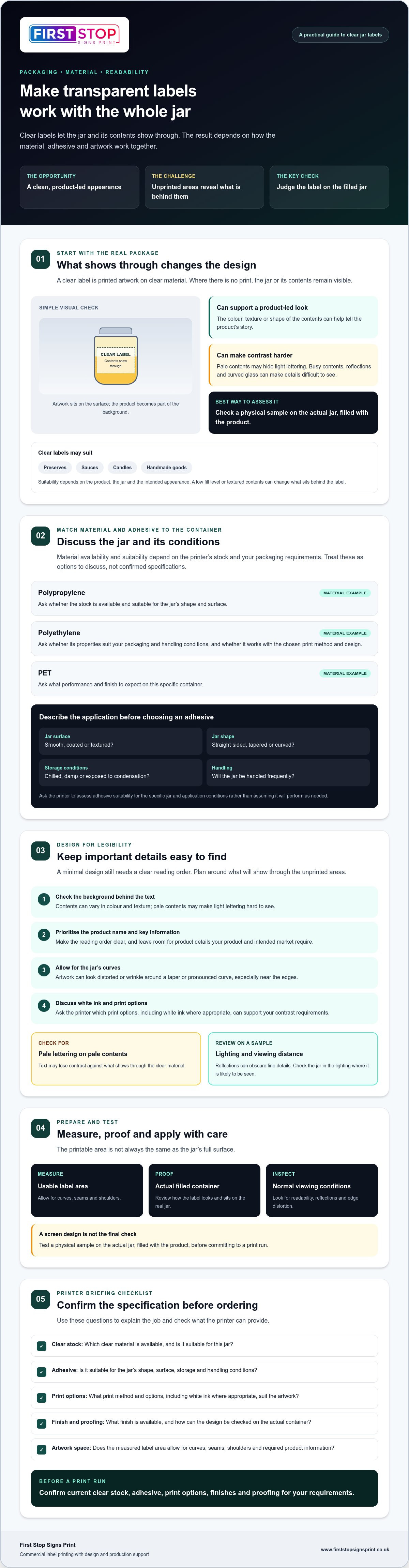
A transparent jar label is printed artwork on clear material, with the jar or its contents visible through any unprinted areas. Unlike an opaque paper label, it lets the container remain part of the design. This can create a restrained, premium or product-led look when the colour, texture or shape of the contents helps tell the product’s story.
The finished appearance depends on more than the artwork. The jar’s surface, what is inside it, how the packaging will be handled and the label specification all matter. Assess transparent labels for jars on the actual filled container rather than relying on a screen design alone.
For an overview of clear-label design and application, watch Getting the Most out of Your Clear Labels from OnlineLabels:
Which jars and products suit clear labels?
Clear labels may suit preserves, sauces, candles and handmade goods when the container or product is intended to remain visible. A jewel-toned preserve can add colour behind the design, while a pale sauce may provide less contrast. Textured contents, such as chopped ingredients, can create a busy background. A low fill level may also leave some parts of the label backed by empty space.
Jar shape matters too. A label that looks balanced on a straight-sided jar may distort or wrinkle around a taper or pronounced curve. Test a sample on the actual jar, filled with the product, before committing to a print run. This lets you check the appearance and how the label sits on the surface.
What can make a transparent label hard to read?
Pale contents can make light lettering disappear, while reflections may obscure fine details. Curved glass can also distort the artwork visually, particularly near the edges. Even a minimal design needs a clear reading order, with the product name and other important information easy to find.
Check a physical sample in the lighting where the jar is likely to be seen, and view it from a normal viewing distance. Ask the printer how the proposed adhesive suits your jar and application conditions. A pressure-sensitive adhesive bonds when pressure is applied, but its suitability for a particular surface should be confirmed rather than assumed.
Choose transparent jar label material and adhesive for the container
Choose a clear label specification around the jar and its use, not just its appearance. Transparent labels for jars may use different film materials, but availability and suitability depend on the printer’s stock and your packaging requirements. Treat polypropylene, polyethylene and PET as options to discuss, not as confirmed specifications from any particular print provider.
Describe the jar’s shape and surface, then explain how the product will be stored and handled. A straight-sided glass jar presents a different application surface from a tapered or textured one. Mention moisture, refrigeration, condensation and frequent handling so the printer can assess those conditions rather than leaving performance to assumption.
How should you assess label material for a glass jar?
Ask whether the proposed clear stock suits the jar’s surface and the conditions it will encounter. Use the table as a starting point for that discussion. These are general material examples only, so confirm each option’s availability and suitability with your print provider.
| Material example | Use considerations | Questions for the printer |
|---|---|---|
| Polypropylene | Discuss it as a possible clear film for the intended jar and application. | Is this stock available, and is it suitable for the jar’s shape and surface? |
| Polyethylene | Ask whether its properties suit your packaging and handling conditions. | Can it be used with the chosen print method and label design? |
| PET | Consider it as another clear-film option to assess with the printer. | What performance and finish should I expect on this specific container? |
If the jar will carry product information as well as branding, plan the available label space before finalising the artwork. Check which details your product and intended market require, then leave room for them alongside the design.
Which adhesive questions should you ask before ordering?
Tell the printer whether the jar is smooth, coated or textured, and whether it will be chilled, exposed to condensation or handled often. Ask them to confirm adhesive suitability for that specific jar and use case. Don’t rely on a generic description alone. Test a sample on a clean jar under relevant conditions, then check how it applies and stays in place before approving a larger order.
Once you’ve gathered those details, discuss your label-printing requirements with First Stop Signs Print. Confirm clear stock, adhesive, print method, finish and order format directly, as these specifications need to be checked for your project.
Design transparent labels for jars that remain easy to read
With a clear label, unprinted areas reveal the jar and its contents, making the product part of the artwork. That can add depth, but it can also change how colours appear. A pale sauce behind a coloured logo may soften it, while dark preserves can make fine dark lettering hard to distinguish. Design against the real contents, not just a white artboard on screen.
Legibility depends on contrast, contents and viewing conditions. Give the product name a clear place in the visual hierarchy, then use spacing to separate it from supporting details. A bold brand name may remain easy to spot where small descriptive text blends into a busy background. Avoid relying on subtle colour differences alone. Check that text is readable at the size and distance at which customers will view the jar.
How do colour and white ink affect clear label artwork?
Colours designed on white paper can look different on clear stock because the jar or product shows through. Ask the printer whether white ink or another backing option is available for your artwork, and how it would be layered with the other colours. Confirm availability, print method and the expected colour result before building the design around them.
Decide which parts of the design should remain transparent and which need a more solid appearance. Mark those areas clearly in your artwork brief, then ask the printer how they will appear in the proof. This helps you judge whether the balance between visible contents and distinct branding suits your intended look.
What artwork details should you check before approval?
Review the proof against the printer’s file specifications. Confirm spelling, text hierarchy and logo placement, and check that key elements sit within the stated safe area. Check bleed requirements too, especially if artwork extends to the edge of the label. A proof displayed on screen may not show the final appearance on transparent material.
Use this checklist before approving:
- View the proof at actual size and check that essential text is clear.
- Compare the colours with the jar and product visible behind unprinted areas.
- Check spelling, logo position, spacing, bleed and safe areas against the printer’s instructions.
- Where possible, apply a sample to the jar and review it in typical lighting.
This final check can reveal contrast or placement issues that aren’t obvious in the artwork file. Ask the printer to confirm the proofing method and any print details that could affect the finished result before approving production.
How to prepare and apply transparent labels to jars
A clear label can make placement errors more noticeable, so confirm the jar dimensions and application process before ordering. A simple workflow helps you communicate your packaging requirements and catch issues before labelling a full batch.
- Document the jar. Record its shape and dimensions, and take clear photos from the front and side.
- Measure the usable area. Use a flexible tape to check the label space. Measure the flatter section of the jar, allowing for curves, seams and shoulders that could distort or lift the label.
- Mark the intended position. Note where the label should sit and how it should align with the jar’s front, lid or other features.
- Describe the use conditions. Tell the printer how the jar will be stored and handled, including whether it may be refrigerated or exposed to condensation.
- Send artwork details and review the proof. Provide print-ready artwork if available, check which file formats the printer accepts, then review the proof before approving production.
What information should you send with a print enquiry?
Include the jar’s dimensions, shape, photos, intended label position and expected use conditions. Explain whether the container is smooth, curved or has a seam where the label might meet. Ask the printer to confirm available clear stocks and adhesive choices, along with proofing options and order formats. If you don’t yet have artwork, ask about accepted design-file formats before preparing it.
Commercial label printing specifications can vary by job. Confirm the details directly with your print provider rather than assuming a particular material, adhesive or format is available.
How can you apply labels neatly and consistently?
Follow the printer’s handling advice, and begin with a clean, dry jar surface. Choose a consistent reference point, such as the centre front, to keep labels aligned across the batch. Position the label carefully, then smooth it onto the jar gradually to help limit creases and trapped air. Avoid stretching it around a curve unless the printer confirms that the material is suitable.
Apply one sample first. Check its position, appearance and adhesion under the conditions you described. If it sits as intended, continue with the remaining jars and inspect them as you go.
Have your measurements and artwork ready? Discuss your jar label printing requirements with First Stop Signs Print, and confirm clear stock, adhesive, proofing and order details for your project.
Choose a transparent jar label printer and plan your next step
The right print route depends on how much control your packaging needs. Self-applied, ready-made labels may suit a straightforward, small-scale task, but offer less flexibility for distinctive branding or a specification tailored to a particular jar. Bespoke commercial printing gives you the opportunity to discuss design and production requirements together. Check what each supplier can provide rather than assuming a clear label option will meet your needs.
What should you compare between label-printing options?
Give each potential provider the same brief, including the jar, product, desired appearance and expected handling conditions. This makes their responses easier to compare. Ask how the specification relates to your container and intended use, then confirm these details before choosing:
- Material: Is clear stock available, and which options could suit this jar?
- Adhesive: What choices are available, and are they suitable for the jar surface and storage conditions?
- Print and finish: Which print methods and finishes can be considered for the artwork?
- Proofing: What proof will you receive, and how can you check the design before production?
- Artwork and order: What file formats and order formats are accepted?
Compare the answers alongside the supplier’s artwork support. A clear explanation of what needs confirming can be more useful than a confident claim that doesn’t address your particular packaging.
How can you brief First Stop Signs Print?
First Stop Signs Print provides commercial label printing with design and production support. For a useful enquiry, share your jar dimensions, product, intended label position and design goal. Include relevant storage or handling conditions, plus your artwork or a note about what you still need to prepare.
Ask the team to confirm whether transparent stock is available for your requirements. Check the proposed adhesive, print method, finish, proofing process and order format directly, as these options need to be confirmed for your project. This gives you a clearer basis for deciding whether the specification suits your packaging.
When your requirements are ready, discuss your label printing requirements with First Stop Signs Print. A considered brief helps you explore whether transparent labels for jars can be produced to suit your container, product and brand.
Take the next step towards a clear, confident label
Successful transparent labels for jars bring the container, contents and design together. Choose material and adhesive based on the jar and how it will be stored or handled, then check that colours and key text remain clear against the product. Reviewing a proof on the actual jar can help you spot issues before approving production.
First Stop Signs Print provides commercial label printing, alongside design and production services. Share your jar dimensions, artwork and intended use, then confirm whether clear stock and the required adhesive, print method and finish are available for your project.
Discuss your transparent jar label requirements with First Stop Signs Print and take the next step with a clear brief. With the right details in hand, you can move towards packaging that presents your product and brand with confidence.
Frequently Asked Questions
Are transparent labels suitable for jars?
Yes, transparent labels can suit jars when you want the container or product to remain visible as part of the packaging design. They may work well for preserves, sauces, candles or handmade goods, but suitability depends on the jar’s surface, shape, contents and how it will be stored and handled. Test the design on a filled jar where possible, as colour and texture behind the label can affect its appearance.
Can transparent labels be used on glass jars?
Yes, clear labels can be applied to glass jars, provided the material and adhesive suit that container and its use. Glass may be smooth, coated, curved or textured, and those details can affect application and adhesion. Tell the printer about the jar’s surface and shape, as well as any refrigeration, moisture or frequent handling. Test a sample on the actual jar before proceeding with a larger order.
How do you make text visible on clear jar labels?
Make text stand out by creating clear contrast between the lettering and whatever shows through the unprinted parts of the label. Use a distinct visual hierarchy, with the product name easy to find and supporting information separated with enough space. Consider how pale or dark contents may change the appearance of colours. Check the design at actual size on the filled jar, in typical lighting and from a normal viewing distance.
Do transparent jar labels need white ink?
No, white ink isn’t essential for every clear label design. It may be worth discussing if colours or text need a more opaque backing to remain distinct from the jar contents. Ask the printer whether white ink is available, how it can be layered with other colours and what effect to expect on your artwork. Availability and final colour results depend on the print specification, so confirm these details before approving a proof.
How do you stop jar labels peeling off?
Start by asking the printer to confirm that the adhesive suits your jar’s surface and expected conditions. Share whether jars will be chilled, exposed to condensation or handled frequently. For application, follow the printer’s guidance and use a clean, dry surface. Apply a sample first, align it carefully and smooth it on gradually. Check how it looks and stays in place under relevant conditions before labelling the rest of the batch.
What information should I provide when ordering transparent labels for jars?
Provide the jar’s dimensions, shape, surface details, photographs and intended label position. Describe the product and its storage and handling conditions, then share your design goal and artwork, or ask which file formats are accepted. Ask the printer to confirm available clear stock, adhesive, print method, finish, proofing and order format. First Stop Signs Print provides commercial label printing with design and production services. Confirm whether your specific clear-label requirements are available.


