
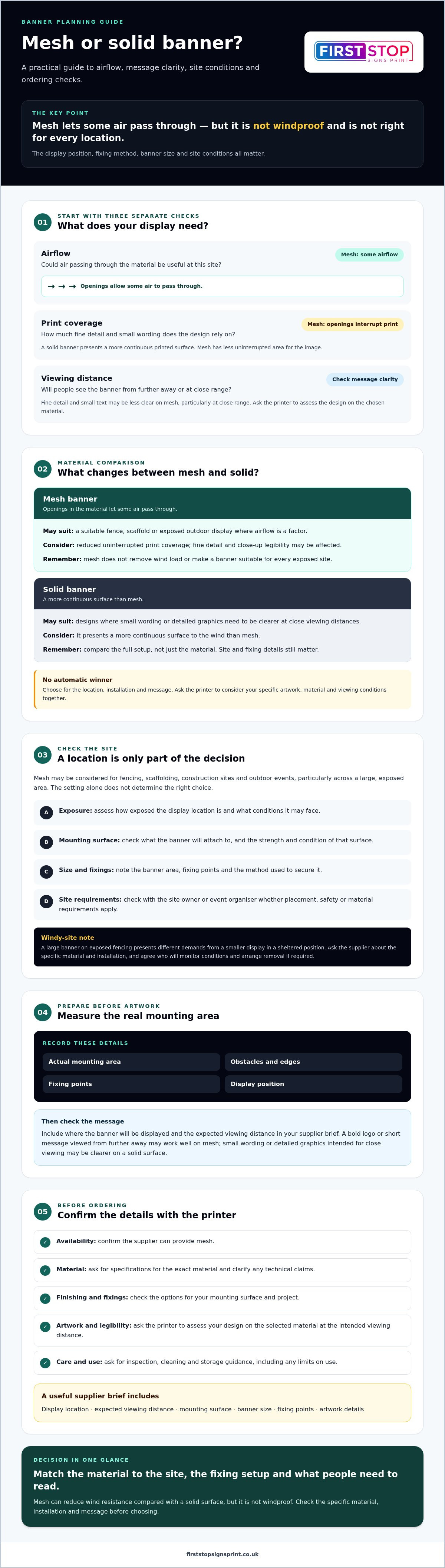
Mesh banners let some air pass through their perforated material, which may make them worth considering for exposed displays. They are not windproof or right for every location, though. The display position, fixing method, banner size and site conditions all matter.
If you’re comparing mesh with solid PVC, consider more than the material. Choose a banner that suits the conditions and keeps your message clear from the distance people will view it.
This guide explains how mesh banners work, where they may be a practical choice and when a solid banner could be more suitable. It also covers how to prepare your artwork and measurements, and what to ask a printer about material, finishing and fixing options before ordering. With these details confirmed, you can make a more informed choice for your site, event or campaign.
Key Takeaways
- Assess airflow, print coverage and viewing distance separately to decide which banner material best suits your display.
- Mesh banners can reduce wind resistance compared with a solid surface, but they aren’t windproof. The location and fixing method still matter.
- Measure the actual mounting area and note obstacles, edges and fixing points before preparing your artwork.
- Before ordering, confirm that the supplier can provide mesh and check the material specifications, finishing and fixing options for your project.
- Include the display location and expected viewing distance in your supplier brief to help assess whether your design will remain clear and readable.
What Are Mesh Banners, and When Do They Make Sense?
Mesh banners are printed on material with small openings that let some air pass through. Unlike a solid banner, they don’t create one continuous printed surface. This can make mesh worth considering for a suitable fence, scaffold or exposed display where airflow is a factor. It doesn’t make the banner windproof: suitability depends on the site, mounting surface and fixing method.
The openings also affect the appearance of the printed design. Wikipedia’s overview of vinyl banners refers to a special mesh material used for large banners. Construction and performance vary, so check the supplier’s information for the specific material you’re considering.
Before choosing a banner for a UK site, consider what it will attach to, how exposed the location is and how far away people will view it. These details will help you discuss material and installation with a printer before ordering.
How does mesh banner material differ from a solid banner?
The gaps between the printed threads allow some airflow, whereas a solid banner presents a more continuous surface to the wind. Mesh has less uninterrupted area for the printed image. Fine detail, small text and close-up legibility may be affected by the openings, depending on the material, print and viewing distance.
Start with what people need to see. A bold logo or short message viewed from further away may work well on mesh. Small wording or detailed graphics intended for close viewing may be clearer on a solid surface. Ask the printer to assess your artwork and viewing conditions against the specific material rather than assuming all mesh prints look the same.
Where are mesh banners commonly used?
Fencing, scaffolding, construction sites and outdoor events are examples of settings where mesh may be considered, particularly across a large, exposed area. A banner fixed to temporary fencing may need a different approach from one displayed on a sheltered wall. The location alone doesn’t determine the right choice.
Before ordering, check what the banner will attach to, where the fixing points are and what conditions the display may face. A suitable mounting surface and fixings matter. Airflow through the material doesn’t remove the need to assess the installation. Share these details with the printer so they can advise whether mesh is appropriate for the site and explain the available material and finishing options.
How Mesh Banners Balance Airflow, Visibility and Durability
Choosing a banner means balancing several factors, not simply deciding whether air should pass through it. Open mesh can reduce wind resistance compared with a solid surface, but it doesn’t remove wind load or make a banner suitable for every exposed site. Performance depends on the material, banner area, installation and conditions around the display.
Visibility is a separate consideration. The openings interrupt the printed surface, so fine details and small text may be less clear, particularly at close range. A simple, high-contrast message viewed from further away may be easier to read than detailed artwork. Ask the printer to assess your design on the selected material at the intended viewing distance.
Are mesh banners suitable for windy locations?
Mesh may be an option where airflow matters, but there’s no universal answer for a windy location. Consider the site’s exposure, the strength and condition of the mounting surface, the banner’s size and the fixing method together. A large banner on exposed fencing presents different demands from a smaller display in a sheltered position.
Before ordering, ask the supplier for guidance on the specific material and installation. Agree who will monitor conditions and arrange removal if required. Don’t treat the word “mesh” as a substitute for assessing the complete setup.
What are the advantages and limitations of mesh?
- Potential advantage: Openings allow some airflow, which may make mesh worth considering for suitable fence, scaffold or other outdoor displays.
- Trade-off: The material has less continuous printed coverage, so fine image detail and close-up legibility may be affected.
- Durability check: Don’t assume performance from appearance alone. Ask for material-specific specifications and care guidance, including any limits on use.
Maintenance is part of the decision too. Check the supplier’s advice on inspecting, cleaning and storing the selected material, and make sure the fixing arrangement can be checked safely at the site. Claims about lifespan or resistance to particular conditions should be supported by specifications for the exact substrate, not general claims about mesh.
For a UK display, check with the site owner or event organiser whether placement, safety or material requirements apply to your installation. Confirm these details before ordering, and ask the printer to clarify any technical claims against the exact material specification.
First Stop Signs Print offers large-format printing. For a mesh banner project, confirm directly whether mesh material, suitable specifications and relevant installation support are available for your display.
Mesh or Solid PVC Banner: Which Option Suits Your Display?
Start with the display, not the material name. Consider how exposed the site is, what the banner will attach to, how far away people will view it and what the artwork needs to communicate. Mesh may suit a fence or scaffold where airflow is relevant, provided the material and installation are appropriate. A solid banner may be a better fit when uninterrupted colour, fine detail or close viewing matters most.
Neither option is automatically more durable or suitable for every location. Ask the printer to confirm the exact material specifications and guidance for your intended use.
| Factor | Mesh | Solid PVC | What to verify |
|---|---|---|---|
| Airflow | Openings allow some air through, which may be useful for suitable exposed displays. | Creates a more continuous surface, so airflow through the banner is limited. | Does the material suit the site, mounting surface, banner size and fixings? |
| Visibility | Openings interrupt the printed area and may affect fine detail or small text. | Provides a continuous printed surface that may better suit uninterrupted graphics. | Will the artwork remain clear at the expected viewing distance? |
| Typical settings | May be considered for suitable fencing, scaffolding or other exposed displays. | May suit sheltered displays or artwork that needs a continuous background. | Are there site conditions or display requirements that favour one material? |
| Care and performance | Depends on the specific substrate, finish and installation. | Also depends on its exact specification and how it is used. | What care instructions and material-specific performance details are available? |
When should you choose mesh instead of a solid banner?
If the display spans exposed fencing and airflow is a concern, ask whether mesh is suitable for that particular installation. If the banner will be viewed close up or features small lettering, product details or fine illustrations, a solid option may preserve more continuous print coverage. Treat these as starting points, not guarantees, and assess the artwork and site requirements together.
What should you compare before choosing a banner material?
Give the printer the location, viewing distance, design and proposed fixing method. Ask which substrate is available, how the print is expected to look on it, and what finish and care it requires. The PRINTING United Alliance offers wider printing-industry resources, but advice for your order should be specific to the material being quoted.
First Stop Signs Print provides digital large-format printing. Confirm directly whether mesh materials and specifications are available for your display.
How to Plan Mesh Banner Artwork, Sizing and Fixings
A reliable banner brief starts with the display site, not a standard size. Measure the area the banner will actually cover and identify where it can be attached. These checks help the printer assess the artwork, material and finish against the real installation.
What artwork works well on a mesh banner?
Design for a quick read. Use a clear visual hierarchy, strong contrast and a prominent logo or main message. Keep small text and fine details to a minimum, as openings in the material may affect how they appear. Check that the design suits the expected viewing distance. For broader layout principles, consult a guide to sign design for UK businesses.
Before preparing the final file, ask the printer to confirm the required artwork dimensions, bleed, resolution, colour setup and file format. Requirements vary, so don’t rely on settings used for an earlier print job.
How should you prepare measurements and fixing details?
Measure the usable fixing area rather than estimating from the full fence, scaffold or wall. Record the surface, edges, obstacles and available mounting points, then share these details with the printer. A standard panel size or fixing pattern may not suit your site.
- Measure: Note the width and height of the area the banner must cover.
- Map the site: Record edges, gaps, obstructions and the position of attachment points.
- Describe the location: Explain whether it is indoors or outdoors, sheltered or exposed, and how people will view it.
- Check the design: Supply artwork at the printer’s requested size and specification, and confirm that key text remains legible at the intended distance.
- Confirm finishing and fixings: Ask which edge finish and fixing options suit the banner material, surface and mounting points. Don’t assume one arrangement fits every installation.
- Agree delivery requirements: Confirm the delivery address, access details and timing needed for the project before ordering.
For a large or exposed display, include the banner’s size, position and proposed fixings in your brief so the printer can raise questions before production. Ask for material-specific guidance. Mesh is not a substitute for checking the site or planning how the banner will be secured.
First Stop Signs Print offers signage and printing services. Its contact page is a place to ask whether mesh materials and the required specifications are available for your display.
How to Order Mesh Banners with Confidence
A clear supplier brief helps establish whether mesh is available and whether it suits the display. Before requesting a quote, gather the key project details so the printer can assess the material, artwork and practical requirements together.
- Dimensions: Give the finished width and height, based on the actual area available for fixing.
- Location: Describe the display surface, whether it’s indoors or outdoors, and how exposed the site is.
- Viewing distance: Explain how close people will be and what they need to read or recognise.
- Artwork: Share the design or a clear brief, and ask for the required file format, resolution, dimensions and any bleed.
- Installation and delivery: Note the fixing points, preferred finish, delivery address and any access or timing requirements.
What should you ask a mesh banner printer?
Start by asking whether mesh printing is available and which specific substrate the printer recommends for your location. Confirm the finished dimensions, artwork requirements, available edge finishing and fixing options, along with any care guidance. If the supplier makes a performance claim, ask which exact material specification it relates to. This lets you assess the product being offered rather than relying on a general description of mesh.
Also confirm what’s included in the order and whether installation support is available for your site and project. Don’t assume printing, finishing, delivery and fitting are all part of one service.
How can First Stop Signs Print support a banner project?
First Stop Signs Print provides large-format digital printing, but mesh banners are not confirmed as a specific product. Check directly whether mesh printing is available, and ask which substrates, sizes and finishes can be supplied. Confirm separately whether installation support is available for your project.
For wider brand visibility planning, a guide to bespoke business signs can help you consider how a banner fits with your other signage. Keep the technical requirements clear in your supplier brief.
First Stop Signs Print also provides signage design, production and professional installation. Confirm which services apply to your banner project before making plans around them.
Choose the Right Banner for Your Display
The right choice starts with the site. Mesh banners may help where airflow is a consideration, but they aren’t windproof or suitable for every exposed location. A solid banner can offer more continuous print coverage, which may better suit detailed artwork or close viewing. In either case, check the material against the display conditions and plan the fixings carefully.
Before ordering, give the printer accurate measurements, location details, expected viewing distance and artwork requirements. Confirm mesh availability, the exact material specifications, finishing and fixing options, and any care guidance. These checks help you make an informed choice and prepare a clear brief.
First Stop Signs Print is a UK signage and commercial printing provider offering large-format digital printing. Design, production and professional installation are available for signage projects, but confirm whether mesh printing and installation support apply to your specific banner. To discuss your project, contact First Stop Signs Print about your print and signage requirements.
Frequently Asked Questions
What is a mesh banner?
A mesh banner is a printed display made from material with small openings that allow some air to pass through. It may be considered for suitable fences, scaffolding and other outdoor displays. Those openings also interrupt the printed surface, which can affect image detail and legibility. Ask the supplier how the specific material may affect your artwork, and confirm its guidance on suitability and installation for your site.
Are mesh banners better than PVC banners?
Neither option is automatically better. The right choice depends on your display. Mesh may be worth considering where airflow is a factor, whilst solid PVC offers a more continuous printed surface that may suit uninterrupted graphics or closer viewing. Compare the location, exposure, viewing distance, artwork and fixing method. Ask the printer which materials are available and whether they’re appropriate for your intended use.
Can mesh banners withstand strong wind?
Mesh openings allow some airflow, but they don’t make a banner windproof. Suitability depends on the specific material, banner size, site exposure, mounting surface, fixings and installation. Don’t treat a general product description as proof that a banner is safe for a particular location. Ask the supplier for material-specific advice, follow its guidance on monitoring conditions and arrange removal if conditions make continued display unsuitable.
Are mesh banners waterproof?
Don’t assume every mesh banner is waterproof or offers the same protection from weather. Performance depends on the specific substrate, print process and finishing, so check the supplier’s written specifications and intended-use guidance before ordering. If the banner will be outdoors, describe the site conditions and ask about care and exposure requirements. A broad description such as “outdoor banner” isn’t a substitute for confirming the product details.
What artwork is best for a mesh banner?
Use a simple layout with a clear message, strong contrast and prominent branding. Large text and uncomplicated graphics are generally easier to read from a distance than small lettering or fine detail. Because the openings affect the printed surface, ask the printer how the chosen material may affect the finished design. Confirm its requirements for file format, artwork dimensions, resolution and bleed before preparing the final file.
How do I measure for a mesh banner?
Measure the actual display area rather than relying on the nominal size of a fence or structure. Record the usable width and height, available fixing points, obstacles and space around the edges. Ask the printer to confirm the finished dimensions and whether the selected finishing needs any allowances. Check your measurements on site before approving the artwork or production proof, so the size and fixing plan match the installation.


