
Could the label that looks best on the shelf be the wrong choice for your product? Choosing the right label material means looking beyond appearance to the surface it needs to stick to and the conditions it will face, from damp storage to frequent handling.
Paper can give a product a clean, familiar finish. Synthetic materials may be a better fit where labels face tougher conditions, but neither option is right for every application. Consider how your product is packaged, stored and used, as well as how you want it to look. A poor match can affect both presentation and performance.
This guide explains the practical differences between common paper and synthetic label materials, then gives you a framework for narrowing down your options. You’ll learn what to consider about the product surface, environment, legibility and branding, and what to include in a print brief. With a considered choice, your label can support a professional product presentation and perform as intended. First Stop Signs Print provides bespoke commercial label printing to bring that choice into a finished label.
Key Takeaways
- Choosing the right label material starts with the job it must do, including the product surface, handling and storage conditions.
- Compare paper, polypropylene, polyethylene and polyester as broad options, then consider how the full label construction affects performance.
- Use your product’s environment to narrow the shortlist, whether labels face refrigeration, frequent handling or transparent packaging.
- Separate essential performance needs from design preferences such as texture, transparency and finish.
- Prepare a clear printing brief with the application, surface, conditions, dimensions and design priorities to guide a well-presented bespoke label.
Choosing the Right Label Material Starts with the Job It Must Do
A label needs to do more than carry a logo. It may identify a product, present key information or help it stand out on a shelf. Choosing the right label material starts with understanding that job, then considering the packaging surface, handling, storage conditions and the look your brand needs.
Label material is the face stock that carries the printed design. It is distinct from the adhesive that bonds the label and the finish that affects its surface appearance. These elements work together, so choosing a suitable face stock alone doesn’t guarantee the finished label will perform as intended.
For a visual introduction to material classification, watch this video:
What does label material include?
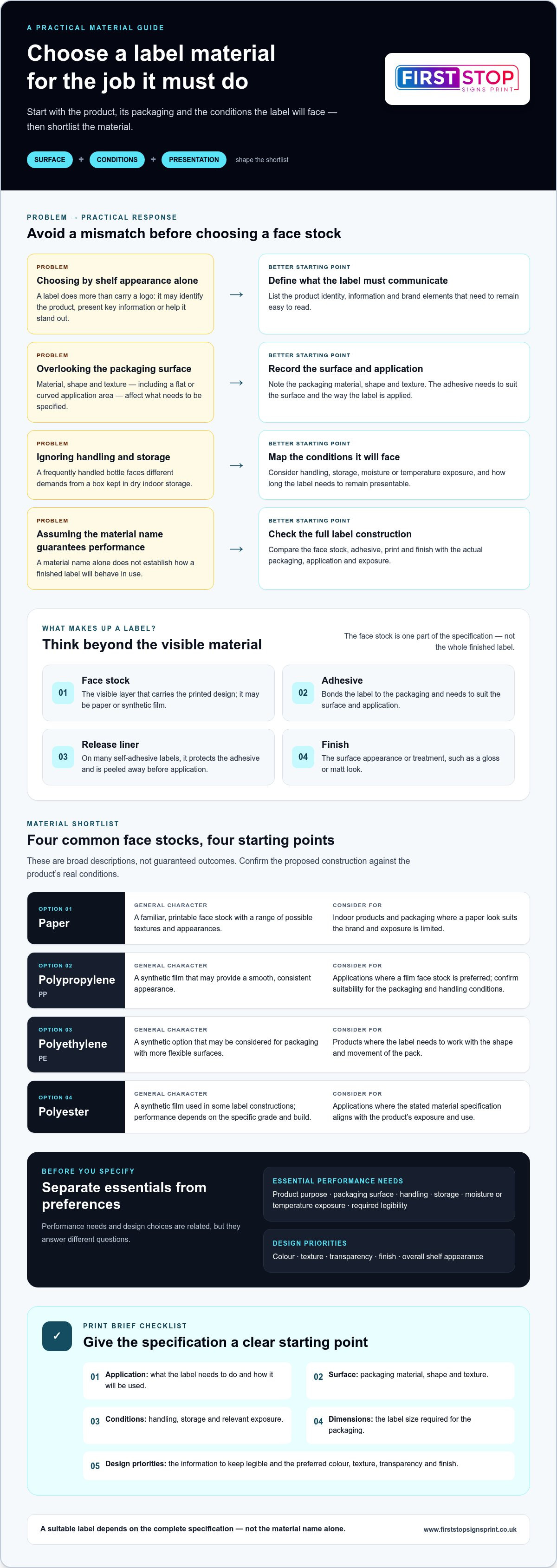
The face stock is the visible layer on which the design is printed. It may be paper or a synthetic film. Beneath it sits the adhesive, which holds the label to the packaging. In many self-adhesive labels, the adhesive is protected by a release liner, which is peeled away before application. The finish describes the surface appearance or treatment, such as a gloss or matt look.
Together, these parts make up the label construction. The adhesive needs to suit the surface and application, while the face stock and print need to deliver a clear, legible presentation. A pressure-sensitive adhesive, for instance, is designed to bond when pressure is applied, so application and handling matter when specifying the label.
Which questions should you answer before choosing?
Start with the label’s purpose, then map out where and how it will be used. A label for a bottle handled regularly faces different demands from one applied to a box kept in dry indoor storage. Neither paper nor synthetic material is automatically the right answer for every product.
- What must it communicate? List the product identity, information and brand elements that need to remain easy to read.
- What surface will it meet? Note the packaging material, shape and texture, and whether the label needs to sit on a flat or curved area.
- What conditions will it face? Consider handling, storage, moisture or temperature exposure, and how long the label needs to remain presentable.
- What should it look and feel like? Set priorities for colour, texture, transparency and overall shelf appearance.
Clear answers give you a practical starting point for choosing the right label material and aligning the face stock, adhesive and print requirements with the product’s real use.
Paper, Polypropylene and Polyester: How Common Label Materials Differ
Material names are a useful starting point, not a performance guarantee. A label’s suitability depends on the conditions it will face and its full specification, not the material name alone. The face stock, adhesive, print and intended application all affect the finished result.
Use this comparison to shortlist possibilities, then match them to the actual packaging and product conditions:
| Material | General characteristics | Consider for |
|---|---|---|
| Paper | A familiar, printable face stock with a range of possible textures and appearances. | Indoor products and packaging where a paper look suits the brand and exposure is limited. |
| Polypropylene (PP) | A synthetic film that may provide a smooth, consistent appearance. | Applications where a film face stock is preferred; confirm suitability for the packaging and handling conditions. |
| Polyethylene (PE) | A synthetic option that may be considered for packaging with more flexible surfaces. | Products where the label needs to work with the shape and movement of the pack. |
| Polyester | A synthetic film used in some label constructions; its performance depends on the specific grade and build. | Applications where the stated material specification aligns with the product’s exposure and use. |
These are broad descriptions, not guaranteed outcomes. A material’s thickness, coating, adhesive and print specification can change how the complete label behaves. Compare the proposed construction with the conditions it is intended to face.
When might paper labels be a suitable choice?
Paper can be a natural fit for many indoor product and packaging labels. Its familiar feel and printable surface can support a considered brand presentation, from a simple look to a more tactile one. The result depends on the paper and print specification, so don’t assume every paper label will look or feel the same.
Consider exposure before choosing paper. Repeated handling, moisture or storage conditions may affect whether it is appropriate for your application. If the label needs to stay clear and presentable through particular conditions, include those requirements in the material brief.
How do synthetic label materials compare?
Polypropylene and polyethylene are both synthetic options, but they aren’t interchangeable. Polypropylene may suit applications where a film face stock is wanted, whilst polyethylene can be considered for packaging that is more flexible. Polyester is another option, but its name alone doesn’t establish how a finished label will perform. Match the actual specification to the product’s surface, movement and exposure.
Keep the material separate from the finish. Gloss describes surface appearance, not the face-stock material itself; paper and synthetic stocks can have different finishes depending on the specification. For textile products, material choice is also separate from required fibre information. See the UK textile labelling regulations for the relevant rules.
Once your application is clear, bespoke commercial label printing can bring the material and printed presentation together in a finished label.
Match Label Material to Packaging, Handling and Storage Conditions
A label that performs well on a dry box may not be right for a chilled bottle or a flexible pouch. Before choosing the right label material, map the product’s journey from application to storage, display and everyday use. Face stock matters, but adhesion also depends on the packaging surface and adhesive, as well as how and when the label is applied.
How does the packaging surface affect material choice?
Think about the shape, texture and movement of the pack. Smooth glass, plastic and card each present different surfaces, but none automatically dictates a particular label material. A curved bottle may need a construction that sits neatly around its shape; a flexible pouch bends during use, while textured card offers a different bonding surface from smooth packaging.
Surface condition matters too. Dust, grease or moisture can interfere with application, so consider how clean and dry the pack will be when labelled. For transparent packaging, decide whether the label should blend into the pack or provide a visible background. Check that the design remains legible against the product and contents.
What conditions should product labels be designed around?
Describe normal use and less frequent exposure separately. A product might usually be stored indoors but occasionally face condensation during transport. Note both, then compare them with the label construction’s specification. Don’t assume a material is automatically waterproof, cold-resistant, abrasion-resistant or suitable for chemical exposure.
- Indoor products: Will the label stay in a dry, controlled setting, or will customers handle it repeatedly? Consider whether routine contact could scuff the print or affect appearance.
- Refrigerated storage: Will the label be applied before or after chilling? Could temperature changes or condensation occur? Include application and storage conditions in the requirements.
- Frequent handling: Will the pack be picked up often, rubbed against other items or squeezed? Identify where friction is most likely and what information must remain readable.
- Transparent packaging: Should the contents remain visible through the label area? Consider how label opacity, print contrast and placement affect both visibility and legibility.
Products such as food, cosmetics and chemicals may also have specific information or packaging requirements. Treat these separately from material performance and verify the rules that apply to the product and market. Choosing a label material cannot, by itself, establish that packaging or printed claims meet those requirements.
Bring the application surface, handling pattern and storage conditions together before shortlisting options. This gives your print brief a practical foundation and helps align the label’s appearance with the demands of its real use.
A Step-by-Step Checklist for Choosing the Right Label Material
A clear process turns material selection into a practical decision rather than guesswork. Use these steps to define what the label must do, separate essential performance needs from visual preferences, and prepare a useful brief for bespoke label printing.
- Define the job. Decide what the label needs to identify, explain or communicate. Note any product information that must remain easy to read.
- Map the conditions. Record the packaging surface, shape and flexibility, how the product will be handled, and where it will be stored. Include occasional exposure as well as normal use.
- Shortlist materials. Compare candidate face stocks against those real conditions. Treat material names as a starting point, and consider the adhesive and complete label construction too.
- Assess the design. Set out the artwork, colour and legibility priorities. Mark preferences such as texture, transparency or gloss separately from must-haves, so appearance choices don’t obscure essential requirements.
- Review print needs. Confirm the label dimensions, placement and intended application. For self-adhesive labels, consider how the label format and application suit the surface, alongside the face stock and adhesive.
What information belongs in a label-printing brief?
Keep the brief specific enough to guide design and production. Include the product type, packaging material and surface, label dimensions, placement and how the label will be applied. Describe storage and handling in practical terms, such as regular friction or possible condensation, rather than relying on broad claims like “durable”.
Add the artwork, required product information and priorities for readability, brand appearance and finish. Mark which points are essential and which are preferences. That distinction helps keep decisions focused if a visual choice needs to be weighed against performance.
How can you assess a material before a full run?
Apply samples to the intended packaging and assess them under conditions that reflect the product’s actual use. Check whether each label sits neatly on the surface, whether the print remains legible and whether its appearance meets your brief. Include representative handling and storage rather than testing only on a clean sample at a desk.
Keep the assessment tied to the final product: a result on a flat card sample may not predict how the label looks on a curved or flexible pack. Note what you tested and observed, then use those findings to refine the specification.
Ready to turn your requirements into a finished label? Discuss your bespoke label printing project with First Stop Signs Print.
Plan Your Bespoke Label Printing with First Stop Signs Print
A well-chosen material is one part of a successful label. The final result also depends on how the design fits the pack, how clearly information reads and how the label will be applied. Bring these elements together in a project brief so the material decision supports practical use and polished product presentation.
How does a clear brief support the finished label?
Describe the product and packaging alongside the conditions the label will face. For example, note whether the pack is rigid or flexible, where the label will sit, and whether it will be handled regularly or stored in a particular environment. These details connect the material and adhesive requirements to the real application, rather than leaving the decision to appearance alone.
Then set out the visual priorities. Include the artwork, brand colours, essential product information and any legibility requirements. Consider the label’s dimensions and placement too: small text, curved surfaces or a transparent pack can all affect how the design is presented. Reviewing practical requirements and artwork together helps create a coherent brief without assuming a particular material or finish will suit every project.
A useful brief can include:
- Product and packaging: what the label is for, the pack’s surface and shape, and where the label will be positioned.
- Use conditions: how the product is stored, handled and applied, including any exposure that matters to performance.
- Label details: dimensions, artwork, required information and priorities for readability and brand appearance.
- Decision priorities: essential functional needs, followed by preferences such as texture, transparency or finish.
This gives the design and production process a clear starting point. It also keeps the intended product presentation in view as the label specification takes shape.
What is the next step for your label project?
Organise your requirements into a concise brief, even if some choices are still open. State what the label needs to do and what the finished product should look like. That makes choosing the right label material a considered part of the wider project, rather than an isolated decision.
First Stop Signs Print provides bespoke commercial label printing, bringing design, production, practical requirements and printed presentation together. Explore the bespoke label printing service to take the next step with your project.
Turn Your Label Requirements into a Finished Design
Choosing the right label material starts with the product’s real use, not just the look you want on the shelf. Consider the packaging surface, handling and storage conditions together, then weigh essential performance needs against preferences such as texture, transparency and finish. Paper and synthetic options each have potential uses, but the complete label specification determines how well a choice suits your application.
A clear brief brings the details into focus: product, surface, conditions, dimensions, artwork and readability priorities. It gives the material decision a practical foundation and helps align the label’s function with your brand presentation.
First Stop Signs Print provides commercial label printing, including design and production, to help shape bespoke labels around your project requirements. Explore bespoke label printing with First Stop Signs Print and take the next step towards a label that presents your product with clarity and purpose.
Frequently Asked Questions
What is the best material for product labels?
The best material is the one that suits your product, packaging and conditions of use. Paper may work well for products kept indoors, while polypropylene, polyethylene or polyester may be considered for other applications. Choosing the right label material means assessing the face stock alongside the adhesive, print requirements and packaging surface. Consider handling, storage, legibility and the appearance your brand needs before settling on a specification.
Are paper labels suitable for products?
Yes, paper labels can suit products stored and used in dry indoor conditions. They offer a familiar printed surface and can support a range of brand styles, depending on the chosen paper and print specification. Their suitability may change if labels face moisture, repeated handling or other exposure. Consider how the product will be stored and used, then assess the complete label construction rather than choosing paper based on appearance alone.
Are polypropylene labels waterproof?
Polypropylene is a synthetic film, but that alone doesn’t mean every polypropylene label is waterproof. The adhesive, print, coatings and full label construction can all affect how it responds to moisture. If a product may get wet or encounter condensation, check the specification for the complete label and the conditions it is intended for. Testing on the actual packaging can help assess appearance and adhesion in representative use.
Which label material is best for refrigerated products?
There isn’t one material that suits every refrigerated product. Consider whether the label is applied before or after chilling, whether condensation may form, and how cold the product gets during storage and handling. The adhesive and face stock both need to suit the application conditions. Describe the product’s actual journey, then assess a sample on the intended packaging under representative storage and handling conditions before committing to a full run.
Can label material affect whether a label sticks to packaging?
Yes, but adhesion depends on more than the face material. The adhesive must suit the packaging surface, which may be smooth, curved, textured or flexible. Surface cleanliness and the conditions during application can also influence how the label bonds. For example, a label applied to a clean, dry glass container may behave differently from one applied to flexible packaging. Assess the full label construction on the actual pack.
What is the difference between label material and label finish?
Label material usually refers to the face stock that carries the printed design, such as paper or a synthetic film. The finish describes the surface appearance or treatment, such as gloss or matt. They’re separate choices: a finish doesn’t identify the material, and the same material category may be available with different surface appearances. Consider both in your brief, alongside the adhesive and print requirements.
How can I test a label material before printing a full run?
Apply a sample to the intended packaging and assess it in conditions that reflect real use. Check whether it sits neatly, stays legible and maintains the appearance you want after representative handling and storage. Include relevant exposure, such as refrigeration or possible condensation, rather than testing only in a dry room. Record what you observe, as results on a different surface may not predict performance on your product.


