
Your shop front has less than three seconds to convince a passerby that your business is worth their time and investment. If your current signage looks dated, faded, or distinctly budget, you're likely losing potential revenue before a customer even reaches the door. Choosing the right acrylic letters is the most effective way to ensure your first impression is one of quality and permanence.
It's a common frustration for business owners to see their signs lose their lustre or look cheap under harsh street lighting. You want a professional finish that reflects your brand's authority, but the jargon surrounding flat-cut versus built-up options can feel overwhelming. We understand that you need a durable, low-maintenance solution that simply works, regardless of the unpredictable British weather.
In this guide, you'll discover how to transform your office interior or retail exterior with high-impact lettering tailored specifically to your brand identity. We'll demystify the technical terms, explore the latest 2026 customisation trends, and provide a clear path to achieving a high-end look that lasts for years without the fuss.
Key Takeaways
- Learn why high-grade acrylic is the superior, impact-resistant alternative to traditional glass or wood for modern commercial signage.
- Discover how acrylic letters provide a premium 3D aesthetic that withstands the British weather whilst remaining more cost-effective than stainless steel.
- Understand the technical differences between flat-cut and built-up lettering to choose the right depth and visual impact for your specific premises.
- Explore how to use mirrored or frosted finishes to create a sophisticated first impression in busy London retail or corporate environments.
- Gain insights into the professional installation process, including why perfect kerning and surface preparation are essential for a high-end finish.
What Are Acrylic Letters and Why Are They Popular for Signs?
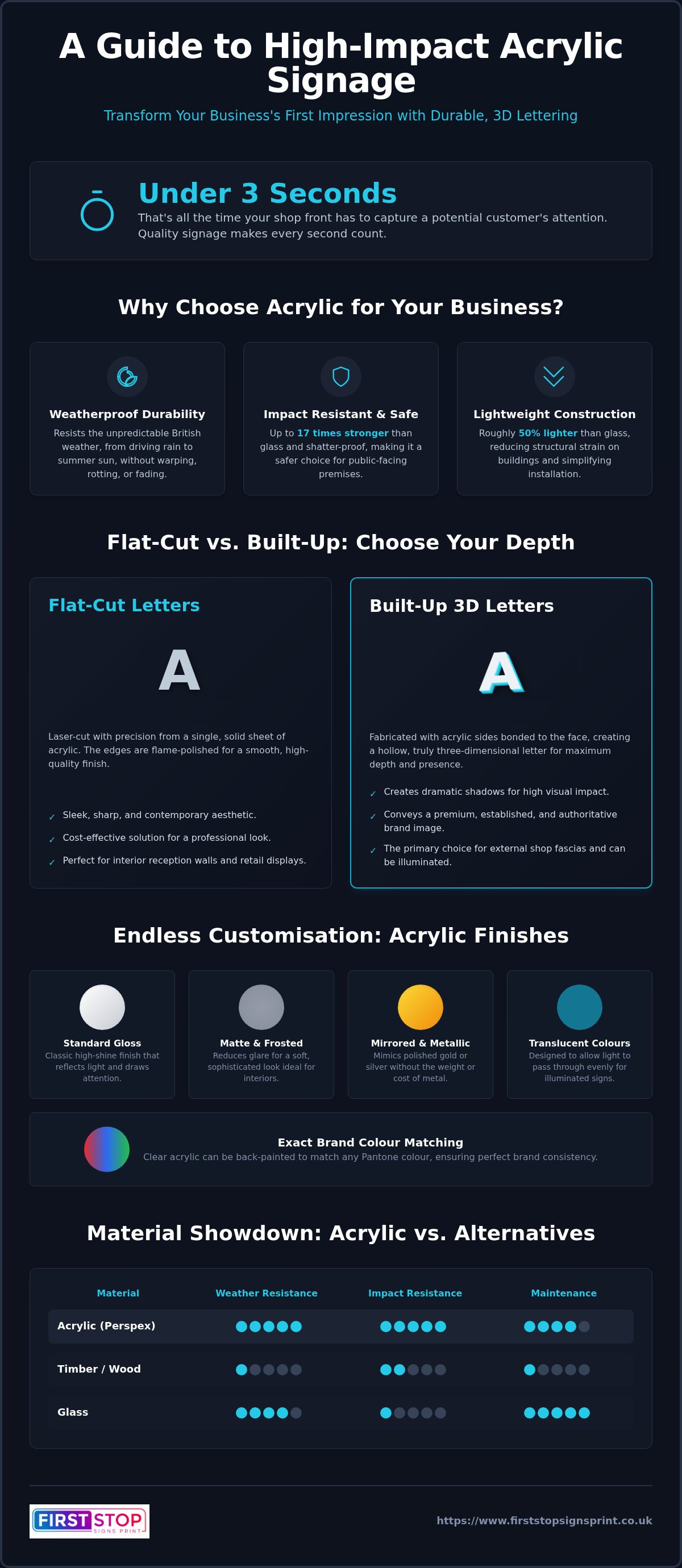
Acrylic is a high-performance thermoplastic scientifically known as Poly(methyl methacrylate). In the UK, you'll often hear it referred to by the trade name Perspex. It has become the gold standard for modern signage because it offers the visual clarity of glass with none of the fragility. Unlike traditional timber signs that can rot or warp in the damp British climate, acrylic letters maintain their structural integrity for decades. The material is prized for its natural gloss and lightweight nature, making it easy to mount on various surfaces without heavy structural support.
We use advanced laser-cutting technology to produce these signs. This process ensures every edge is flame-polished and every curve matches your brand's bespoke font or logo with absolute precision. Whether you need a small, intricate logo for a reception desk or large-scale lettering for a shop fascia, the results are consistently sharp and professional.
The Science of Durability: Acrylic vs. Glass
Safety is a primary concern for any business on a busy London high street or Essex retail park. Acrylic is between 10 and 17 times more impact-resistant than glass, making it exceptionally difficult to break through accidental knocks or vandalism. If it does break under extreme force, it's shatter-proof; it cracks into large, dull-edged pieces rather than dangerous shards. This makes it a much safer choice for public-facing premises. High-quality cast acrylic is inherently UV stable, ensuring your signs won't turn yellow or become brittle even after years of exposure to the UK sun.
Acrylic (Perspex) Finishes and Colours
The versatility of this material allows for almost infinite customisation to suit your brand's personality. You aren't limited to a single look. We offer a variety of finishes to match your aesthetic goals:
- Standard Gloss: A classic, high-shine finish that reflects light and draws the eye from a distance.
- Matte and Frosted: These contemporary options reduce glare and provide a sophisticated, soft-touch appearance for interior office walls.
- Mirrored and Metallic: Mirrored acrylic mimics polished silver or gold metal at a fraction of the weight and cost.
- Translucent Shades: These are specifically designed for illuminated signs, allowing light to pass through evenly.
If you have a very specific brand identity, we can back-paint clear acrylic to match your exact Pantone colours. This technique ensures your acrylic letters remain perfectly on-brand whilst benefitting from the protective depth and lustre of the clear material in front of the pigment.
The Core Benefits of Choosing Acrylic for Your Business
Choosing the right material for your signage is an investment in your company's future visibility. Whilst many materials exist, acrylic letters offer a unique balance of aesthetic prestige and practical durability. In areas like London and Essex, where buildings are often subjected to driving rain, frost, and high winds, acrylic's non-porous surface ensures it won't swell or degrade. It's a resilient choice that stays looking new long after other materials have begun to show their age.
Cost-effectiveness is another major draw. You can achieve a premium, three-dimensional look that rivals solid stainless steel but without the significant price tag or the heavy structural load. This is particularly important for businesses operating out of older building facades in London. Since acrylic is roughly 50% lighter than glass, it puts far less strain on the masonry. It also simplifies the installation process, ensuring you stay compliant with UK sign regulations regarding fixings and public safety.
Long-Term ROI and Maintenance
Busy business owners need solutions they don't have to worry about constantly. Acrylic is essentially a "fit and forget" option. Unlike wooden signs that require regular repainting or vinyl stickers that can peel and fade within a few years, acrylic letters maintain their colour integrity for decades. They don't rust, they don't rot, and they don't corrode. A simple wipe down with soapy water every few months is usually all it takes to keep your branding looking sharp.
Visual Impact and Brand Perception
The physical depth of 3D lettering creates natural shadows that shift throughout the day. This movement draws the eye of passers-by far more effectively than flat graphics. There's also a psychological benefit; solid, tangible branding suggests a solid, tangible company. Customers tend to trust a business that invests in its physical presence. This material is incredibly versatile, working just as well on an external fascia board as it does on an internal reception wall. For a deeper look at how to tailor these elements to your specific needs, explore our guide on bespoke business signs.
If you're ready to upgrade your premises, our team can help you design custom business signs that truly represent your professional standards.
Flat-Cut vs. Built-Up 3D Letters: Which Do You Need?
Deciding between flat-cut and built-up lettering is the most significant choice you'll make during the design phase. It fundamentally changes how your brand occupies the physical space. Whilst both options use acrylic letters to create a professional finish, the manufacturing process and final visual impact differ greatly. Your choice should depend on your specific location, the distance from which people will see the sign, and your overall budget for the project.
Understanding the distinction helps you avoid the common mistake of choosing a sign that looks too small or "flat" for a large exterior wall. Conversely, it prevents you from overspending on massive 3D letters for a small interior space where a sleeker profile would be more appropriate.
Flat-Cut Acrylic: Sleek and Subtle
Flat-cut letters are produced from single sheets of material, typically ranging from 3mm to 10mm in thickness. They offer a clean, minimalist aesthetic that works perfectly for internal office signs, directory boards, and smaller shop fronts. Because they are lighter and simpler to produce, they are a cost-effective way to achieve a high-end look without a massive investment.
We offer two primary mounting styles for these letters. You can have them fixed flush to the wall for a streamlined appearance, or raised on "stand-off" spacers. Using spacers creates a shadow gap behind the letter, which adds a subtle 3D effect even with thinner materials. This is an excellent way to increase the perceived quality of your branding in corporate receptions or hallways where customers see the sign from a close distance.
Built-Up Letters: The Premium 3D Choice
If you want your business to dominate a high street, built-up letters are the industry standard. These are not cut from a single sheet; they are fabricated as hollow box shapes with "returns" or sides. This construction allows for massive depth, often reaching 50mm to 100mm or more, making the branding legible from much further away. This added volume creates a sense of permanence and authority that flat graphics cannot match.
This fabrication method is essential for illuminated shop signs. The hollow interior provides space for LED modules, allowing for "face-lit" effects where the front glows, or "halo-lit" effects where light spills out from the back onto the wall. You can also combine acrylic faces with metal returns to create a high-contrast, multi-material look. This versatility ensures your acrylic letters stand out both day and night, providing a 24/7 marketing tool for your premises.
Common Applications for Acrylic Lettering in the UK
Acrylic is one of the most versatile materials available for modern business environments. It isn't restricted to a single type of sign; instead, it adapts to various settings across the UK, from the competitive retail strips of London to expansive corporate headquarters in the Home Counties. Because the material is so easy to shape and finish, it serves both functional and purely aesthetic purposes with equal success.
On busy London high streets, retail shop fronts use acrylic letters to pierce through the visual noise. A high-gloss, 3D fascia board creates a sense of established quality that flat, printed signs simply cannot replicate. In corporate reception areas, we often use mirrored or frosted acrylic to provide a sophisticated first impression. Mirrored finishes offer the prestige of polished metal at a fraction of the weight, whilst frosted options provide a contemporary, soft-touch look that feels approachable yet professional.
Beyond the front door, acrylic is an essential tool for wayfinding and directional signage. In large office complexes or multi-tenanted buildings, clear navigation is vital for a positive visitor experience. Lightweight acrylic lettering is also the preferred choice for exhibition displays. It allows businesses to maintain a high-end, professional presence at trade shows with branding that is easy to transport and install on portable booths.
Illuminated Acrylic Signage
Energy efficiency is a top priority for UK businesses in 2026. LED-illuminated acrylic letters are the most cost-effective way to ensure your brand remains visible 24 hours a day. You can choose between face-lit effects, where the light shines directly through the front of the letter, or back-lit halo effects. Halo lighting creates a glow that spills onto the wall behind the sign, resulting in a dramatic, high-contrast look. At First Stop Signs Print, we specialise in designing and installing bespoke led signs that combine maximum visual impact with low power consumption.
Internal Branding and 3D Wall Panels
Internal branding is just as important for staff morale and company culture as it is for clients. Many organisations now use acrylic lettering in meeting rooms and boardrooms to reinforce core brand values. For a truly modern interior, you can combine these letters with our 3D wall panels. This creates a textured, multi-layered effect that adds depth to any office space. Precise colour matching is critical here; we ensure your signage matches your specific brand Pantone colours to maintain total consistency across all your physical locations.
If you want to see how these applications can work for your premises, you can order custom business signs directly from our expert team today.
Professional Installation and Maintenance Guide
Installing your signage correctly is just as vital as the design itself. Whilst small, interior acrylic letters can sometimes be a DIY project, large external shop fronts require a professional touch to ensure long-term safety and structural integrity. A professional installer understands wind loads, masonry types, and the specific height regulations required for public spaces. At First Stop Signs Print, we provide expert installation services across London, Essex, and Hertfordshire to ensure your branding remains secure and perfectly aligned.
The process begins with meticulous surface preparation. We clean the substrate to remove any dust or grease that could interfere with the fixings. We then use a full-sized paper template to mark the exact position of every character. This step is crucial for achieving perfect kerning, which is the precise spacing between letters that makes a sign look balanced and professional. Once the template is taped in place and checked with a spirit level, we mark the drilling points or adhesive areas.
After the points are marked, we secure the letters using the most appropriate hardware for the wall type. Once every letter is fixed, we perform a final levelling check and a thorough inspection of the finish. This methodical approach prevents the common issue of signs looking "wonky" or becoming loose over time due to poor fixing choices.
Mounting Methods Explained
The fixing method you choose dictates the final aesthetic of your sign. We offer three primary ways to secure your acrylic letters:
- Stud Mounting: This is the most secure method for external masonry. Metal studs are screwed into the back of the letters and then inserted into drilled holes in the wall, often secured with industrial adhesive.
- Stand-off Spacers: These small barrels lift the letters away from the wall. This creates a "floating" effect with natural shadows that add depth and premium appeal to office interiors.
- Flush Mounting: For a clean, flat appearance, letters are fixed directly to the surface using Very High Bond (VHB) tape or structural adhesive. This is ideal for sleek, minimalist reception walls.
How to Clean and Maintain Acrylic
Maintaining the lustre of your sign is straightforward, provided you use the right materials. You must avoid ammonia-based cleaners or glass sprays; these chemicals cause "crazing," which creates tiny, permanent cracks in the material's surface. Instead, use lukewarm soapy water and a soft microfibre cloth to gently lift away dust and grime. If your sign suffers minor surface scratches over the years, you can use a specialised acrylic polishing compound to buff them out, restoring the original high-gloss finish and keeping your brand looking its best for 2026 and beyond.
Secure Your Brand's Visual Legacy for 2026
Investing in bespoke acrylic letters is more than a simple aesthetic choice; it's a strategic move to ensure your business remains visible and respected for years. You now understand how this material outperforms glass in durability whilst offering the premium depth of 3D or illuminated finishes. Whether you opt for sleek flat-cut characters or high-impact built-up letters, the key to long-term success lies in precision and professional execution.
Our team at First Stop Signs Print specialises in 3D and illuminated business signage, using high-precision laser cutting to recreate your brand logo with absolute accuracy. We don't just supply the materials; we provide expert installation across London, Essex, and Hertfordshire to ensure your sign is safe, level, and compliant. Don't let your first impression fade with a budget solution that doesn't reflect your professional standards.
Get a bespoke quote for your acrylic letters from First Stop Signs Print and let's start transforming your premises into a local landmark today.
Frequently Asked Questions
Are acrylic letters suitable for outdoor use in the UK?
Yes, acrylic is perfectly suited for the UK's varied and often harsh climate. It is a non-porous material that won't swell, rot, or degrade when exposed to rain, frost, or high winds. We specifically use high-quality cast acrylic for our external signage projects because it offers superior UV stability. This ensures your branding won't yellow or become brittle after years of exposure to the sun in London, Essex, or Hertfordshire.
How long do acrylic signs typically last before fading?
A high-quality acrylic sign can maintain its vibrant colour and structural integrity for ten to fifteen years, or even longer with basic maintenance. Unlike vinyl graphics that might peel or timber that requires regular repainting, acrylic is a durable, "fit and forget" solution. Its colour is typically pigment-infused throughout the material rather than just printed on the surface, which prevents the significant fading often seen in cheaper signage alternatives.
Can I have my business logo made into acrylic letters?
We can recreate almost any business logo using high-precision laser cutting technology. This process allows us to follow intricate curves and bespoke fonts with absolute accuracy. Whether you require a flat-cut logo for a reception desk or a built-up 3D version for your shop front, we ensure the final product matches your brand identity exactly. We can even back-paint clear material to match your specific Pantone colours for total consistency.
What is the difference between Perspex and acrylic?
Perspex is simply a well-known brand name for a high-quality thermoplastic technically called poly(methyl methacrylate). It is similar to how people use "Hoover" to refer to any vacuum cleaner. In the UK signage industry, Perspex is highly regarded for its exceptional clarity and long-term durability. When we talk about acrylic letters, we are referring to this same versatile, impact-resistant material that has largely replaced glass in modern commercial branding.
Do I need planning permission for acrylic letters on my shop front?
Most non-illuminated shop signs under 1.55 square metres fall under "deemed consent," meaning they don't require a formal planning application in England. However, if your sign is illuminated or your premises are in a conservation area, stricter rules apply. For example, characters in conservation areas are typically restricted to 0.3 metres in height. We recommend checking with your local council or our professional installation team to ensure your signage meets all current UK regulations.
Can acrylic letters be illuminated with LEDs?
Yes, acrylic is the ideal material for LED illumination. Because it transmits approximately 92% of visible light, it is perfect for face-lit signs where the front of the letter glows evenly. Alternatively, we can create a "halo" effect by mounting LEDs inside built-up letters to cast a glow onto the wall behind. This is an energy-efficient way to ensure your business remains highly visible throughout the night in busy urban centres.
How thick should my acrylic letters be for a professional look?
For flat-cut letters, a thickness of 5mm to 10mm is standard for a professional, high-quality appearance. If you want a more substantial 3D presence, built-up acrylic letters are the better choice as they are fabricated with "returns" to reach depths of 50mm or more. The right thickness often depends on the viewing distance; larger signs on high facades generally require more depth to remain legible and impactful from the street level.
Is it possible to move acrylic letters to a new location if I relocate?
It is entirely possible to move your lettering to a new premises, though it requires careful handling by professionals. If the letters were stud-mounted or fixed with stand-off spacers, they can usually be unscrewed and reinstalled. You will definitely need a new paper template to ensure the spacing and alignment are correct at the new site. We often help clients relocate their signage, though we always inspect the letters first to ensure they remain in peak condition.


