
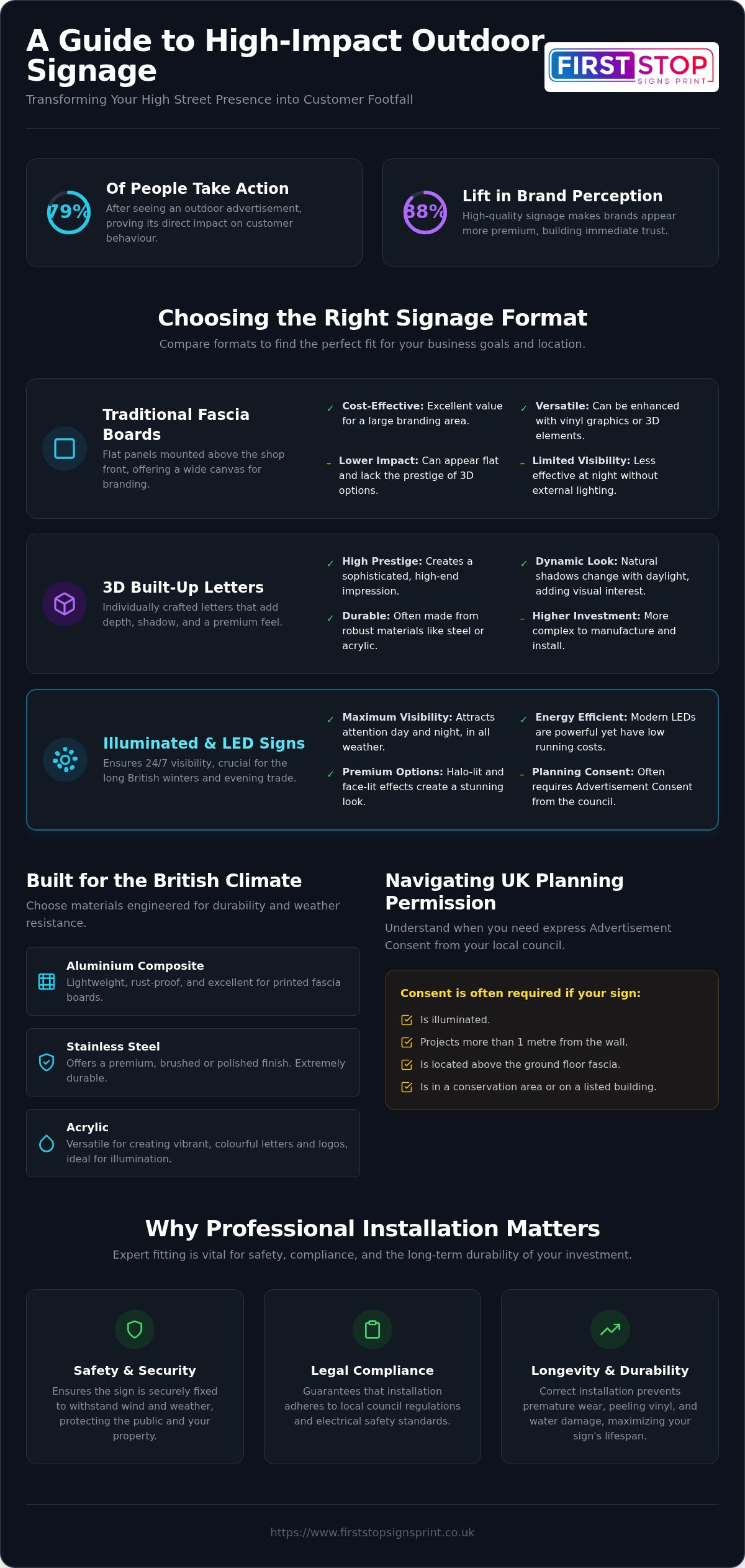
Did you know that 79% of people take action after seeing an outdoor advertisement? In an era dominated by digital noise, your physical presence on the high street remains your most powerful tool for driving footfall. Choosing the right outdoor signs is about more than just aesthetics; it's about creating a lasting first impression that converts passers-by into loyal customers.
It's incredibly frustrating to invest in a new shop front only to watch the colours fade or the vinyl peel after just one British winter. You want to stand out amongst the competition, but the fear of being invisible or falling foul of complex planning laws often leads to hesitation and missed opportunities.
This guide shows you how to choose, design, and install bespoke signage that looks prestigious and is engineered to withstand the harshest elements. We'll explore everything from the durability of 3D LED displays to handling local council regulations, ensuring your brand stays visible and vibrant for years to come.
Key Takeaways
- Learn how high-quality signage builds immediate trust and serves as a strategic investment in your brand's physical presence.
- Identify the most effective formats for your business, comparing flat fascia boards with illuminated 3D letters to create high-impact outdoor signs.
- Choose durable, UV-resistant materials like aluminium and stainless steel that are specifically engineered to withstand the unpredictable British weather.
- Navigate the complexities of UK planning permission by understanding when you need express Advertisement Consent from your local council.
- Understand why professional installation is vital for the safety, compliance, and long-term durability of your exterior shop front displays.
The Strategic Value of Professional Outdoor Signs
Professional outdoor signs act as the silent salesman for your premises, working every hour of the day to communicate your brand's value. Whilst digital marketing captures attention online, your physical signage defines your presence in the local community. Understanding the history and purpose of signage reveals that its core function hasn't changed; it's about identification and navigation. However, the stakes are higher now. Research indicates that high-quality out-of-home advertising leads to an 88% lift in premium brand perceptions. If your sign looks cheap or neglected, passers-by often assume your service follows suit. Quality isn't a luxury; it's a prerequisite for trust.
Investing in permanent fixtures rather than temporary banners is a strategic move for any growing business. A custom shop front board isn't just an expense; it's the most cost-effective form of local marketing available. With an average return of £1.60 for every £1 spent, outdoor signs offer a longevity that social media ads simply cannot match. They anchor your business to its location, building familiarity amongst local residents over years. This sense of permanence is vital for establishing a brand that feels like a staple of the community.
Boosting Footfall with Visual Hierarchy
On a crowded London high street, you only have seconds to catch a driver's eye or a pedestrian's attention. Success depends on visual hierarchy. This means using high-contrast colours and bold fonts that remain legible from a distance. If a customer can't read your name from across the street, they won't cross it to enter your shop. We focus on viewing angles and font sizes to ensure your message hits home. Visual hierarchy in signage is the deliberate arrangement of design elements to guide the viewer's eye to the most important information first.
Refing Your Brand Identity Outdoors
Your physical shop front should feel like an extension of your website. Consistency in typography and colour palettes ensures that customers who found you online recognise you immediately on the street. For businesses seeking a prestigious edge, integrating 3D logos and 3d letters adds a sense of authority. Whether you're a minimalist law firm in Romford or a vibrant retail space in Essex, your exterior must mirror the experience waiting inside. It's about creating a seamless transition from the pavement to the point of sale.
Choosing the Right Format: From Fascia Boards to 3D Lettering
Selecting the right format for your outdoor signs depends heavily on your location's physical layout. On a narrow high street, a massive flat board might be lost to traffic, whereas a projecting sign captures the attention of pedestrians walking parallel to your building. You need to consider the scale of your facade and the width of the pavement to ensure maximum impact without overwhelming the architecture. It's a technical balance between visibility and aesthetics.
The Power of 3D Signs and Built-Up Letters
3D signs offer a prestigious feel that flat prints simply can't replicate. By adding physical depth, you create natural shadows that shift with the daylight, making the branding feel dynamic and alive. Common material choices include durable acrylic, brushed stainless steel, or lightweight aluminium. These materials suggest a level of permanence and success that builds immediate trust with your audience. For a deeper dive into these premium options, see our 3d signs pillar.
Illuminated and LED Signage Solutions
Ensuring your outdoor signs remain visible during the long British winter is a major priority for retail and hospitality. When the sun sets before 4 PM, non-illuminated signs effectively disappear. Modern LED signs provide a striking solution that is both visually punchy and energy-efficient. You can choose between halo lighting, which glows from behind the letters for a sophisticated look, or face-lit letters for maximum brightness. Before installing, it's wise to consult the UK government's guide for advertisers regarding regulations on light pollution and brightness levels.
Traditional Fascia and Shop Sign Boards
For many businesses, a standard shop sign board remains the most practical and cost-effective choice. These offer a clean canvas for full-width branding directly above your entrance. However, the modern trend is a hybrid approach. You can take a flat aluminium composite board and apply 3D elements or subtle LED illumination to create a bespoke look. This is a particularly popular choice for barber shop signs and boutique retailers that need to balance a specific budget with high-impact design.
If you're unsure which format suits your premises, we can help you design a custom signage package that fits your brand and your specific location.
Built to Last: Selecting Materials for the British Climate
The British climate is a relentless test for any exterior installation. Your outdoor signs face a cycle of driving rain, frost, and intense UV exposure that can quickly degrade sub-standard materials. UV resistance is particularly critical; without it, vibrant brand colours can fade significantly within a single year, leaving your shop front looking neglected. We select materials specifically engineered to lock in pigmentation and resist the bleaching effect of direct sunlight.
For London and Essex exteriors, we favour corrosion-resistant metals like aluminium and stainless steel. Aluminium is naturally rust-resistant and lightweight, making it the perfect choice for large fascia boards that need to remain secure and attractive for decades. Stainless steel offers an even higher level of prestige and durability, especially in high-traffic urban areas where atmospheric pollutants are a factor. For high-impact visual displays, acrylic and polycarbonate provide excellent clarity and strength. Polycarbonate is virtually unbreakable, making it an ideal choice for signs in areas where vandalism or accidental impact might be a concern.
Weatherproofing and Durability Standards
When choosing illuminated or LED signs, understanding IP (Ingress Protection) ratings is vital. We ensure our electrical components meet high standards, typically IP65 or higher, to guarantee they remain functional during heavy downpours. Beyond moisture, materials must also handle temperature fluctuations that cause expansion and contraction. We use protective UV laminates on all large format digital prints to provide a physical barrier against both the weather and minor abrasions. Regular maintenance, such as a simple wash with mild soapy water and a check of the masonry fixings, will keep your display looking fresh for years.
Sustainable Signage Material Choices
Modern businesses are increasingly looking for eco-friendly ways to maintain their physical presence. Recyclable aluminium is a premium option that doesn't lose quality during the recycling process, making it a circular choice for the environment. By opting for long-life LEDs, you're not just reducing your energy bills; you're significantly lowering the carbon footprint of your illuminated displays. Choosing high-quality materials from the start is the most sustainable path, as it reduces the frequency of replacements and the associated waste. For a broader understanding of how these choices fit into national standards, the UK government's guide for advertisers provides useful context on the long-term management of exterior displays.
Navigating UK Planning Permission and Signage Compliance
Applying for new outdoor signs in the UK involves more than just design; it requires a clear understanding of the Town and Country Planning Regulations. Many business owners are surprised to learn that whilst some signs fall under 'deemed consent', others require formal permission. Generally, if your sign is non-illuminated and stays within specific size thresholds, you might not need a formal application. However, once you introduce LED illumination or larger dimensions, you must apply for express Advertisement Consent. The standard fee for this application is currently £132 per site, and once granted, the consent is typically valid for five years.
In boroughs across London and Essex, conservation areas add another layer of complexity. Local councils often have strict guidelines on materials and lighting to preserve the character of historic high streets. If your business is located in a listed building, you'll need a separate Listed Building Consent application alongside your advertisement request. Ignoring these rules can lead to enforcement notices and costly removals. It's always better to be proactive with compliance.
The Application Process for Advertisement Consent
Navigating the paperwork requires precision. You'll need to submit detailed site plans, technical drawings showing the sign's projection, and specifications of the materials used. Council decisions in London boroughs usually take around eight weeks from the date of submission. We help our clients by providing the technical drawings and specifications needed to satisfy planning officers, making the process much less daunting for busy business owners.
Health and Safety Compliance
Safety is a non-negotiable aspect of installing outdoor signs. If your sign projects over a public highway, you must obtain a projection licence from the local highway authority. This typically requires a minimum of £5 million to £10 million in public liability insurance to protect your business. Beyond structural anchoring, electrical safety is paramount for illuminated LED displays. All wiring must meet current UK building regulations to prevent fire risks and ensure long-term reliability in the wet British weather.
If you're concerned about compliance for your next project, you can book our professional sign installation services for expert guidance and safe fitting.
Professional Installation: Why Expert Fitting Matters
While online-only printers might suggest adhesive tapes or simple screws for DIY fitting, professional outdoor signs require a much higher level of technical precision. Commercial signage is often heavy, large, and positioned high above public pavements. A poorly secured sign isn't just an eyesore; it's a significant safety liability. Professional installation ensures that your investment stays exactly where it belongs, regardless of high winds or the natural vibration of urban traffic.
Expert fitting involves using specialist equipment that most business owners don't have on hand. From cherry pickers for high-level fascia boards to heavy-duty masonry fixings designed for specific wall types, the right tools make the difference. We focus on a seamless finish. This means using hidden fixings so the focus remains on your brand, and ensuring all wiring for illuminated elements is tucked away neatly for a clean, prestigious appearance.
The Installation Workflow
Our process begins with an initial site survey. We don't just look at the design; we assess the structural integrity of the wall and identify any access requirements for our machinery. On the day of installation, our team arrives with a clear plan to minimise disruption to your business operations. We handle the heavy lifting and precise alignment, followed by the final testing and commissioning of any LED components. We make sure the "halo" or "face-lit" glow is perfectly balanced before we consider the job done.
Service Areas and Local Expertise
First Stop Signs Print provides an end-to-end service across Romford, London, and the Home Counties. Our local expertise is vital because we understand the diverse building types found in our region. We've worked on everything from modern glass-fronted offices in the City to heritage storefronts in Essex conservation areas. This experience allows us to choose the correct mounting methods that respect the architecture whilst maximising your visibility. If you're ready to transform your storefront, contact us for a bespoke quote for your business signs. We'll handle the entire journey from the first sketch to the final bolt.
Transform Your Shop Front into a High-Impact Brand Asset
High-quality signage acts as a silent salesman, building trust with every person who walks past your door. By choosing durable materials like UV-resistant aluminium and bespoke 3D letters, you ensure your business remains vibrant and visible amongst local competition. We've explored how navigating planning laws and prioritising professional installation prevents costly enforcement notices and guarantees a prestigious finish that lasts for years. This strategic approach to your exterior presence is what separates established brands from the rest of the high street.
At First Stop Signs Print, we provide a full end-to-end service across London and Essex. From our specialist 3D and LED manufacturing in Romford to our expert design-to-fit approach, we handle every technical detail so you don't have to. It's time to stop being invisible to passing traffic and start making a lasting impression in the physical world with a display that reflects your standard of work. We look forward to helping you transform your presence and achieve the visibility your business deserves.
Get a Bespoke Quote for Your Outdoor Signs
Frequently Asked Questions
Do I need planning permission for my outdoor business sign?
You often need formal permission, though some smaller displays fall under 'deemed consent'. If your sign is illuminated, larger than 0.3 square metres, or located in a conservation area, you must apply for express Advertisement Consent. The standard application fee is currently £132 per site. We recommend checking with your local planning authority in London or Essex before proceeding with any permanent installation to avoid potential enforcement notices or fines.
How long do outdoor signs typically last in the UK weather?
High-quality outdoor signs generally last between five and ten years, depending on the materials and their exposure to the elements. Aluminium and stainless steel are particularly resilient against the relentless British rain and frost. Whilst cheaper vinyl or foam boards might show significant wear after just a few seasons, premium 3D letters and LED components are engineered for long-term durability. Regular maintenance can further extend this lifespan by preventing corrosive dirt build-up.
What is the best material for a durable shop front sign?
Aluminium composite and stainless steel are the gold standards for durable shop front signs. Aluminium is lightweight, rust-proof, and holds colour exceptionally well even under intense UV exposure. For businesses seeking a more prestigious look, stainless steel provides unmatched structural integrity and a premium aesthetic. Acrylic is also an excellent choice for 3D elements; it's weather-resistant and allows for vibrant, translucent colours that work perfectly with modern LED backlighting systems.
Can you install outdoor signs on listed buildings in London?
Yes, it's possible to install signs on listed buildings, but you must obtain Listed Building Consent from your local council. This process is more rigorous than standard applications. Councils often require traditional materials and non-intrusive mounting methods to protect the heritage of the structure. We have extensive experience working with businesses in historic parts of London and Essex to design outdoor signs that meet these strict aesthetic and legal requirements.
How much does a custom 3D LED sign cost to manufacture?
The cost of a custom 3D LED sign depends entirely on the complexity of the design, the materials chosen, and the overall scale of the project. Factors such as the type of illumination, the depth of the built-up letters, and specific installation requirements all influence the final investment. Because every project we undertake is bespoke, we provide tailored quotes following an initial consultation to ensure your brand needs and budget are accurately met.
How do I maintain my outdoor sign to prevent it from fading?
To prevent your sign from fading or degrading, we recommend cleaning it at least twice a year with mild soapy water and a soft cloth. This removes atmospheric pollutants and salt that can slowly eat away at protective coatings. For illuminated signs, checking the seals and ensuring the LED drivers are clear of debris is essential. Using UV-resistant laminates during the manufacturing process also provides a critical barrier against the bleaching effects of sunlight.
What is the difference between a fascia sign and a projecting sign?
A fascia sign is a flat or 3D board mounted directly above your shop entrance, covering the width of the storefront to provide primary branding. In contrast, a projecting sign is mounted perpendicular to the building. This format is essential for capturing the attention of pedestrians and drivers approaching from the side. Combining both formats ensures your business remains visible from all angles on a busy high street, maximising your physical presence.
Do you provide sign installation services in Essex and Hertfordshire?
Yes, we provide professional sign installation services across Essex, Hertfordshire, and all London boroughs. Our team is equipped with the specialist machinery needed for safe fitting on various building types, from modern retail parks to narrow high street shops. Whether you're based in Romford, St Albans, or Central London, we offer a complete end-to-end service that includes a site survey, professional production, and a secure, compliant installation for your business.


