
A shop sign doesn’t have to be a short-term choice. High-quality vinyl with protective lamination can last 5-7 years in challenging UK conditions, while the best retail signage for your shop depends on its location, purpose and exposure to the weather.
Balance durability with appearance: a window promotion may need regular updates, while a sign identifying your shop should suit its setting over time. The material and format both affect how well it works.
This guide compares practical retail signage options, explains what affects a sign’s lifespan and how signs can support your business, then outlines typical project timelines. Use it to choose signage that makes your shop visible and suits the way you use your space.
Key Takeaways
- Match the format to its job: temporary promotions, shop identification and in-store displays each call for different signage options.
- High-quality vinyl with protective lamination can last 5-7 years in challenging UK conditions, making material choice important for outdoor signs.
- Use clear, well-placed signs to support visibility, promotions and customer decisions as they move through your shop.
- Allow 5 to 10 days for banners and point-of-sale materials; wall murals and rigid shop signage typically take 7 to 14 days.
- Customers form impressions of retail signs within 2-3 seconds, so make interior messages easy to notice and understand.
1. Banners, posters, rigid signs and display products
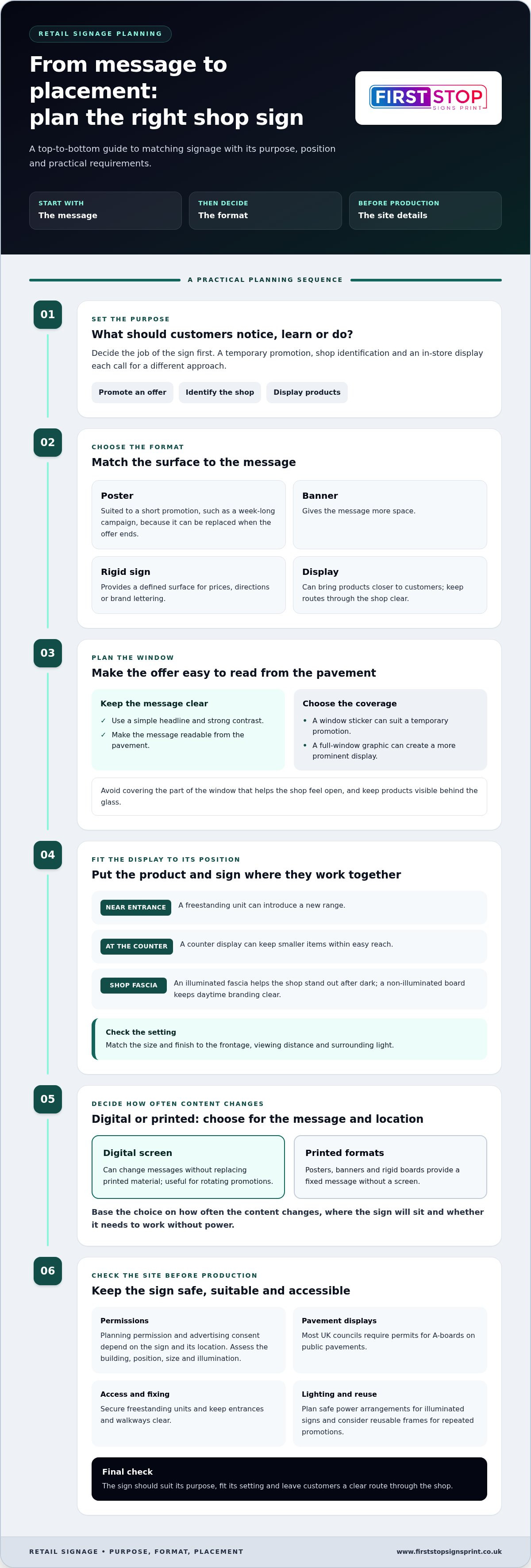
Choose a format by deciding what customers should notice, learn or do. A poster suits a short promotion, such as a week-long campaign, because it can be replaced when the offer ends. A banner gives the message more space, while rigid signs provide a defined surface for prices, directions or brand lettering. Displays can bring products closer to customers, but should leave clear routes through the shop.
For a window, graphics and lettering can announce an offer before shoppers enter. Use a simple headline, strong contrast and a clear view of products behind the glass. A window sticker can suit a temporary promotion; a full-window graphic can create a more prominent display. Keep the message readable from the pavement, and avoid covering the part of the window that makes the shop feel open.
Custom displays work best when their shape and position suit the product. A freestanding unit near the entrance can introduce a new range; a counter display can keep smaller items within easy reach. An illuminated fascia helps a shop stand out after dark, while a non-illuminated board keeps daytime branding clear. Match the size and finish to the frontage, viewing distance and surrounding light.
Digital and traditional formats serve different needs. A digital screen can change messages without replacing printed material, making it useful for rotating promotions. Posters, banners and rigid boards provide a fixed message without a screen. Choose based on how often the content changes, where the sign will sit and whether it needs to work without power.
UK suppliers include print specialists producing posters, window graphics and banners, and sign manufacturers making rigid boards, fascias and illuminated signs. Their services differ in formats, materials, design support and installation, so match the supplier’s work to the sign type and site requirements.
Planning permission and advertising consent depend on the sign and its location. Assess the building, position, size and illumination before production. Most UK councils require permits for A-boards on public pavements, so factor this into plans for pavement-facing displays.
Key risks include signs falling or obstructing access, poorly managed lighting or cables, and disposable displays creating avoidable waste. Secure freestanding units, keep entrances and walkways clear, and plan reusable frames for repeated promotions. For illuminated signs, include safe power arrangements in the design and installation plan.
2. Are shop signs a long-lasting option?
Yes, an exterior sign can serve a shop for years when its material suits its location. High-quality vinyl with protective lamination can last 5-7 years in challenging UK conditions. Outdoor signs should be selected with weather exposure, surface preparation and maintenance in mind. A sheltered entrance and an exposed street-facing frontage place different demands on the same material.
A well-designed fascia sign might be seen by thousands of people daily for 7-10 years. That makes legibility and lasting branding important from the outset. Choose lettering and colours that remain clear against the building, then position the sign where passing pedestrians and drivers can see it. A fascia should identify the shop before a customer reaches the entrance.
Illuminated signs and 3D lettering add depth and visibility, particularly where a frontage needs to stand out in changing light. Lighting can make a shop name easier to notice after dusk, whilst raised letters create shadow and dimension during daylight. Both need suitable construction and secure fixing. Plan the sign around the frontage, viewing angle and existing lighting, rather than treating illumination as a substitute for clear lettering.
A-boards and pavement signs offer a changeable message close to the entrance. They can highlight a daily special or direct passers-by towards a doorway, but they are not a replacement for a permanent fascia. Bring them indoors when not in use and keep the pavement clear. Most UK councils require permits for A-boards on public pavements, so account for this when planning an outdoor sign.
Shopfront boards and fascias provide a stable place for the main business name and identity. Overhead wayfinding signs serve a different purpose inside larger premises, helping customers find departments, tills or collection points. Use consistent lettering and directional wording so visitors can follow the route without stopping to interpret each sign.
To help a sign last, match it to its exposure and purpose. Check fixings and surfaces during routine shop maintenance, and clean signs using methods suited to their materials. Replace damaged lettering before it becomes difficult to read. Simple inspections can reveal loose edges, faded graphics or lighting faults before they affect the shop’s presentation.
Consider a professionally made custom shop sign when your fascia, raised lettering or illuminated display needs a durable, considered finish. A well-planned sign can deliver consistent visibility without relying on frequent changes.
3. How can shop signs help my business?
Effective signs can guide attention towards a product, promotion or useful next step. Keep each message focused: show the offer, name the benefit and make the action clear. A Signage Foundation study found that 60% of surveyed businesses reported a 10% increase in sales after installing new or improved exterior signage. This is a reported result, not a promise for every shop.
To support footfall, make your shopfront easy to recognise from the street. Display the business name prominently, then add one concise reason to enter, such as a seasonal offer or new range. A custom shopfront sign can create that first visual impression; window graphics can carry the promotion without crowding the fascia. Keep essential details readable and consistent across both.
Promotions work best when the message is specific and current. Instead of a general “Sale” poster, identify the product category, saving or offer period where relevant. Position it beside the featured stock or near the entrance so customers can connect the message with the product. Retailers can update window graphics monthly to highlight new stock or services and maintain customer interest.
Signs also reduce uncertainty. Clear information about departments, opening times, payment methods or collection points helps visitors decide where to go without searching for assistance. For example, a directional sign near the entrance can point towards changing rooms, while a small counter sign can explain a collection process. Prioritise the information customers need at each stage of their visit.
Choose colours, lettering and materials that fit the brand customers already know. A premium retailer might use restrained colours and precise typography; a children’s shop could use brighter graphics and friendlier lettering. The aim is not to decorate every surface, but to create a recognisable visual system linking the fascia, windows, promotional signs and interior displays.
For a chain, consistency matters across every branch. Set shared artwork, wording, colours and placement rules, then adapt dimensions to each shopfront. A coordinated retail graphics rollout has covered 120 stores for a national fashion retailer. That example shows why production files and installation instructions should be organised centrally, while local site conditions still shape the final fit.
Measure whether a signage project serves its purpose by recording a simple baseline before changing signs. Track enquiries about the promotion, visits to the featured display or use of a collection point. Compare the same measures afterwards, noting campaign dates and other changes. This gives the team practical evidence for refining future promotions and building brand recognition.
4. How long does a typical retail signage project take?
Typical production times vary by format: banners and point-of-sale materials take 5 to 10 days, while wall murals and rigid shop signage take 7 to 14 days. Window stickers typically take 3 to 7 days. These are turnaround guides, not the full project schedule: design approval, site preparation and installation can affect the overall timing.
Start with the message and location. Decide whether a sign needs to promote an offer, identify the shop or direct customers. A fascia design needs to suit the frontage; window graphics should preserve visibility through the glass. For a sign viewed from across a street, consider its size, contrast and lighting together, rather than enlarging the artwork without checking the available space.
For a personalised design, prepare the wording, logo and preferred colours before artwork begins. If you already have artwork, provide the original file and specify the finished dimensions and intended position. A clear brief helps the designer set up the layout for the material, whether it will be printed as a poster, applied as window graphics or produced as a rigid sign.
Proofing is the chance to catch mistakes before production. Check spelling, contact details, prices and dates against the approved promotion. Review colour, contrast and logo proportions on the proof, then confirm the message reads clearly at its intended viewing distance. Small lettering that looks legible on a computer screen may be difficult to read on a shopfront.
Choose size and placement by considering the viewing angle, surrounding architecture and foot traffic. Lighting should make lettering visible without obscuring the message or creating distracting glare. A sign facing a shaded entrance may need a different lighting approach from one receiving direct daylight. These checks help the design attract attention while fitting its setting.
After approval, production begins using the chosen material and finish. Installation may involve access arrangements, fixing points, surface condition and coordination with the shop’s opening hours. A rigid sign may need secure mounting, while a window sticker needs a clean, prepared surface. Settle these details early to help avoid delays between production and fitting.
Plan for routine care after installation, too. Keep printed surfaces clean using a method suited to their material, and inspect fixings, edges and lighting during normal premises checks. For changing promotions, prepare replacement artwork before the current offer ends. A clear schedule makes updates easier to organise and keeps outdated messages out of the window.
Build the signage project plan around the format, artwork readiness, proof approval and site requirements. Production turnaround provides a useful starting point, while each design and installation stage shapes the actual delivery date.
5. Interior signage and customer experience
Customers form impressions of retail signs within 2-3 seconds. In that brief glance, a clear welcome sign or a well-placed offer can make the shop feel easier to understand. Use one main message at the entrance, then support it with signs that help visitors decide where to go next. Avoid competing headlines at the doorway.
Wayfinding works as a sequence, not as a collection of unrelated arrows. Start with a visible sign at the entrance, direct customers at each junction, then mark the destination. For example, a clothing shop might point towards changing rooms, tills and collections. Use the same words and symbols throughout so customers can follow each instruction without guessing.
Place information where customers need it. A price or product detail belongs near the item; a returns instruction belongs near the service point. At a busy counter, a short sign can clarify where to queue or collect an order. Keep the wording direct and make the key action stand out from supporting details.
Custom signs can also help shops adapt their interiors for events. A bookshop hosting a local author might use a welcome board, directional signs and a backdrop for the signing area. For a seasonal launch, coordinated colours and lettering can connect the event area with the shop’s existing identity. Plan sign positions around displays, entrances and customer movement.
Choose materials to suit the indoor setting and message. Acrylic can create a smooth, polished look for a counter sign or wall-mounted notice. Printed panels can carry detailed information, while raised lettering adds depth to interior branding. Consider lighting, wall colour and viewing distance before choosing finishes, so the text remains clear in its final position.
Signs designed for indoor use should not automatically be placed outside. An exterior position exposes materials to weather, changing light and dirt, which can affect appearance and readability. If one design needs to work both indoors and outdoors, choose materials and fixing methods for the more demanding location. Keep a separate indoor version if the finish or lighting needs to differ.
Review the customer route by walking from the entrance to the main destinations. Check whether each direction is visible before a visitor reaches a junction, and remove signs that repeat or contradict one another. A simple floor plan can show where signs should go, including the entrance, till, changing rooms and event area.
For an interior that needs clear directions and a consistent visual finish, discuss your shop signage project and the spaces it needs to serve.
First Stop Signs Print: Label Printing
First Stop Signs Print helps retailers bring their visual identity into the shop with custom business signs and commercial printing. Its shop signs, window graphics and large-format printing can help make a shopfront easier to recognise and carry a consistent look into the interior.
For spaces that need more than practical identification, 3D Wall Panels and Metal Wall Art can add a distinctive visual feature. These options suit different purposes, from presenting a brand across the shopfront to adding character inside the store. Consider how each element will work with your existing colours, displays and customer route.
A signage project is easier to plan when you know what the sign needs to communicate and where it will appear. Contact First Stop Signs Print to discuss your shop’s signage needs.
Make your next shopfront decision count
Before commissioning new retail signage, decide what customers should notice first and what they need to do next. That priority can guide the wording, placement and visual style, helping each sign feel purposeful rather than competing for attention. Consider how your shop’s identity carries from the entrance into the interior, and where a small detail could make the customer journey clearer.
First Stop Signs Print offers Label Printing, Custom Business Signs and 3D Wall Panels, supporting businesses that want their brand to appear consistently across products and premises. Bring your idea, intended location and artwork together, then discuss how the finished signs can suit your shop’s layout and identity.
Contact First Stop Signs Print to talk through your signage requirements and take the next step towards a more distinctive shop environment.
Frequently Asked Questions
Are shop signs a long-lasting option?
Yes, shop signs can remain useful for years when their materials and maintenance suit the setting. Sun, rain, wind and dirt affect outdoor surfaces, while indoor signs face different wear. Inspect signs periodically for loose fixings, lifting edges, faded wording or lighting faults. Clean them using a method suited to their material to help preserve their appearance and keep the message clear.
How can shop signs help my business?
Shop signs help customers recognise your business, notice relevant offers and find important areas. Give each sign one job: a fascia identifies the shop, a window message highlights a product, and a directional sign guides visitors. To assess whether a change is useful, compare customer questions or enquiries about a promotion before and after installing it. Keep the message, location and measurement consistent.
How long does a typical retail signage project take?
Production varies by format: banners and point-of-sale materials typically take 5 to 10 days, while wall murals and rigid shop signs take 7 to 14 days. Window stickers typically take 3 to 7 days. Add time for preparing artwork, approving a proof and arranging installation. To plan a launch, work backwards from the date the sign must be displayed, allowing time to resolve design changes before production.
What exactly is commercial signage and why does it matter?
Commercial signage is visual communication that a business uses to identify its premises, present information or promote products and services. It includes shop fascias, window graphics, interior directions and promotional displays. Clear signs help customers understand where they are and what the business offers. For example, a consistent shop name on the frontage and near the till reinforces recognition at different points in the visit.
What are the purposes of signs in shops?
Shop signs identify the business, explain offers, label products, guide customers and communicate practical details. A new visitor might need directions to the till, while a returning customer may look for a collection point. Place each message near the decision or destination it relates to. This reduces uncertainty and helps staff spend less time repeating directions or explaining information already shown clearly.
How much does retail signage cost in the UK?
There is no fixed cost: the price depends on the sign’s dimensions, materials, finish, artwork and whether installation is required. First Stop Signs Print calculates pricing after reviewing artwork and measurements, so request a price for your specific project. Installation is optional and requires a postcode. Accurate measurements and the intended location help define the work being quoted.
What materials are best for indoor and outdoor retail signs?
The best material depends on the sign’s location, finish and use. Indoor signs can prioritise appearance and surface detail, while outdoor signs need weather-grade materials suited to rain, wind and frost. Acrylic, Dibond composite panels and vinyl are among the materials used for business signs. Consider the surface behind the sign, how it will be fixed and whether the message needs regular updates.
What accessibility and legibility requirements should retail signage meet?
Make signs easy to read and understand with clear wording, strong contrast and lettering suited to the viewing distance. Put directional information at decision points, and use words alongside colour or symbols so meaning does not rely on colour alone. Keep routes and entrances clear of signs or stands. These practical design choices support navigation for customers with different sight, mobility and communication needs.


