
A clear quote request is the quickest way to get a useful answer when you need posters or business printing. A print shop near me can assess the job more accurately when you provide the finished size, quantity, intended use, artwork and deadline. Include these details from the outset to make it easier to choose the right print option.
A fast, straightforward process matters when printed materials are needed for an opening, promotion or event. The right choice depends on more than speed: format, viewing conditions and artwork quality all affect what will work well.
This guide explains what to include in a quote request, how to prepare print-ready files and which products can help your business stand out locally, from posters and flyers to signs and business cards. It also covers how to discuss same-day or next-day printing options in relation to your job, so you can plan the next step with practical information and fewer surprises.
Key Takeaways
- Choose a poster format around where it will be displayed and how people will view it.
- For a useful quote, prepare the artwork and share the finished size, quantity, intended use and deadline.
- Discuss turnaround and collection arrangements early when planning urgent printing.
- Match local visibility products, such as signs, labels or business cards, to how customers encounter your business.
- Use a print shop’s opening hours and contact details to plan your enquiry and collection.
Poster and large-format printing
Yes. Nearby print shops can print documents, posters, flyers and business cards. Poster and large-format printing suits messages that need to be seen across a shop, reception area or event space.
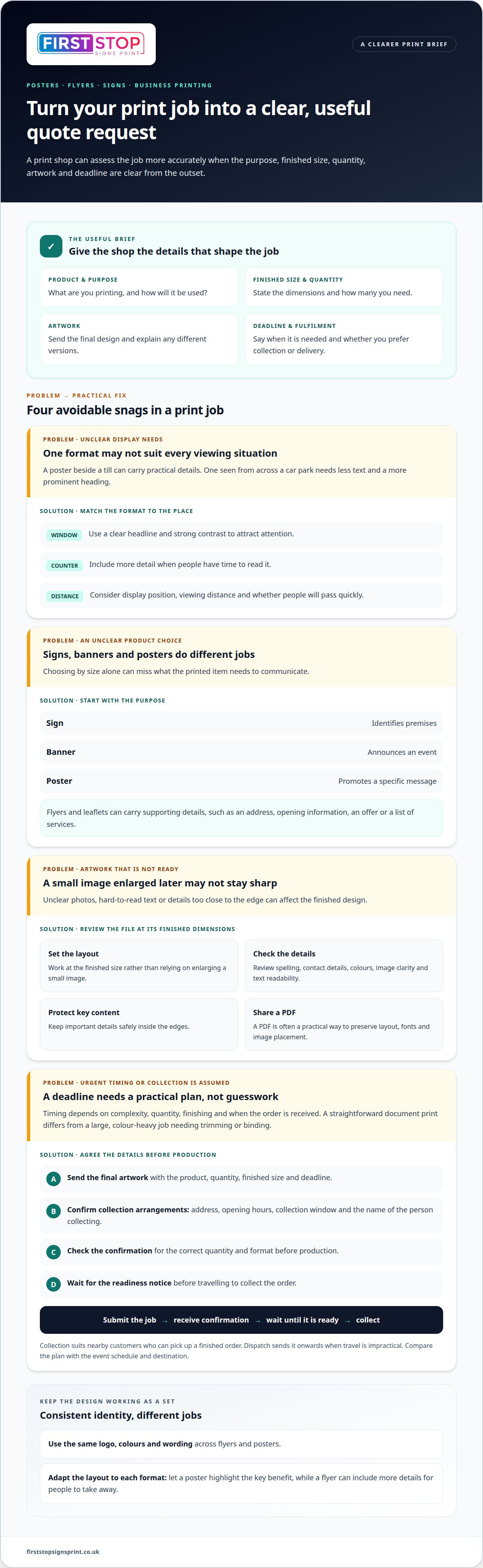
Start by matching the format to its location. A shop-window poster needs a clear headline and strong contrast, while a notice beside a counter can include more detail. For example, a café promoting a seasonal menu could use a window poster to attract attention and leaflets to explain the offer. Make the main message easy to spot before adding supporting information.
Large-format printing helps a business stand out where small stationery might be overlooked. Signs, banners and posters have different purposes: a sign identifies premises, a banner announces an event, and a poster promotes a specific message. Consider viewing distance, display position and whether people will pass quickly or have time to read. A poster beside a till can include practical details; one viewed from across a car park needs less text and a more prominent heading.
Keep the visual identity consistent across flyers and posters, while giving each format its own job. A flyer can include an address, opening information and an offer, while a poster highlights the key benefit. Use the same logo, colours and wording, then adapt the layout to each format. Leaflets are useful when readers need more detail to take away, such as a list of services or product information.
Prepare the artwork before requesting poster printing. Set up the layout at the finished dimensions rather than enlarging a small image and hoping it stays sharp. Check that photographs are clear at the intended size, text is readable and important details sit safely inside the edges. A PDF is often a practical way to preserve the layout, fonts and image placement when sharing a finished design.
- Choose the purpose: promotion, directions, identification or event information.
- Set the format: decide where the item will sit and how far away people will view it.
- Review the artwork: check spelling, contact details, colours and image clarity.
- Describe the job: share the finished size, quantity and intended display when requesting a quote.
These steps help clarify whether you need a compact poster, a prominent display or coordinated printed materials. For a local launch, for instance, a shop-window poster can attract attention while matching flyers provide details customers can keep. Clear artwork and a defined purpose make it easier to choose a suitable format and create a consistent result.
Same-day printing and collection
Print shops may offer photocopying, scanning, binding and laminating alongside printing. Specify the task when arranging collection, especially if you need a finished document rather than loose copies.
For urgent printing, send the final artwork and job details together. State the product, quantity, finished size and deadline in your first enquiry. A complete request helps First Stop Signs Print assess the job and explain the available production and collection arrangements. For business cards, include the approved design and your collection or delivery preference.
The time needed depends on practical details such as complexity, quantity, finishing and when the order is received. A straightforward document print differs from a large, colour-heavy job that needs trimming or binding. Make the deadline clear before production begins, and avoid sending revised artwork after approval.
Collection is useful when you need printed materials at a particular place and time. Confirm the collection address, opening hours, collection window and any reference needed at handover. If a colleague will collect the order, include their name in the arrangement. Keep the order confirmation available so the correct package can be identified efficiently.
Click and collect follows a simple sequence: submit the job, receive confirmation, then collect it once the shop confirms it is ready. Don’t assume an online order is immediately available. Check that the confirmation shows the correct quantity and format, and wait for the collection notification before travelling. This helps avoid a wasted journey, particularly when the order is needed for a meeting or event.
- Send complete details: include artwork, quantity, format and deadline.
- Agree collection: establish the address, timing and collection name.
- Review confirmation: check the job details before production.
- Wait for readiness: collect after receiving the shop’s notice.
Collection and dispatch serve different needs. Collection suits nearby customers who can pick up a finished order; dispatch sends it onwards when travel is impractical. If you’re preparing materials for a launch, compare the collection plan with the event schedule and destination. Packaging, delivery arrangements and the time available all affect which option is more convenient.
For a local business print project, organise the finished artwork and collection details together through print project options. A clear brief makes it easier to discuss the job and its practical next steps.
Printing quotes and file support
Begin a quote request with the finished product, size, quantity and deadline. Add how it will be used, such as flyers for a reception desk or a poster for a shop window. These details help First Stop Signs Print understand the job rather than assess an incomplete description. If you need several versions, explain how the designs or quantities differ.
First Stop Signs Print calculates prices after reviewing the artwork and measurements. Format, quantity, material, colour coverage and finishing can all affect the price. A quote should make clear what the job includes, so compare matching specifications rather than looking at the total alone. For example, a folded leaflet and a flat flyer are different formats, even if they use the same artwork.
Prepare artwork at the intended finished size and orientation. A design for a portrait notice won’t suit a landscape display without adjustment. Check every line of text, particularly names, dates, telephone numbers and web addresses. Ask someone else to proofread the final version. A fresh reader may spot a missing word or incorrect contact detail before printing.
For file support, share the original artwork and explain what needs attention. A print-ready PDF can preserve the layout, fonts and image positions, while an editable file can help with requested changes. Keep logos and photographs clear at their final size. If text or images sit close to an edge, ask how the design should allow for trimming. This helps identify practical issues before the job moves forward.
- Job: name the product and intended use.
- Dimensions: give the finished size and orientation.
- Quantity: state how many copies or versions you need.
- Artwork: attach the final file and note any requested edits.
- Timing: include the deadline and preferred collection or dispatch plan.
For example, when ordering event flyers, send the approved design, state the finished format and include the event date. If the artwork needs a change, describe it clearly, such as moving the venue details above the opening hours. Specific instructions reduce avoidable back-and-forth and distinguish the approved version from earlier drafts.
Before approving the quote, check the product description, quantity, artwork version and finishing details. Confirm that the proof shows the correct spelling, colours and contact information. Once approved, save the final file and quote together. They provide a clear reference if you reorder the same materials or request a revised design later.
Same-day and next-day printing
Same-day and next-day printing can help when an event, promotion or meeting is close. The turnaround is shaped by the job’s scope, artwork readiness, finishing and collection arrangements. A single-page notice with approved artwork is a different task from a large batch requiring several production steps. Set the deadline first, then describe the job clearly.
Be precise about what “ready” means. A finished print might need trimming, folding, binding or packing before collection. For example, flyers for a morning event need to be ready for use, not merely printed. State the date and time you need the completed order, and whether you can collect it. This gives the printer a practical schedule to assess.
Artwork approval can affect the production timetable. Send the final file with correct text, images and dimensions, then review any proof promptly. If a proof needs changes, list them together rather than sending separate corrections. A revised logo or incorrect event date can require another review. Approving one accurate version helps avoid delays caused by uncertainty over which file to print.
Choose a simpler specification when time is tight. A standard format with straightforward finishing may involve fewer production steps than a custom size or elaborate assembly. For example, a business preparing handouts could choose a flat flyer instead of a folded leaflet if both suit the message. Keep the design complete and avoid last-minute edits once the approved artwork is in production.
- Give the deadline: state when the finished order must be ready.
- Describe the job: include the item, quantity, size and required finishing.
- Send final artwork: use the approved file and check essential details.
- Plan collection: allow for travel and the agreed handover time.
Next-day printing can provide more planning room than a same-day request, but the schedule still needs to account for production and collection. If materials are for a launch, work backwards from the event: allow time to review the proof, approve the final design and collect the finished prints. Keep the approved artwork and order details together, especially when several versions are involved.
For urgent work, send one complete enquiry rather than a series of partial messages. Include the deadline, final artwork, quantity and finishing instructions in the same request. A clear brief lets First Stop Signs Print assess the production steps and respond with a workable plan. If the schedule is too tight for a complex job, simplifying the format or finishing can reduce the steps needed before collection.
What are the opening hours and contact details of nearby print shops?
Opening hours and contact details vary by print shop, so check the current business listing before travelling. Search results and map listings can help identify nearby options, but compare the hours with the shop’s own website or latest business profile. Pay particular attention to Saturday hours, bank holidays and notices about temporary changes.
Choose the contact method that suits your question. A phone call is useful for a time-sensitive collection query, while email gives you space to attach artwork and describe a print job. An enquiry form can also capture details such as the product, quantity and required date. If you need posters for an event, include the finished size and when you plan to collect them.
Before calling, note down the information needed to understand your request. State the item, quantity, format, deadline and collection or delivery preference. For a complex order, keep the artwork file nearby so you can describe its format and finishing requirements. A prepared enquiry makes it easier to discuss the job without searching through messages during the call.
- Opening hours: check the day and time that you plan to visit.
- Telephone number: use it for urgent questions about collection or timing.
- Email address: send artwork and a written job description.
- Shop address: confirm the location and plan your journey.
- Online form: provide the requested details in one enquiry.
Before visiting, confirm the address and purpose of your trip. A shop may handle enquiries, proof approval and finished-order collection through different processes. If you’re collecting flyers, have your order name or reference ready. If you’re bringing a document for copying, check the shop’s stated services and opening hours before setting out.
Use contact details to resolve practical questions, not to leave essential job information until arrival. A short email can record the agreed format, quantity and collection plan. Keep the reply with your artwork and any proof, especially if several versions are involved. This gives you a clear record when you collect the finished work.
For a printing enquiry, send your print project details and explain what you need, the quantity and your preferred timing. Clear information helps move the conversation from a general request to the practical details of the job.
Hours and contact details vary by shop, so verify the current listing and address for the location you plan to visit. Use the listed phone number, email address or online form to get in touch.
First Stop Signs Print: Label Printing
First Stop Signs Print provides label printing for businesses that need product information and branding clearly presented on packaging. Explain what the labels need to communicate and where they will be used, such as on retail packaging. A clear brief helps shape the print job around its purpose.
For a wider visual presence, First Stop Signs Print also offers custom business signs, 3D wall panels and metal wall art. These options can support a shop’s identity across packaging, signage and interior spaces, creating a more consistent impression for customers.
Prepare your artwork and outline the intended use, dimensions and quantity when discussing a label project. Contact First Stop Signs Print to talk through your printing requirements.
Make your next print project work harder
Printed materials do more than share information. They help customers recognise your business, from product packaging to the shop interior. As you plan a project, consider how each piece contributes to a consistent visual identity. A label identifies a product, while a sign gives your premises a distinct presence.
First Stop Signs Print offers label printing, custom business signs and 3D wall panels. These options can help businesses carry their visual identity across packaging and physical spaces. If you’re weighing up what your project needs, begin with the purpose: what should customers notice, understand or remember?
A focused brief gives the conversation a useful starting point. Share the intended application and the look you want to achieve, then discuss the printing or signage option that fits. If you’re ready to move from searching for a print shop near me to planning a specific project, contact First Stop Signs Print. Your next step can be a clearer, more distinctive presence for your business.
Frequently Asked Questions
Need A Quote?
To request a quote, give First Stop Signs Print a clear description of the job and its intended use. Include the item, quantity, finished dimensions, artwork status and required date. For window posters, say how many you need and whether the design is final. If you need several versions, explain what changes between them. This helps assess the specification you have in mind.
Need brilliant quality printing?
Quality starts with artwork suited to the finished print and careful checks before approval. Review the proof for spelling, image clarity, colour balance and contact details. Consider viewing conditions too: small text may be unsuitable for a poster viewed from across a room. For product labels, check that essential information remains legible at the label’s actual size. A clear brief helps align the result with its purpose.
What print shops are near me in the UK?
A print shop near me in the UK depends on your town, postcode and the type of printing you need. Use a map or local directory to find nearby businesses, then compare their listed services with your project. A shop focused on document copying may not suit a large display job. For business printing, look for relevant products such as posters, flyers, labels or signage, and note the address before planning collection.
How much does printing cost at local print shops?
First Stop Signs Print calculates the price after reviewing the artwork and measurements. The format, quantity, material, colour coverage and finishing can affect the quote. A batch of simple handouts differs from a large display with specialist finishing. For a useful quote, describe the exact item and intended use rather than asking for a general price. Compare quotes only when the specifications match.
Can I upload files online or print from a USB drive at nearby shops?
Some print shops accept online uploads, while others may take files in person from a USB drive. The available method depends on the shop’s ordering process. For an online order, label the file clearly and include any instructions. For a USB job, bring the final version and identify the file to print. If several drafts are saved, remove or clearly name outdated versions to reduce the chance of selecting the wrong artwork.
What file formats, paper sizes, and print specifications do local shops accept?
Accepted file types and print specifications depend on the printer and job. Before sending artwork, state the finished dimensions, orientation, quantity and colour requirements. A PDF can preserve a design’s layout, while editable artwork may help if revisions are needed. For paper, describe the intended feel and use, such as a lightweight handout or a firmer menu. These preferences help the printer assess the job against its production options.
Do nearby print shops offer delivery or click-and-collect?
Some print shops offer collection, delivery or click and collect, with arrangements set by each business. Collection suits customers who can travel to the premises; delivery can help when materials need to reach an office or event venue. For click and collect, follow the order instructions and wait for confirmation that the job is ready. Include the destination and timing in your enquiry so the fulfilment method can be considered alongside the print order.


