
Brick needn’t rule out metal wall art for business premises. It can be mounted on brick when the fixings suit the masonry, the artwork’s weight and the way it hangs. The condition of the brick and mortar matters too, so choose a mounting method for the wall as well as the artwork.
Look beyond the design: you want a finish that suits your business, hangs securely and works with the room’s light and character. Price matters too, but depends on practical choices such as size, material, finish and design detail.
This guide explains how to mount artwork on brick, how sunlight can affect metal artwork and how finishes change its appearance. You’ll also learn what influences pricing and how artwork can express your company’s history or personality, helping you choose thoughtfully for your premises.
Key Takeaways
- Brick walls can support metal artwork when the fixings suit the masonry, the artwork’s weight and the wall’s condition.
- Sunlight, placement and surface finish all affect how artwork looks over time, so consider the room’s exposure before choosing a design.
- Compare materials and finishes by the effect you want, from a subtle decorative detail to a stronger focal point.
- Choose artwork that reflects your company’s character and feels appropriate for the people who use or visit the space.
- Project pricing depends on choices such as size, material, finish and design detail, so define your priorities before requesting a quote.
Does aluminium wall art fade in sunlight?
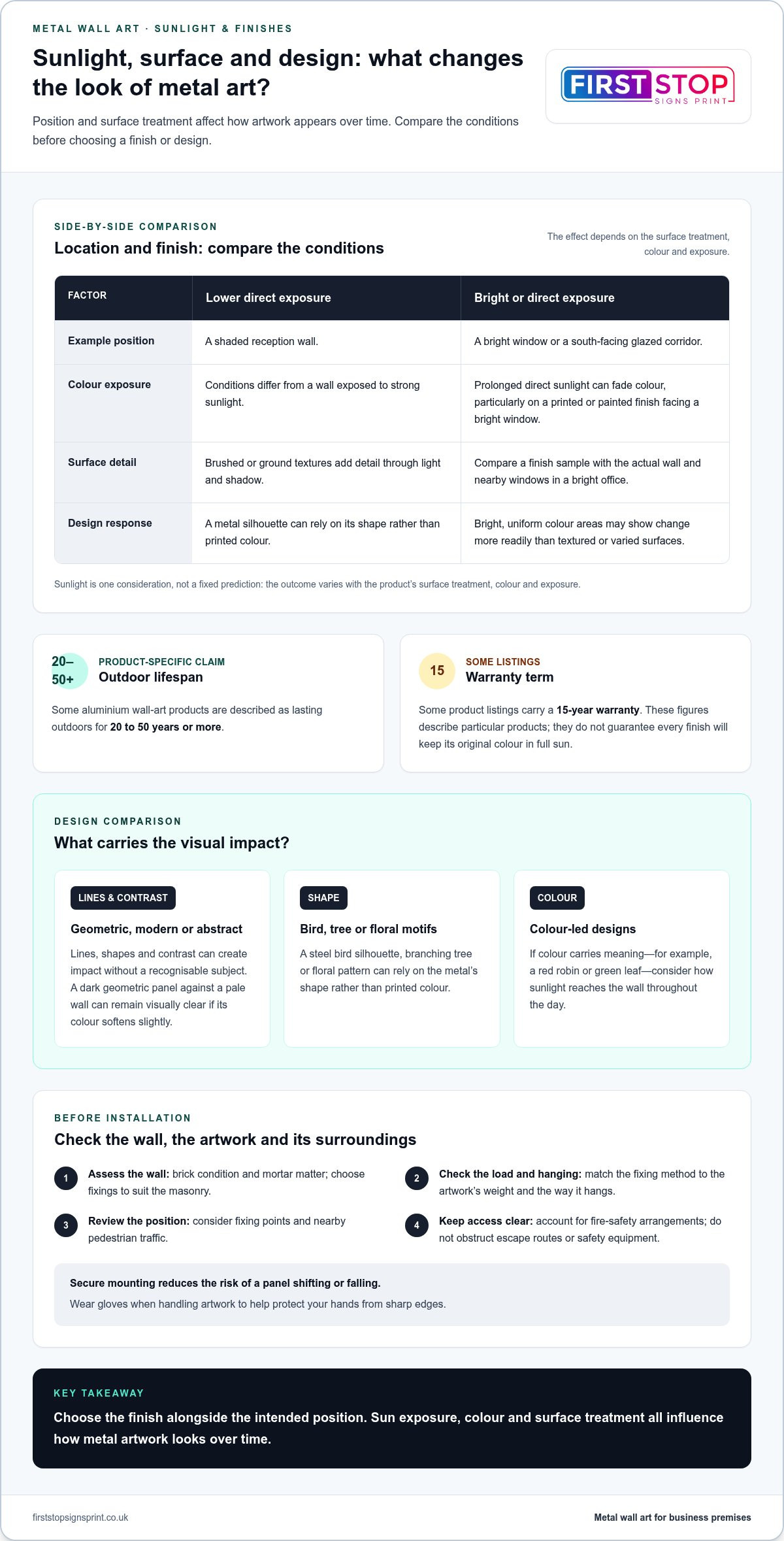
It can. Colour on aluminium wall art may fade after prolonged exposure to direct sunlight, particularly if a printed or painted finish faces a bright window. The effect depends on the surface treatment, colour and exposure, so consider the finish alongside the intended position before choosing a design.
Some aluminium wall-art products are described as lasting outdoors for 20 to 50 years or more, and some listings carry a 15-year warranty. Those figures describe particular products, not a guarantee that every finish will keep its original colour in full sun. A shaded reception wall and a south-facing glazed corridor create different conditions.
For a practical demonstration of how surface texture is created, watch this video:
Design affects how any change in colour appears. Geometric, modern and abstract pieces use lines, shapes and contrast to create impact without a recognisable subject. For example, a dark geometric panel against a pale wall can remain visually clear if its colour softens slightly. Bright, uniform areas may show change more readily than textured or varied surfaces.
Animal, bird, floral and tree designs each bring a different character to a workplace. A steel bird silhouette, branching tree or floral pattern can rely on the metal’s shape rather than printed colour. If colour carries meaning, as with a red robin or green leaf, consider how sunlight reaches the wall throughout the day.
Metal artwork can have painted, printed, polished or textured finishes, each creating a different visual effect. Aluminium and steel can both be shaped into decorative panels, while brushed or ground textures add detail through light and shadow. In a bright office, compare a finish sample with the actual wall and nearby windows.
Made-to-order designs let a business tailor artwork to its space. Decide what matters most: a particular colour, company motif, precise wall dimensions or surface texture. Then consider the room’s exposure to sunlight. For instance, a custom abstract pattern can use the company palette without relying on colour alone for visual interest.
Sports and team designs can create an immediate connection in a club, gym or hospitality setting. A ball, racket or team-colour motif can be cut or formed as metal artwork. If the piece will hang beside a sunny entrance, consider its silhouette and contrast as well as its colour, so it remains clear as light conditions change.
For UK premises, consider the artwork’s material, position and fixing method alongside the building’s fire-safety arrangements and access needs. Keep escape routes and safety equipment unobstructed, and make sure the artwork is mounted securely.
Businesses can source commercial metal wall art from specialist metal-art and signage suppliers. Compare the material, finish, intended location and fixing details, then match the specifications to your space.
Before installation, assess the wall, artwork weight, fixing points and nearby pedestrian traffic. Secure mounting reduces the risk of a panel shifting or falling. Wear gloves when handling the artwork to help protect your hands from sharp edges.
Adding colour and personality to office interiors
Metal artwork can give an office a focal point without making colour a permanent part of its interior scheme. For example, a feature panel in a reception can add a strong accent against neutral walls, while leaving desks, flooring and furniture unchanged. It’s a useful option when a space needs character but the wider design should remain adaptable.
Start with the people who use the room. A client-facing reception may suit a calm abstract design, while a creative studio could carry a bolder pattern. Consider what visitors should notice first: the company name, a distinctive shape or a burst of colour. A clear priority helps the artwork feel intentional rather than competing with signs, screens or displays.
Use the office palette as a practical guide. Pick out a colour already present in the upholstery, brand details or a meeting-room wall, then decide whether the artwork should echo or contrast with it. For example, a muted blue wall can complement a warmer bronze-toned feature, while a bright yellow accent may work better in a mostly neutral room.
- Reception: Choose a recognisable focal design that gives visitors a clear first impression.
- Meeting room: Use a restrained pattern that adds interest without distracting from the table or presentation screen.
- Shared workspace: Select a motif that connects separate desks, such as a repeated line or shape.
- Breakout area: Introduce a more expressive colour or subject to distinguish the space from work zones.
Scale and placement matter as much as colour. A compact piece can look lost on a wide, open wall, while a large design may overwhelm a tightly furnished corridor. View the proposed position from the entrance and main seating area. A paper outline on the wall can help you judge the artwork’s footprint before deciding where to place it.
Metal artwork also gives businesses a way to refresh a room without repainting every surface. A botanical silhouette can soften a technology office, while a geometric panel can reinforce a contemporary fit-out. Match the subject to the room’s purpose and the people who spend time there, rather than choosing a design solely because it follows a current trend.
For a tailored feature that brings a chosen palette or motif into the workplace, explore metal wall art designs and consider how the piece will sit alongside your existing office colours.
Materials and finishes
Choose the metal and finish together, because thickness affects rigidity whilst the surface shapes the final look. Aluminium is a lightweight option, and many aluminium wall-art panels are made from 2 mm-thick sheet. Decorative Corten steel panels commonly use 2 mm steel, while 3 mm can suit larger panels or installations needing extra rigidity.
In busy commercial spaces, durability depends on matching the material, finish and fixing method to the room. Metal wall art is straightforward to maintain: remove dust with a soft cloth and follow the cleaning guidance for its finish. In a busy corridor, secure the fixings and position the panel away from routine knocks to help protect it and passers-by.
Compare finishes under the lighting where the artwork will hang. A brushed surface has a directional sheen, while a ground texture creates visible marks and catches light differently. Polished metal can reflect windows and ceiling lights; a matt finish looks more subdued. Viewing a sample beside the intended wall can reveal these differences before ordering.
Steel and aluminium create different effects. Aluminium is relatively light, which can make handling easier and reduce the load on the wall. Corten steel develops a distinctive weathered appearance, so consider whether that character suits an indoor reception or sheltered exterior. Painted finishes add colour, while bare or textured metal keeps the material prominent.
Before ordering, UK businesses should compare the supplier’s stated material, thickness, finish, dimensions, mounting method and intended location. Check how the artwork will be cleaned and whether the quoted measurements describe the panel alone or its overall footprint.
- Material: Match aluminium or steel to the intended setting and visual effect.
- Thickness: Compare the panel specification with its size and required rigidity.
- Finish: Choose between painted colour, polished sheen, brushed texture or weathered character.
- Mounting: Make sure the fixing method suits the wall and artwork weight.
- Care: Get finish-specific cleaning guidance before using products on the surface.
In a reception, for example, a brushed aluminium panel can add a clean, contemporary accent. A larger Corten feature may suit a spacious interior where its textured surface can be appreciated from a distance.
Metal artwork can stay in good condition in a working environment when it is properly mounted and cared for. A particular outdoor aluminium product may state a lifespan of 20 to 50 years or more, or carry a 15-year warranty; these claims apply to that product, not every metal finish.
Using artwork to express a company’s history or personality
A considered artwork choice can show colleagues and visitors what a company values before anyone speaks. Start by identifying one story the space should communicate: its origins, craft, location or approach to customers. A family bakery might feature a metal wheat motif, while an engineering firm could choose a precise geometric pattern. One clear idea gives the display meaning without turning the wall into a timeline.
Choose the story with the people who use the space in mind. A reception welcomes visitors, while a staff breakout area serves colleagues who spend time there every day. Consider what each group should notice or feel. A local heritage symbol may help visitors understand a firm’s connection to its town; an abstract form may suit a business whose identity centres on innovation.
Translate the story into visual cues. Shapes, surface texture, colour and placement can each carry part of the message. A tree design might suggest growth, while interlocking forms can represent collaboration. A workshop-inspired finish could refer to hands-on production. Keep the connection clear: if visitors need a long explanation to understand the link with the company, simplify the motif.
Use this short planning sequence to connect the design with the business:
- Choose one message: Decide whether the wall should express heritage, expertise, community or a particular working culture.
- Select a recognisable cue: Use a local outline, material reference or brand colour that supports that message.
- Match the room: Place a welcoming story in reception, or a team-focused motif in a shared workspace.
- Review the design: Ask colleagues and visitors whether the intended idea comes across clearly.
Specific references can make a display feel authentic. A coastal business might use a wave contour, while a firm with a long craft tradition could choose a tool silhouette. These are illustrative ideas, not fixed templates. The strongest choice relates to a genuine company value or place, rather than borrowing a fashionable image without context.
Balance personal meaning with the room’s visual needs. A detailed historical scene may suit a large meeting-room wall, while a compact reception could benefit from a simpler emblem. Consider viewing distance, nearby signage and existing colours. A motif that remains legible from the doorway can make the company story easier to recognise.
Metal artwork can express identity without making every part of the interior permanent. A distinctive focal piece can sit alongside neutral walls and existing furniture, leaving the wider scheme flexible. Before settling on a design, write a one-sentence explanation of its meaning. If it connects the artwork to the company and its audience, the concept has a clear purpose.
Wall art product prices
Metal wall art prices vary because a simple cut-out and a detailed bespoke panel require different amounts of material and production work. For a business, the useful comparison is more than the headline price. Match the design, dimensions and finish to the wall, then compare specifications on a like-for-like basis.
For bespoke artwork, the price depends on the project and is provided after a quote request. Key factors include size, metal type, finish, design complexity and mounting requirements. A small, single-layer logo motif needs a different production approach from a large, intricate panel with several cut-out details. Installation and delivery arrangements can also affect the final project cost.
Material is one cost factor. Aluminium panels and steel designs have different properties, and sheet thickness affects material use and rigidity. A compact decorative piece may use less material than a broad feature panel. For a larger installation, ask for the proposed material and thickness alongside the dimensions, so you can assess whether the specification suits the space.
Finish and detail affect the work involved. A straightforward silhouette requires a different level of cutting detail from a design with fine lettering, layered shapes or intricate patterns. Painted colour, a polished surface or a textured effect can also change the production process. Compare your preferred finish with the actual artwork specification rather than assuming similar-looking designs require the same work.
Use this practical comparison before deciding:
- Size: Record the available wall area and the intended panel dimensions.
- Material: Compare aluminium and steel options against the design and location.
- Design: Note whether the artwork uses a simple outline or fine, layered detail.
- Finish: Specify colour, texture or sheen so quotations describe the same result.
- Mounting: Include wall type and installation needs when describing the project.
Product listings can indicate how design and scale affect retail prices, but they are not a reliable budget for a bespoke commercial project. A ready-made animal silhouette and a custom company-history panel differ in dimensions, materials and production requirements. Treat each listing as an example of a specific product, not as a like-for-like quote.
To make a quote request useful, prepare the wall measurements, a design reference and your preferred finish. Add the intended location, such as a reception or meeting room, and say whether installation is required. These details help define the project and make comparisons clearer.
Ready to discuss a tailored design for your workplace? Request a metal wall art quote with your preferred dimensions, material and finish.
First Stop Signs Print: Label Printing
First Stop Signs Print helps businesses bring a considered visual identity into their premises through bespoke Metal Wall Art. Choose a design that reflects your brand, company history or workplace character, then align its material, finish and dimensions with the space. For a broader interior feature, 3D Wall Panels can add depth; Custom Business Signs can reinforce your identity at key points around the premises.
Label printing serves a different purpose, helping businesses present product information and branding on packaging. Together, these options can support different parts of your visual presence, from the office wall to the products customers take away. Share your design direction and intended use to start a focused conversation about the right format.
To discuss metal wall art or label printing, contact First Stop Signs Print or visit www.firststopsignsprint.co.uk.
Plan your next workplace feature
Before committing to a feature wall, decide what you want the space to communicate and who should notice it first. A short design brief can bring together the wall’s purpose, preferred visual tone and important brand details. This gives the artwork a clear role in your premises, rather than making it an isolated decoration. For metal wall art for business premises, that direction is a useful starting point for a design that belongs in your space.
First Stop Signs Print offers Metal Wall Art alongside Custom Business Signs and 3D Wall Panels, helping businesses develop visual features for their premises. Label Printing can support a separate need, presenting product details and branding on packaging. Consider which format fits your immediate priority, then gather any design references or brand elements you want to discuss.
Ready to take the next step? Contact First Stop Signs Print to discuss your ideas and explore a suitable direction. A clear starting point can help turn your workplace vision into a distinctive feature.
Frequently Asked Questions
Can aluminium wall art be mounted on brick walls?
Yes, aluminium wall art can be mounted on brick when the fixings suit the brickwork and panel. First identify whether the wall is solid brick or brick veneer, then check the condition of the mortar and planned fixing points. Loose or crumbling mortar, for example, may not hold an anchor securely. The panel’s weight and hanging method also affect the choice of fixing, so don’t rely on adhesive alone for a substantial piece.
Can aluminium wall art be powder coated?
Yes, aluminium can be powder coated to give it a coloured finish. The result depends on preparation and the coating process, so specify the intended location and colour before production. A business might choose a shade that matches its existing interior or brand palette. Powder coating differs from printing a detailed image: decide whether the design needs a consistent colour surface or fine photographic detail before selecting the finish.
Does Corten steel wall art rust?
Yes, Corten steel develops a rust-coloured surface patina as it weathers. This changing finish is part of its distinctive appearance, unlike the uniform painted look of coated steel. Before placing it indoors, consider whether its evolving character suits the room. Outdoors, position it so rainwater runoff does not mark paving or nearby surfaces. Follow care guidance specific to the panel’s finish and intended setting.
Is aluminium wall art suitable for outdoor use?
Aluminium wall art can be suitable outdoors when its finish, fixings and design are chosen for the exposure. A sheltered entrance differs from an open wall facing wind and rain, so assess the location before selecting a piece. Consider direct sunlight, water runoff and the wall material. On a business frontage, make sure the artwork does not obstruct signs, entrances or access routes, and use secure fixings suited to the site.
What types of metal wall art are suitable for business premises?
Suitable designs include geometric panels, abstract forms, botanical motifs, animal silhouettes and sports-related artwork. The best choice depends on the room’s purpose and the impression the business wants to create. A subtle line pattern may suit a meeting room, while a recognisable bird or team motif could add character to a café or club. For a branded interior, consider a bespoke design using a meaningful symbol without cluttering the wall.
How much does metal wall art for business premises cost in the UK?
The cost of metal wall art for business premises depends on its dimensions, material, finish, design detail and mounting requirements. A ready-made decorative piece and a bespoke panel designed for a particular wall are not directly comparable. To set an accurate project budget, define the intended location, approximate size and finish, then request a quote based on those requirements. Installation needs and design complexity can also affect the overall cost.
How do you choose metal wall art to suit a business’s brand and interior?
Start by choosing the message the artwork should convey, then match its subject and style to the people using the room. A local landmark, for example, can express a company’s community roots, while a clean abstract design may suit a contemporary workspace. Compare the proposed artwork with nearby furniture, wall colours and signs. A paper outline in the intended position can help you assess the scale before choosing the final design.
What sizes and finishes are available for commercial metal wall art?
Commercial metal artwork comes in different dimensions and finishes, with options depending on the design and material. Common visual choices include painted colour, polished or brushed surfaces, and textured metal. Measure the usable wall area and consider viewing distance: intricate details may be harder to see across a large reception. For a custom piece, provide your preferred dimensions and finish, and explain how the artwork should fit into the room.


