
Commercial signage costs in the UK depend on the sign’s size, materials, finish, illumination and installation needs. A printed display and a bespoke illuminated feature involve different design and manufacturing requirements, so start by considering how and where the sign will be used.
It’s understandable to want a clear price before settling on a design. This guide explains what affects the cost, how custom design and manufacture work, and how to compare sign types without losing sight of your budget or business identity.
You’ll also find guidance on choosing signs for outdoor use, including the practical details that influence durability and visibility. From shopfront boards and 3D lettering to illuminated options, the following sections help you match the format to your premises and make an informed decision.
Key Takeaways
- Compare sign costs by considering materials, dimensions, finish, illumination and installation, not just the starting product price.
- Choose between shopfront boards, 3D lettering, illuminated signs and other formats based on where the sign will be seen and what it needs to communicate.
- Custom design can align a sign’s shape, colour and finish with your brand and premises.
- For outdoor use, weigh visibility alongside the sign’s exposure to weather and the demands of its location.
- Explore bespoke business signs, 3D wall panels, metal wall art and label printing to create a more consistent visual presence.
How much does commercial signage cost in the UK?
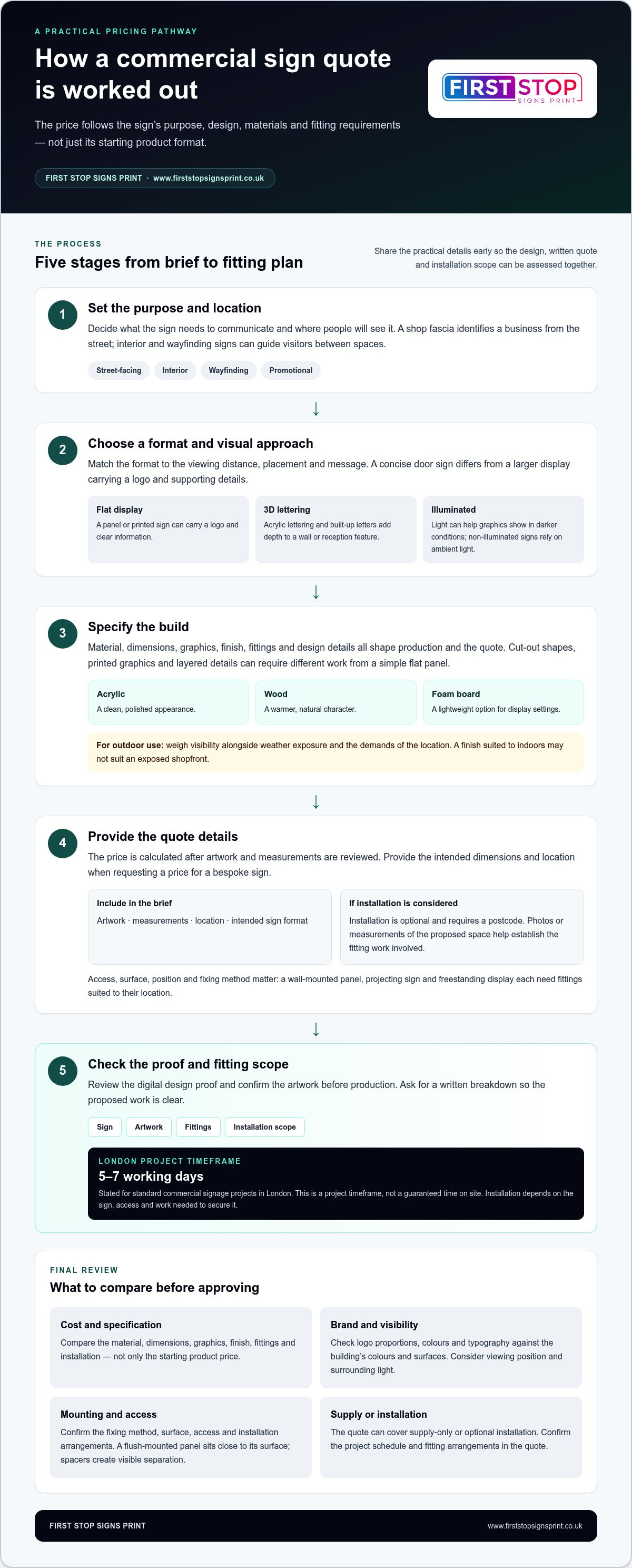
The price is calculated after the artwork and measurements are reviewed. Material, dimensions, graphics, finish, fittings and installation all shape the quote. At First Stop Signs Print, you can request a price for a bespoke sign, with supply-only or optional installation.
Sign materials and custom design
Acrylic, wood and foam board create different looks and suit different spaces. Acrylic can give a clean, polished appearance, whilst wood brings a warmer, natural character. Foam board offers a lightweight option for display settings. Compare the material's appearance and intended location before choosing; a finish that works indoors may not suit an exposed shopfront.
Custom design also affects production. Dimensions, cut-out shapes, printed graphics and layered details all influence how a sign is made. A flat panel with a simple logo has different requirements from raised lettering with several colours. Match the design to your branding, then review the artwork and finish before production.
Ask for a written breakdown covering the sign, artwork, fittings and installation. First Stop Signs Print calculates the price after reviewing artwork and measurements, so provide the intended dimensions and location when requesting a price. Installation is optional and requires a postcode. A small panel and a large fascia involve different materials and handling, while the sign's size and fixing method affect how it can be transported and fitted.
Keep brand consistency in view. Use the same logo proportions, colours and typography across reception signs, shopfronts and internal spaces. A custom design can adapt these elements to each sign's shape while retaining recognisable details. Check how the graphics will appear against the building's colours and surfaces. These choices help define the look and function of commercial signage.
Installation coverage and options
Installation planning covers the sign's location, access, surface and fixing method. A wall-mounted panel, projecting sign and freestanding display each need fittings suited to their position. For installation across our London service areas, provide photographs or measurements of the proposed space. These details help establish what the fitting work involves.
Standard commercial signage projects in London are stated to take 5-7 working days. That is a project timeframe, not a guaranteed measure of time spent on site. Installation itself depends on the sign, access and the work needed to secure it. Confirm the project schedule and fitting arrangements in the quote.
Fittings influence both appearance and practicality. A flush-mounted panel sits close to its surface, while spacers create visible separation behind a sign. Choose an option suited to the wall and desired finish. For an exterior sign, consider how the fixing points meet the surface and whether the graphics remain clear from the intended viewing direction.
Before choosing a sign, check that the proposal identifies the material, dimensions, graphics, finish, fittings and installation scope. Review the digital design proof to see how the sign will look and confirm the artwork before production. This helps align the finished sign with your branding and makes the commercial signage quote easier to assess.
Do you make custom business signs, or only standard designs?
Custom signs can be shaped around a business’s logo, premises and purpose. Standard formats remain useful when a clear, familiar display is the priority.
Commercial sign types and formats
Choose a format by deciding where people need to see the sign and what they need to understand. A shop fascia identifies a business from the street, while interior signs can direct visitors between spaces. Wayfinding signs help people find a reception, department or exit. Custom designs can adapt the size, shape and graphics to your premises rather than relying on a standard layout.
Check viewing distance and placement before approving a design. A door sign needs concise information, while a larger display can carry a logo and supporting details.
Promotional signs and logo printing
Promotional signs put a campaign, offer or event in view. A temporary display can highlight a seasonal promotion, while a printed logo helps visitors recognise the business across reception and customer-facing spaces. Keep the message brief, then make the logo and supporting graphics easy to distinguish.
Consistent colour, typography and logo proportions connect a display to existing branding. Review the artwork at its intended size, especially where small text could become difficult to read.
Three-dimensional acrylic and built-up logos
Three-dimensional acrylic lettering gives a logo depth and a defined edge. Built-up letters create a more dimensional display on a wall or reception feature. Both formats can make a brand stand out in an interior, but the result depends on the logo’s shape, letter spacing and viewing position.
Use a clean artwork file and check each letter’s layout before production. A detailed logo may need careful spacing so its distinctive shapes remain clear at the finished size.
Illuminated and non-illuminated signs
An illuminated sign uses light to make its graphics visible in darker conditions, while a non-illuminated sign relies on ambient light. Consider the sign’s position, surrounding lighting and when people need to see it. LED neon can suit a dim entrance, while an unlit display may work well in a bright interior. Traditional glass neon is also available for heritage projects.
Compare the visual effect, power needs and installation requirements before selecting a format. The right choice is the one that communicates clearly in its actual setting.
Planning permission: Assess the sign’s location, format, illumination and the building or site before manufacture. Planning or property approvals may apply, so establish the relevant requirements before installation.
Accessibility: Make accessibility a design check: use readable lettering, strong contrast and clear placement. The sign’s purpose and setting affect what visitors need to understand or find.
Maintenance and safety: Inspect fixings, surfaces and any electrical components for damage or looseness. Arrange repairs when a sign becomes unstable, damaged or difficult to read.
For a design shaped around your premises and branding, explore custom sign options.
Bespoke commercial signage design and manufacture
A bespoke sign starts with its purpose, position and intended audience. Those decisions shape the design, artwork, materials and installation plan.
Bespoke design and manufacture
Start with your brand assets, wording and location. A reception logo and a shopfront sign need different layouts, even when they share the same identity. The design should account for viewing distance, surrounding colours and the surface where the sign will sit.
Manufacture follows approval of the artwork and chosen format. Options can include LED acrylic panel signs, neon-style logo signs and illuminated sign boxes for visibility in low light or after hours. Most business signs in the collection are produced within 5 to 14 working days after artwork proof approval and payment confirmation.
Design and installation
Plan installation alongside the design, not after manufacture. A wall sign, window graphic and projecting display each need a suitable position and fitting approach. Record the surface, access and viewing direction for the proposed location. These details help align the final design with the way people approach the building.
For an installed sign, the fixing method must suit its location and construction. A digital proof can show placement and scale against a photograph of the wall or entrance. Review the proof, wording, colour and logo proportions before approval. This gives the production team a clear reference for the finished sign.
Prepare artwork in a format suited to the sign’s dimensions. Accepted design files include AI, EPS, SVG and PDF with fonts outlined. JPG and PNG files may need checking. Share the largest original file available so the graphics can be assessed for the intended size.
Check the artwork at its intended display size. Fine details that look clear on a screen may be difficult to see across a reception or shopfront. Inspect small lettering, thin logo lines and colour contrast before sign-off. A print-ready PDF with fonts outlined is among the accepted file formats.
Durable results depend on matching the sign’s construction and finish to its setting. A window graphic faces different conditions from an indoor wall panel, so specify the intended location at the design stage. For an illuminated sign, review how the logo and wording appear when lit and when switched off.
Use a clear production sequence: provide the brand artwork and site details, review the design proof, approve the final format, then schedule manufacture and fitting. This keeps design decisions connected to the installed result and helps avoid late changes to dimensions, graphics or fixing positions.
Choosing signage for outdoor use
Start by identifying the sign’s purpose and exact position. A fascia above a shop entrance needs to identify the business from the pavement, while a forecourt sign may guide visitors towards parking or reception. Photograph the premises from the main approach, then note obstructions such as trees, awnings and neighbouring signs. This gives the design a real setting, not just a blank screen.
Visibility depends on distance, viewing angle, surrounding colours and lettering size. Read the proposed wording from the distance customers will see it. A passing driver has less time to take in a message than someone approaching on foot. Keep essential details prominent, use clear contrast between lettering and background, and avoid filling the sign with information that belongs inside.
Choose a material and finish for the sign’s actual exposure. A sheltered entrance and an open roadside position face different conditions, including rain, wind and direct sunlight. Ask how the selected construction is intended to perform outdoors, and compare its surface finish with the building. A glossy panel may reflect light at certain angles, whilst a matt finish can present graphics differently.
Plan the fitting before approving the final design. Identify the wall or support, its condition and the position of existing doors, windows or lighting. A projecting sign needs clearance from the entrance route; a wall-mounted panel needs fixing points suited to its surface. Provide photographs and measurements, then agree where the sign will sit and how installers will access the area.
Consider illumination against the premises’ surroundings. An illuminated sign can help customers see a shopfront after daylight fades, but nearby streetlights and reflective windows may affect how its graphics appear. Review the design in both lit and unlit conditions. For a non-illuminated panel, check visibility in daylight and shade, especially where a doorway sits beneath a deep canopy.
Before manufacture, work through these practical checks:
- Confirm the sign’s purpose, position and main viewing direction.
- Check that the colour and lettering remain legible against the building.
- Match the material and finish to the sign’s exposure and location.
- Agree the fitting method, access and clearance around entrances.
- Review the artwork against a photograph of the actual premises.
After installation, inspect the sign’s surface, fixings and visibility as part of routine site checks. Look for loose fittings, damaged graphics, fading or lighting that no longer works. A clear record of the installed position and chosen finish helps staff identify changes. Prompt attention to a damaged panel can also prevent an unclear entrance display from confusing visitors.
Commercial signage product prices
Published product prices vary by format, size and specification, so compare like with like. A printed logo sticker, an acrylic panel, a set of three-dimensional letters and an illuminated street-facing sign involve different materials and production steps. A listed price may cover the sign alone, whilst a bespoke project may also involve artwork, fittings or installation. Check what each item includes before judging value.
First Stop Signs Print calculates the price after reviewing artwork and measurements. Dimensions, material, finish, illumination, graphics and installation shape the cost. A small printed display has different requirements from a large fascia fitted above a retail entrance. Shaped lettering or layered logos also involve different production from a straightforward printed panel.
Compare signs with similar specifications rather than treating different formats as equivalent. For example, compare a flat acrylic logo panel with another panel of similar dimensions and finish, then compare a built-up logo with another three-dimensional sign. A projecting or illuminated sign involves different components, so its quote reflects a different specification.
Check what is included in each quote. Window graphics, individual signs and letters can have different specifications and pricing units. First Stop Signs Print calculates prices after reviewing the artwork and measurements. Ask for any optional installation to be considered separately; a postcode is required for an installation request.
Use this sequence to make a fair comparison:
- Match the sign type, intended location and overall dimensions.
- Compare material, colour, finish and printed or raised graphics.
- Check whether illumination, fittings and installation are included.
- Confirm whether the displayed amount includes VAT.
Colour choices can affect how closely a sign follows existing branding. Some business-sign ranges offer 36 standard colours, while custom artwork may require a different finish or production approach. For a bespoke sign, provide the logo, required wording, dimensions and location together. This gives the quote a clear basis and helps prevent comparisons between different specifications.
For example, a retail premises may need a fascia for street visibility, while its reception needs a separate logo display. Treat each as its own specification rather than assuming one product listing covers both. Compare the function, materials and installation scope, then choose the format that meets the brief without paying for features the space does not need.
Discuss your bespoke sign project with the team to start shaping a specification around your premises and branding.
First Stop Signs Print: Label Printing
First Stop Signs Print brings practical print and signage options together for businesses shaping customer-facing spaces. Choose from product labels and packaging print, or bespoke signage designed around your brand and premises.
Alongside Label Printing, options include Custom Business Signs, 3D Wall Panels and Metal Wall Art. These can help carry a consistent visual identity from product labelling to reception and interior displays. For example, a business updating its shopfront could consider a custom sign, then coordinate its product labels with the same branding.
Share the intended use, artwork and location when discussing a project. Those details help define a suitable format and finish. To discuss your signage or printing needs, contact First Stop Signs Print or visit www.firststopsignsprint.co.uk.
Give your next sign a clear purpose
Before beginning a project, decide what you want customers to notice, recognise or find. That brief can guide signage from product labels to features within your premises. Consider how each sign will sit alongside the colours, lettering and displays people already associate with your business. A clear purpose helps shape commercial signage that supports your brand in its physical spaces.
First Stop Signs Print offers Label Printing, Custom Business Signs and 3D Wall Panels. These options can support different parts of your visual identity, whether you’re refining product presentation or planning a branded space. Note the intended use, location and artwork you want reflected to create a useful starting point for your commercial signage project.
When you’re ready to discuss your project, contact First Stop Signs Print. A considered brief is a practical first step towards signage that feels right for your business and its surroundings.
Frequently Asked Questions
Can I choose my own colours for my business sign?
Yes, you can specify colours to suit your brand. Provide Pantone, RAL or CMYK references to guide colour matching, rather than relying on a screen image alone. For an illuminated sign, you can also select a light colour temperature: warm white is approximately 3000 K, whilst cool white is approximately 6000 K. Include these references with your artwork so the design can be reviewed consistently.
Can I fix the Business Signage from behind, for example, on a door or cupboard?
Rear fixing can suit a sign when its design, surface and access allow it. Before choosing this method, check the door or cupboard construction, available clearance and how the door moves. For a cupboard, consider whether the fixings will interfere with hinges or internal storage. Share the intended position and mounting surface when planning the sign, so its size and fixing arrangement suit the installation.
Can I get my business signage made faster with a rush service?
Yes, faster production options are available. Fast turnaround is 3-7 days, while express production takes 24-48 hours and carries a surcharge. Standard turnaround is 5-10 working days after design proof approval. If timing matters, prepare your artwork and measurements early, then factor proof approval into your schedule. Express production has an additional charge, so include that when planning your order.
Have a sign-related question?
Contact First Stop Signs Print with your sign-related question. Include what the sign needs to do, where it will be placed and whether you have artwork or measurements. For a shopfront enquiry, mention the frontage surface and viewing direction; for an interior sign, describe the room and audience. These details make the discussion specific to your project and its intended setting.
How long does it take to receive a business sign order?
Standard production takes 5-10 working days after design proof approval. Express production takes 24-48 hours, with a surcharge. Delivery transit can affect when an order reaches you, so allow for shipping after production. If you need installation, it’s optional and requires a postcode for the installation request. Set your required arrival date first, then allow time for artwork approval and delivery.
What types of commercial signage are available for businesses?
Businesses can choose from shop fascia signs, projecting signs, aluminium trays, three-dimensional letters, LED neon signs, window graphics and display signs. Display formats include pavement A-boards, roll-up banners and exhibition graphics. Traditional glass neon is also offered for heritage projects. Choose by purpose: a fascia identifies a shop from the street, while window graphics can carry branding across glass without taking up interior wall space.
Which materials are best for indoor and outdoor commercial signs?
The best material depends on the sign’s location, appearance and exposure. Indoor options include acrylic, MDF, metal and Foamex; outdoor formats can use weather-grade acrylic, Dibond composite panels or powder-coated aluminium. Stainless-steel fixings are also available. UV-stable vinyl has a 5-7-year direct-sunlight rating. Outdoor signs typically last 5-10 years with basic cleaning, but that is not a performance guarantee.
How do I design and order a commercial sign for my business?
Start by setting the sign’s purpose, position, dimensions and artwork. Accepted design files include AI, EPS, SVG and PDF with fonts outlined; JPG and PNG files may need checking. A free digital proof is provided before production. Prices are calculated after artwork and measurements are reviewed, and signs have no minimum order values or quantities.


